A vanished city lives again...

Showing posts with label miscellany. Show all posts

Tuesday, September 30, 2014

Palm pilgrimage

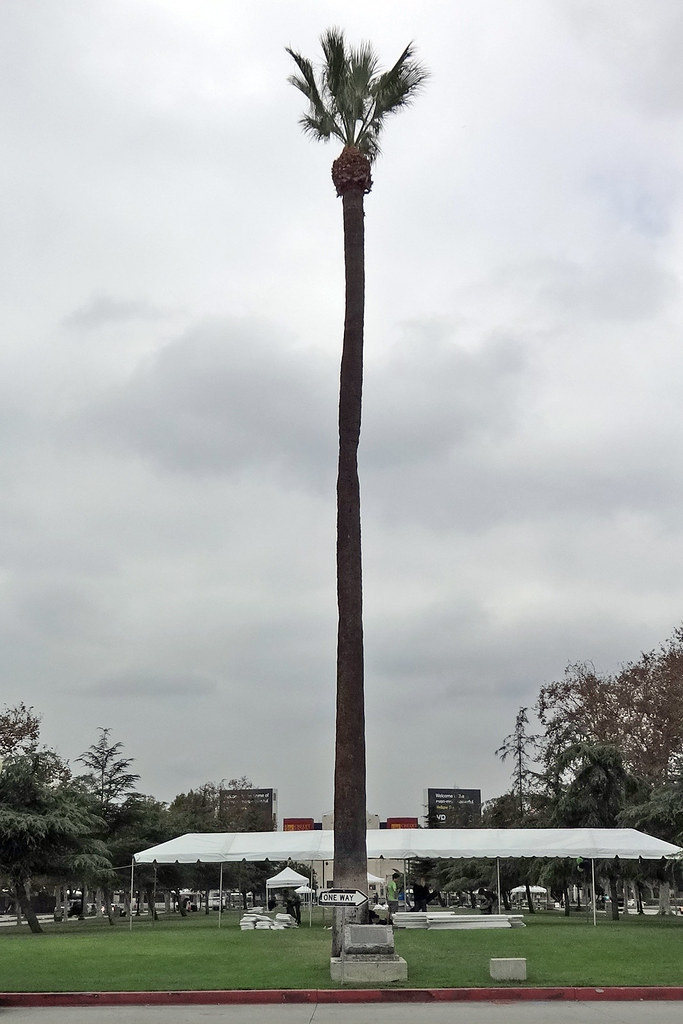
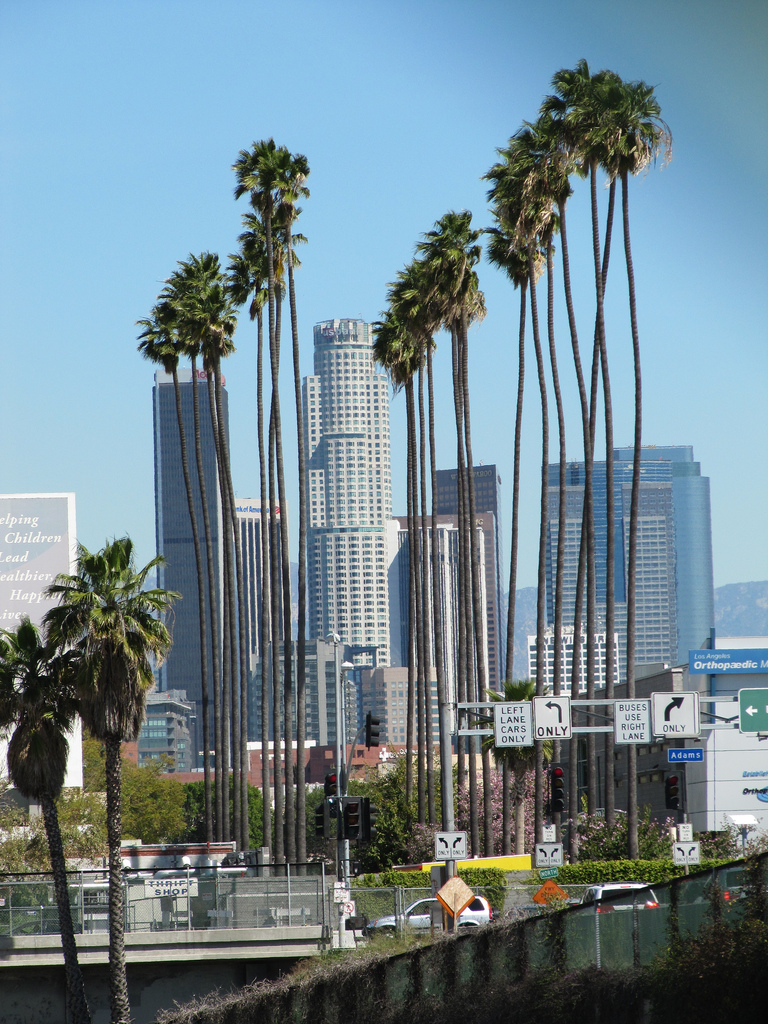
September, 2014, marks the centennial of the 180-year-old Hammel/Arcade Depot palm tree's transplantation to its forever home in Exposition Park, so my first visit to L.A. in two years was nicely timed.

Upon my arrival, though, I was initially alarmed to see that the ancient veteran had been the recent recipient of a rather severe trimming of its crown.


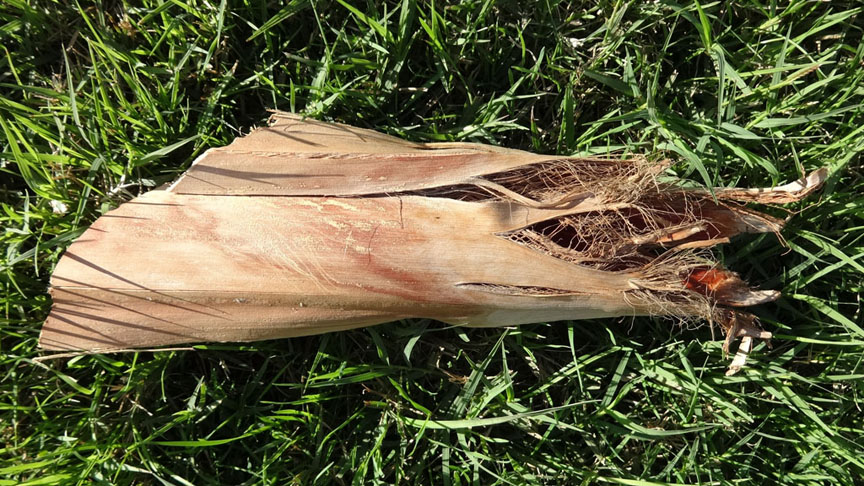
The arborists' perhaps overzealous labors left me with a nice souvenir of my palm pilgrimage, however: this shorn sheath fragment from The Oldest Living Thing in Los Angeles.

All photos © J Scott Shannon.


Thursday, May 16, 2013

The oldest palm tree in Los Angeles

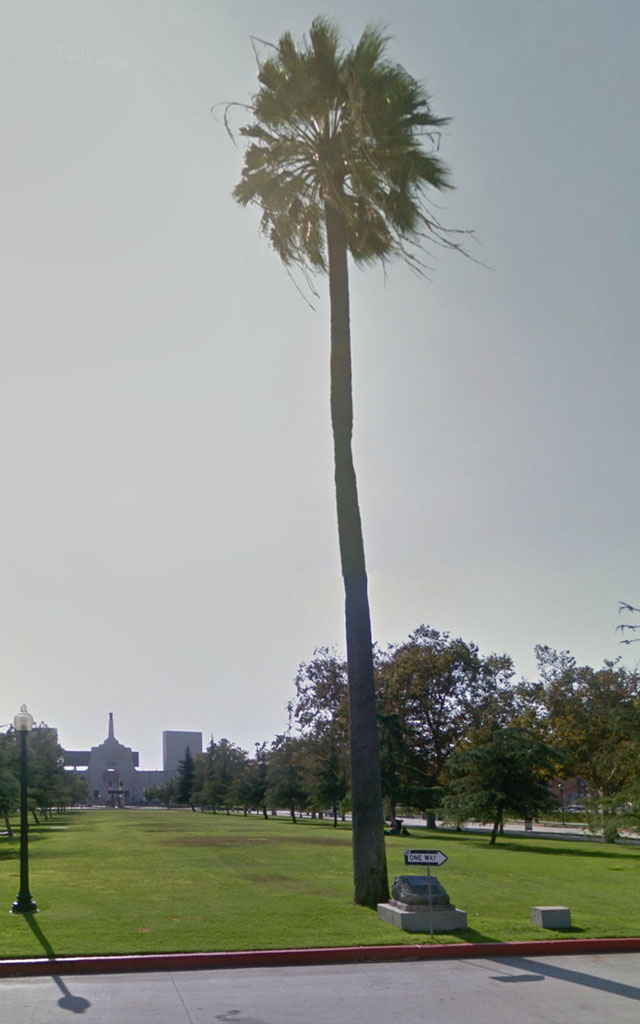
Many by now have probably seen Nathan Masters's recent blog post or read elsewhere about this lone palm tree standing today in front of the Memorial Coliseum in Exposition Park.


Google Maps Street View.


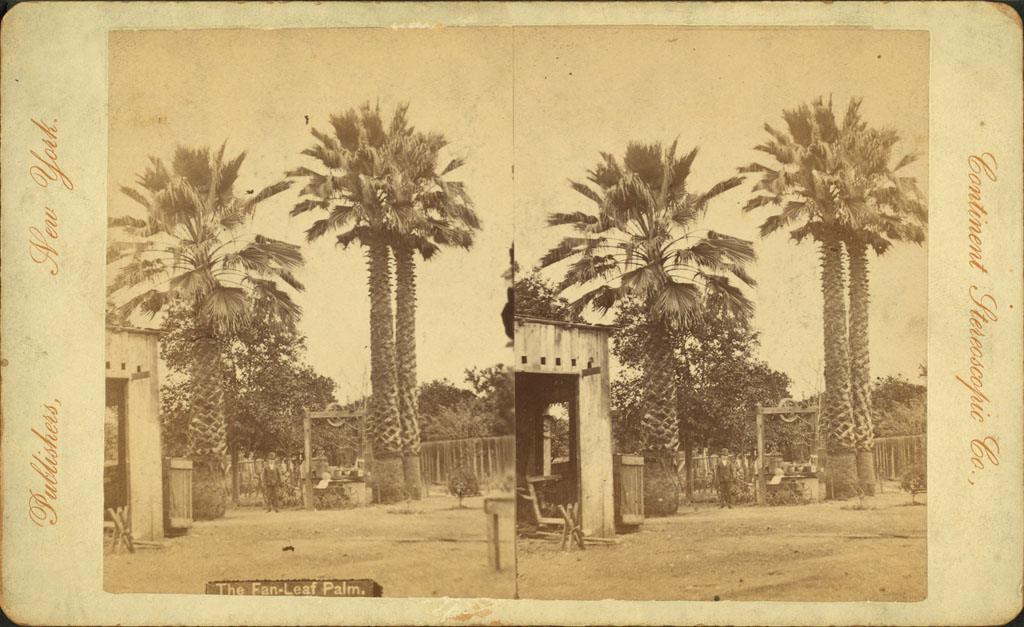
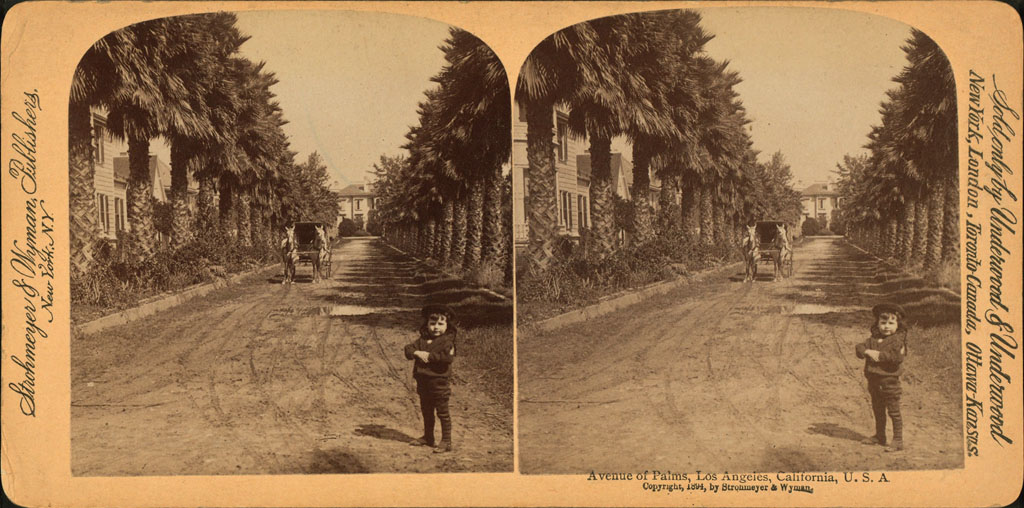
At approximately 180 years of age, it is almost certainly the oldest-known palm in Los Angeles, and the stereoscopic photograph below from circa 1873* may just be the oldest-known image of said tree (the smaller palm on the left).

My attempt to reproduce the original camera image.
Wikimedia Commons, public domain.


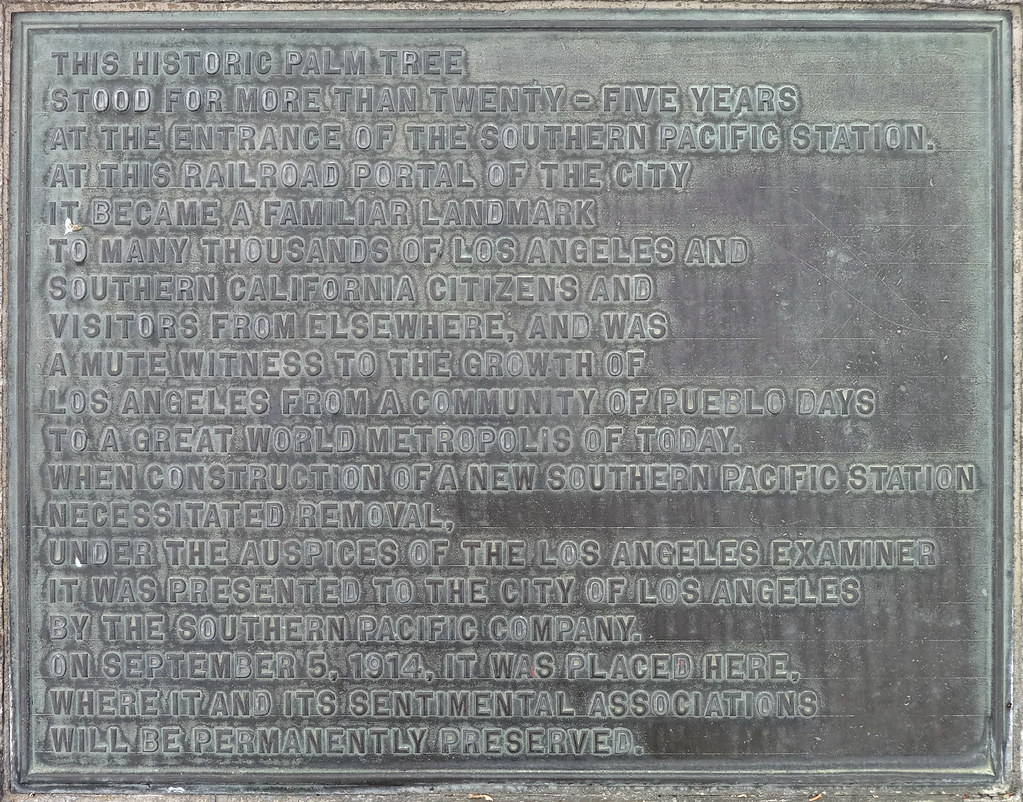
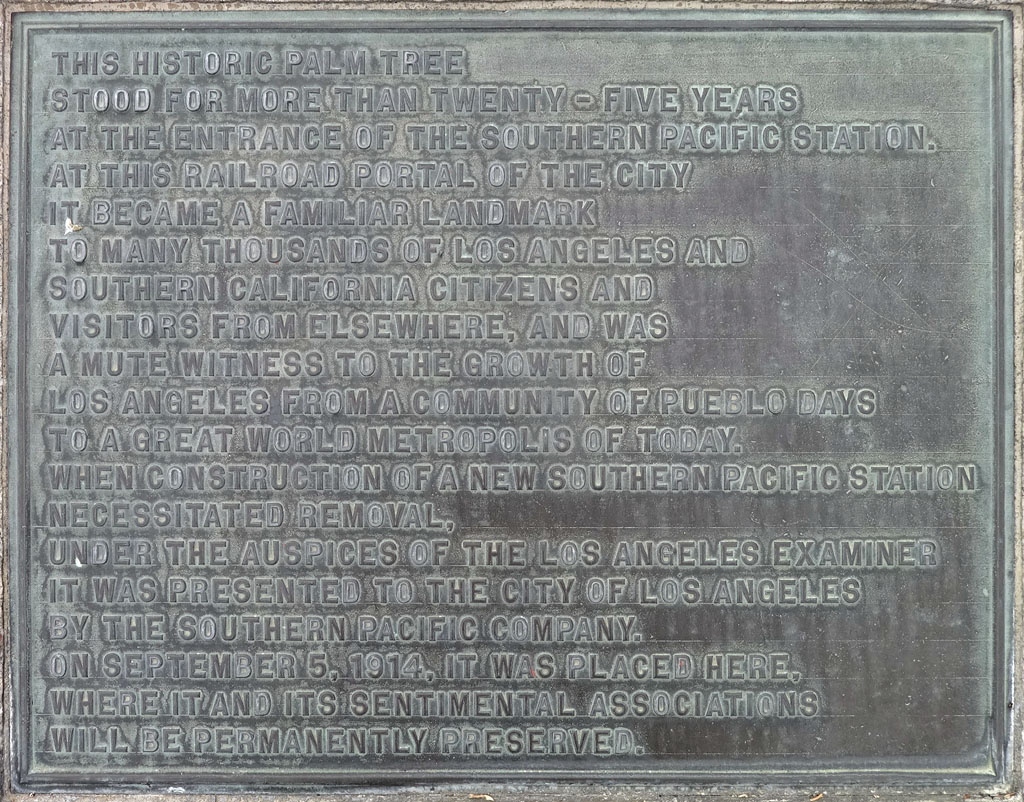
The basic story of how the palm ended up in Exhibition Park is told on its commemorative plaque.


Photo by J Scott Shannon.


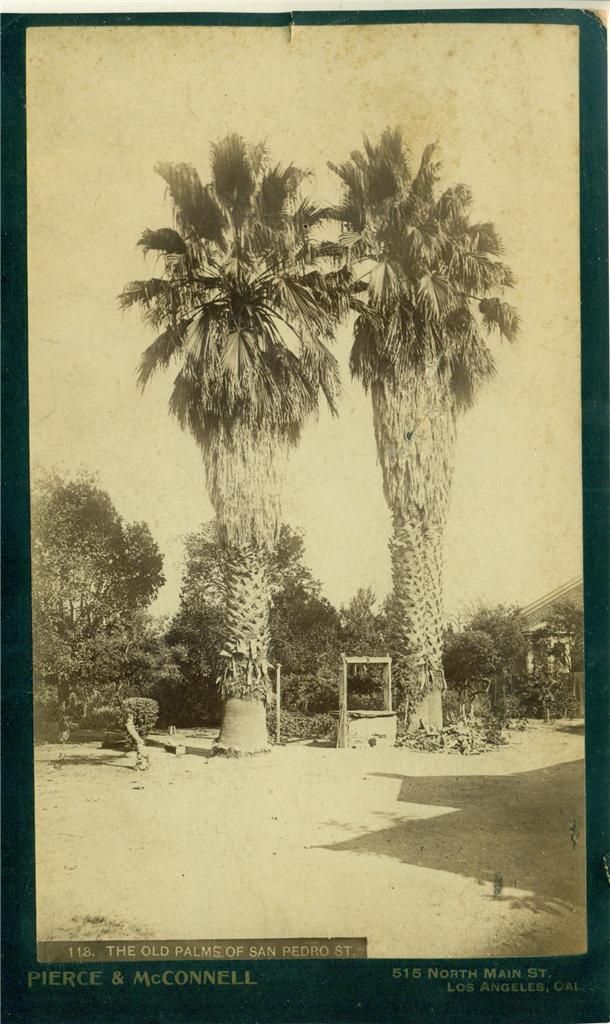
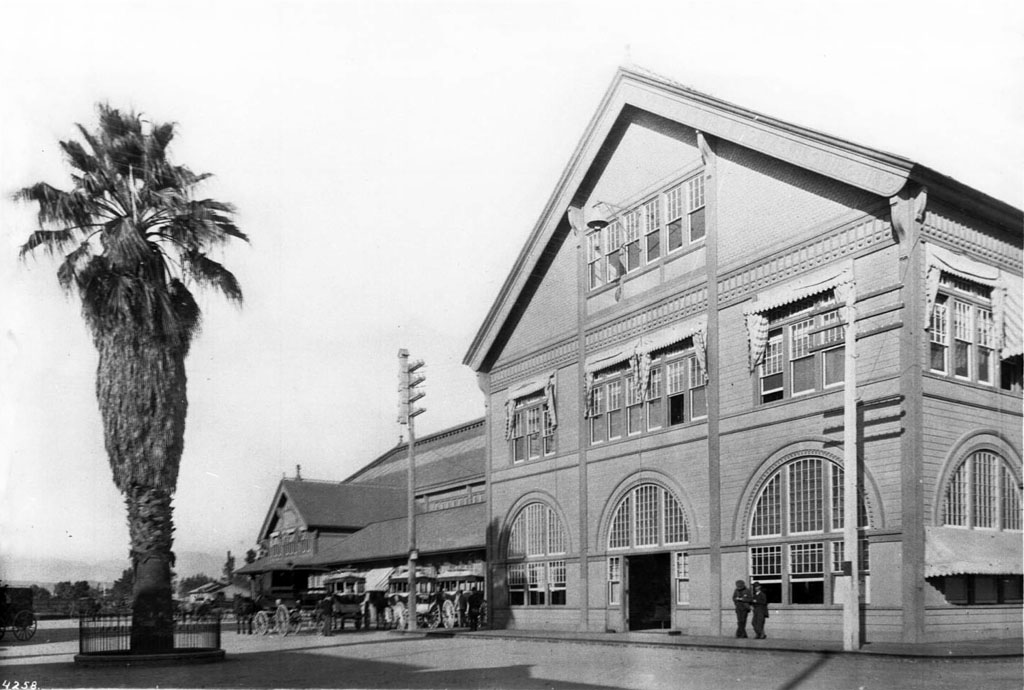
The fascinating details of the palm's earlier journey from a back yard on San Pedro Street to the Southern Pacific Arcade Depot in 1888 have been meticulously detailed here.


Taken c.1888, just prior to the move to the Arcade Depot...

...where it stood greeting travelers for the next quarter of a century.
Courtesy U.S.C. Digital Library/California Historical Society.


While the palm at Exposition Park may be the oldest documented Washingtonia filifera in Los Angeles, we shouldn't forget the oldest-known examples of W. robusta: the Longstreet Palms (below), the story of which I've told here many times. These Civil War-era veterans are at least 150 years old, and are therefore no less worthy of monument status than their cousin in Exposition Park.


Wikimedia Commons, original photo by waltarrrrr on Flickr.


Wikimedia Commons, public domain.


The Hammel Palm and the Longstreet Palms were each world famous in their day. Now that they have all arisen out of obscurity, I think it's wonderful that their historical importance is once again being acknowledged, and celebrated.


Friday, June 15, 2012

Union Station, 1939

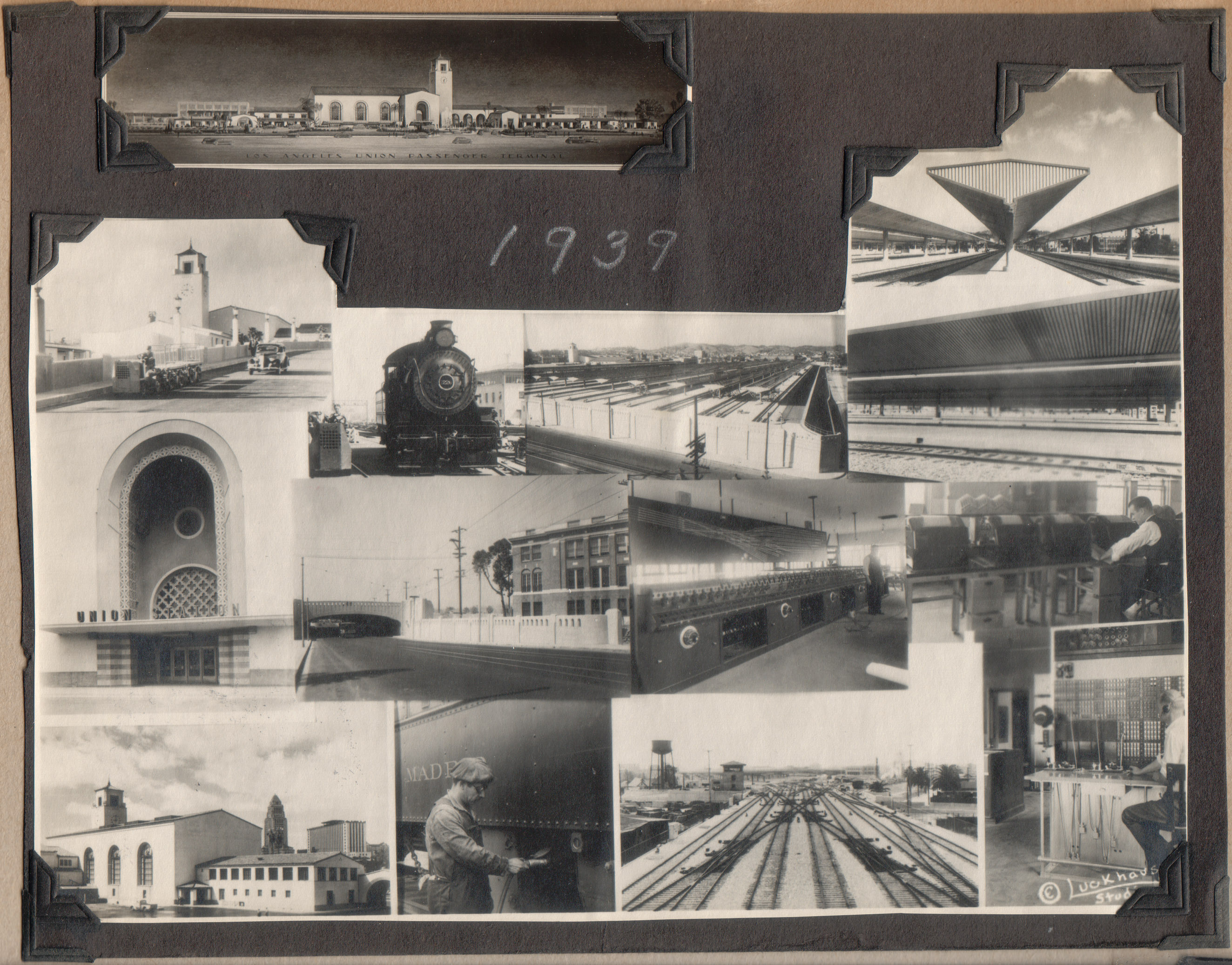
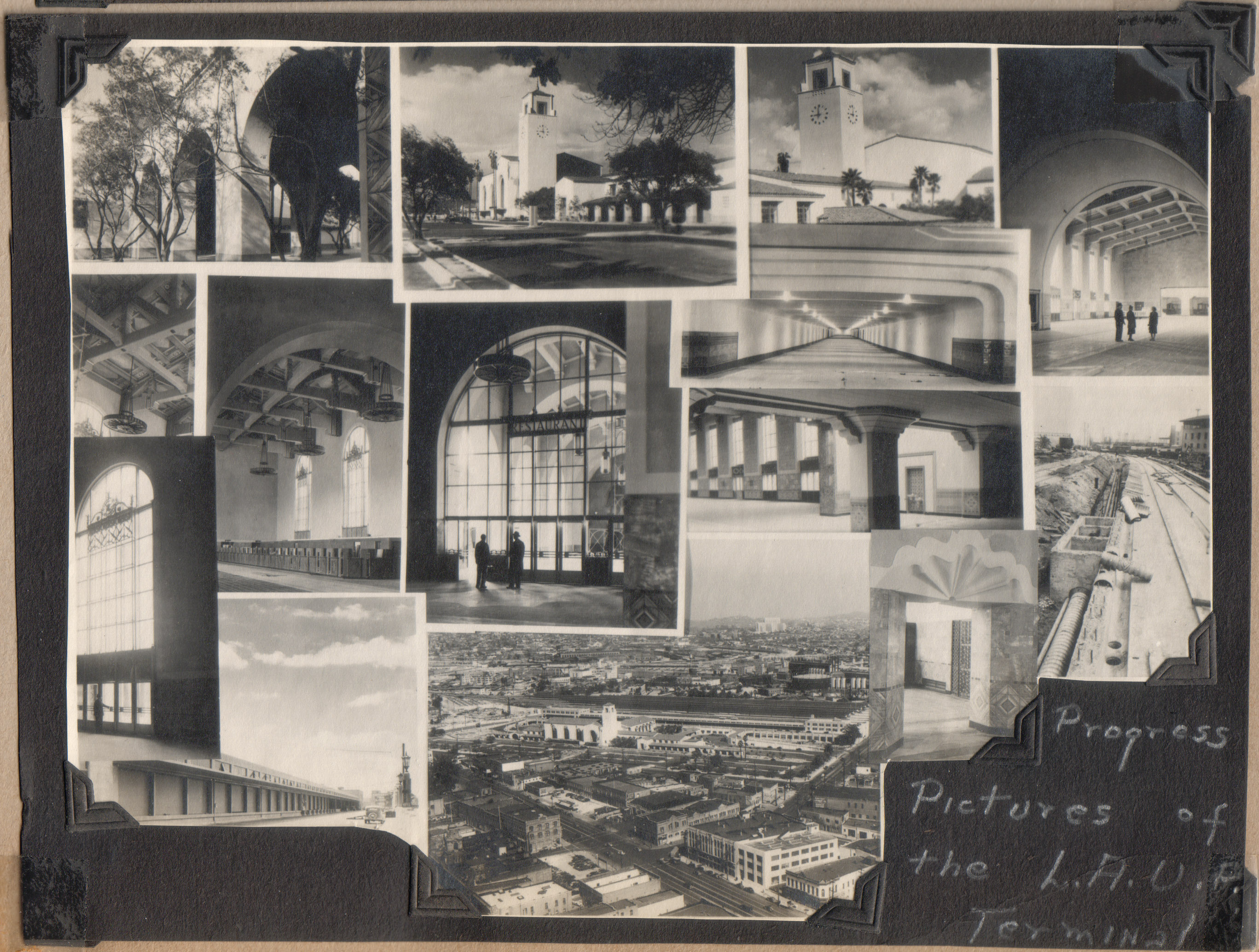
These two photo-montages are from our family album. They depict the Los Angeles Union Passenger Terminal in 1939, just prior to its official opening. I've never seen the likes of them in any online archive, so I'm guessing they may be rather rare images.


Click image for 300dpi enlargement. Link to Flickr page.


Click image for 300dpi enlargement. Link to Flickr page.


Sunday, June 27, 2010

Gallery of historical photos

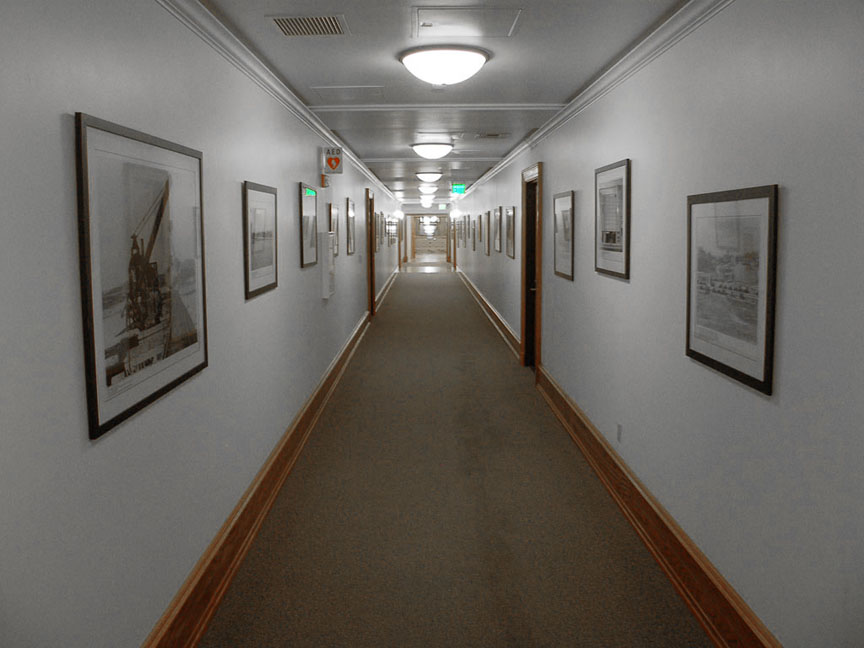
For the past few days, I have been vacationing in Los Angeles, and twice last week, I had the privilege of visiting the amazing gallery of historical photographs on the 4th floor of City Hall. (Courtesy of Councilmember Tom LaBonge.)


Photo by J Scott Shannon.

Lining the 4th floor corridors are framed enlargements of some of the most extraordinary images of old Los Angeles I've ever seen. I wish my old digital camera had image stabilization, or I'd be posting about 50 of the pics here! A handful I've seen before in the USC/LAPL archives, but the vast majority of the photos were totally new to me.

If you're an L.A. history nut like me, I'd really urge you to treat yourself to a visit to the 4th floor. I've been there a total of three times now (my first visit was last year), and I intend on going back every chance I get. Don't forget to go up to the observation deck on the 27th floor, too! It's open to the public during business hours on weekdays.


Wednesday, January 13, 2010

Views of old Los Angeles

Views of old Los Angeles, compiled by Larry Harnisch...


Pop quiz: Anyone care to guess the exact vantage point for the opening panorama shot?


Friday, December 18, 2009

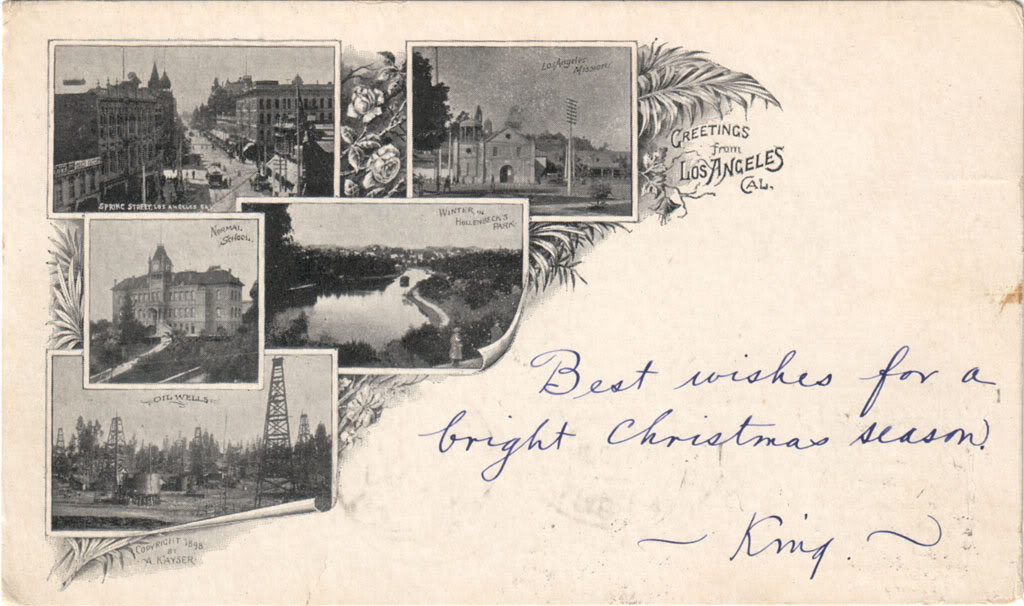
L.A. Christmas, 1899


Thursday, October 22, 2009

Hiatus

My apologies for the lack of updates recently. Due to Real Life circumstances, I've been forced to take a bit of a hiatus from writing about my favorite avocation here. When I come back, though, I'll have something really special to share – something quite different than what I usually post, and more personal, too. Anyway, rest assured, Los Angeles Past will be back again in a week or two. Stay tuned!


Friday, September 25, 2009

Mission statement

It's "history" now (literally), but "Los Angeles Past" actually started out on LiveJournal. One feature of LJ that I liked was their profile page where you could write at length about yourself and why you're keeping a journal there – like a blog mission statement. Unfortunately, my LiveJournal "Bio" is too long for my Blogger profile, so I thought I'd post the LJ blurb here so readers can better understand my motivation for creating Los Angeles Past...

"Natural and man-made catastrophes have played a part in the destruction of many old cityscapes in the United States. The original buildings of our nation's capital city – Washington, D.C. – were torched by invading British troops during the War of 1812. Most of Chicago was wiped out by its Great Fire of 1871. Victorian San Francisco was destroyed by its famous earthquake and fire of 1906.

"Historical Los Angeles, though, suffered a no-less-thorough destruction of its own. This civic calamity was no act of war nor of God, however. Old L.A. was destroyed intentionally by its own government and citizenry in the name of 'progress.'

"So complete was this man-wrought devastation that a person born in Los Angeles in 1875 and living a normal life span of 75 years would have lived long enough to see virtually the entire city they grew up and grew old in wiped clean off the face of the earth. And whatever life there was left in Los Angeles by 1950 was finally bled out of it by the freeways.

"By the time I was born in an L.A. suburb in 1954, Los Angeles had become little more than a commuter destination. When I was growing up, that's all it ever was to me. I never knew Los Angeles as a living city, as my mother and father had. So when I left the L.A. area for greener pastures at the age of 28, I didn't feel like I was leaving anyplace particularly special.

"In recent years, however, I have been delving ever-deeper into the pre-WWII history of Los Angeles, and I'm finding it to be quite a revelatory experience. Piece by piece, I am uncovering a vanished world. This historical city is almost entirely new and unfamiliar to me. It's been a fascinating adventure thus far! Old Los Angeles was a truly amazing place. Have a look through this blog and you'll see what I mean!


Saturday, August 29, 2009

Speaking of names...

Speaking of original names, I confess I've long had my doubts about the alleged appellation of nuestro pueblo at the time of its founding. According to almost every account, it was:

El Pueblo de Nuestra Señora la Reina de los Angeles del Río de Porciúncula

Am I alone in thinking that this sounds just a wee bit contrived? There are probably more letters in this name than there were residents in the original settlement!

Well, it so happens that recently I found out that I'm not alone in my suspicions. Buried in the references of the Wikipedia entry for Los Angeles is this notation:

There is some question about the legitimacy of this name, which may have, through a series of misinterpretations and inflations, been corrupted from the actual name authorized in writing in 1781, "La Reina de Los Angeles". Cf. Theodore E. Treutlein, "Los Angeles, California: The Question of the City's Original Spanish Name", Southern California Quarterly 55, no. 1 (Spring 1973): 1-7. Historian Doyce B. Nunis, Jr., has traced the longer name to the histories written by the Franciscan missionaries, especially Francisco Palóu, who wished to play up the region's connections to their order. Pool, Bob, "City of Angels' First Name Still Bedevils Historians". Los Angeles Times (March 26, 2005), Sec. A-1.


Notate bene that this reference states unequivocally that, "the actual name authorized in writing in 1781 [was], 'La Reina de Los Angeles' (The Queen of the Angels)." If this is true, then why, oh why, should the absurdly long mythological name be further perpetuated?

Another picky-picky-picky observation on my part...

La Reina de Los Angeles

Consider: the city was named for the Queen (La Reina) of the Angels, not the angels (Los Angeles) themselves. So shouldn't the short form of the Spanish name be "La Reina?" It's not the "City of the Angels," as you always hear, it's actually the city of the Angels' Queen. Where did this go wrong? The original settlement name of San Diego was "San Diego de Alcalá," but we don't call it Alcala today, nor did what was first dubbed "San Francisco de Asís" end up being called Asis. The cities were named for St. James and St. Francis respectively, not their referential associations.

I'm sure we can thank the Americans for the bastardized name, "Los Angeles." If the old town had remained Mexican through its entire history, I have little doubt that today the city would be called "La Reina" instead.

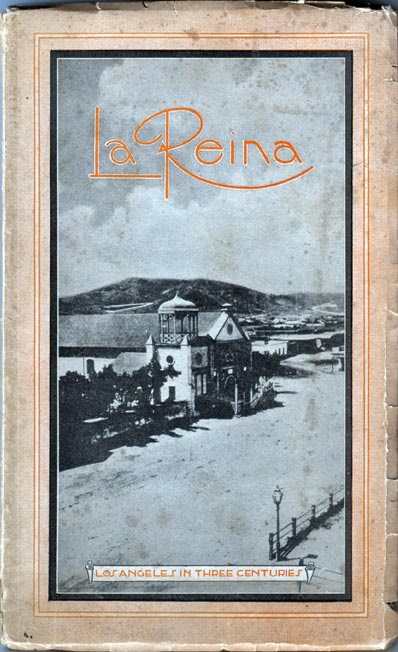
Post scriptum: As you can see, at least one book on Los Angeles history got it right. ;)


La Reina - Los Angeles in Three Centuries, Published by Security Trust & Savings Bank, Los Angeles, 1929.


Sunday, July 20, 2008

The Longstreet Palms: The oldest trees in Los Angeles?

EDIT (10/2/2021): Please note that this article contains many statements which, through subsequent research, I discovered are factually incorrect, especially the alleged connection to Confederate General James Longstreet. Click on the "longstreet palms" tag here or at the bottom of the page to read the most recent and accurate findings on this very interesting subject!

It's funny how things that we don't pay any attention to at first can gradually worm their way into our consciousness and eventually become an obsession.

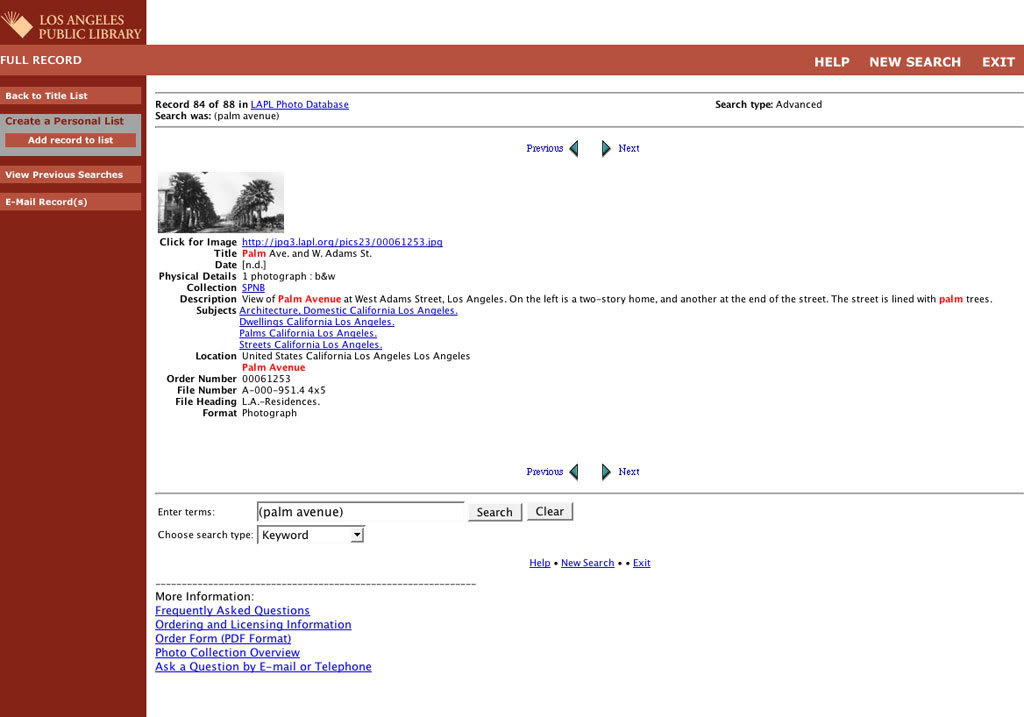
Here's how one such obsession of mine began. As you can tell from my blog, one of my hobbies is collecting postcards of old Los Angeles; a common subject of which is a "palm drive" or "palm avenue," depicting a street lined usually on both sides with either native or exotic palm trees. Stereotypical California scenes, I thought, of no real noteworthiness. So, I generally ignored these palm-themed postcards – my specialty is downtown street scenes and buildings – but after a while, I started to notice that a lot of the really old palm postcards appeared to depict one specific location: one on or near West Adams Street.
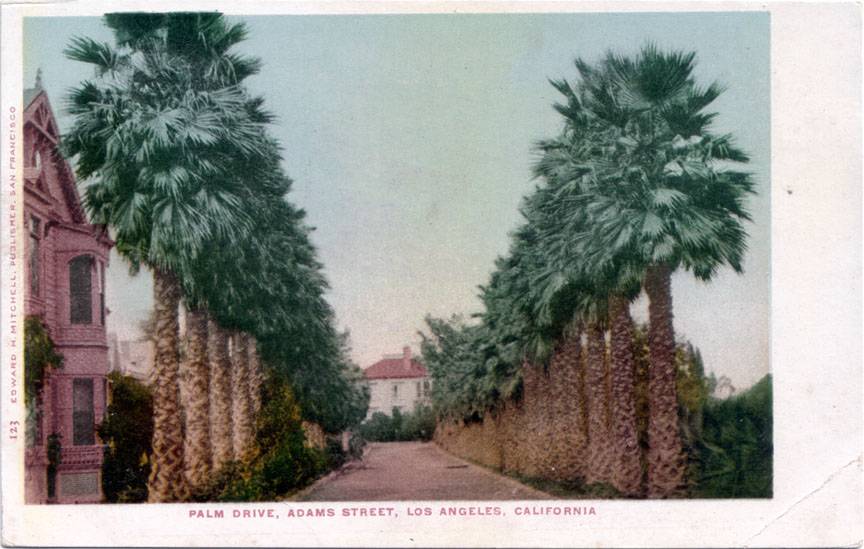


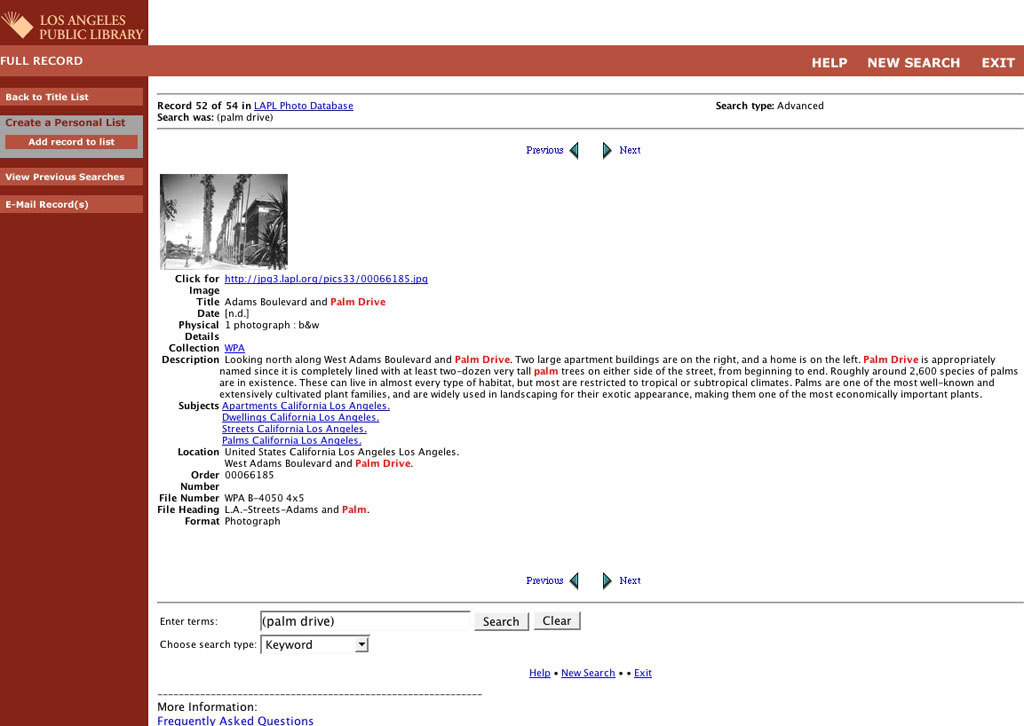
Curious, I looked it up in my 1941 "Hill's Guide" of Los Angeles, and was somewhat surprised to learn that Palm Drive was an actual place.
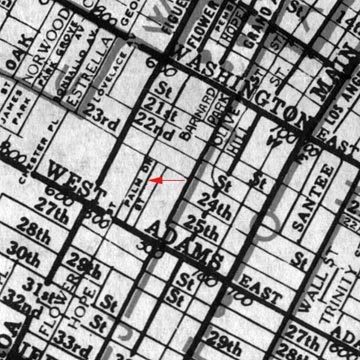


Then, I went to Google Maps to check the location today. I recognized the area immediately. It's an old memory from my childhood, actually. Palm Drive is located on what is now (or was) the campus of the world-renowned Orthopaedic Hospital. I almost stopped my search for the palms at that point, thinking it unlikely they'd still be there. But just on a whim, I decided to have a look at the location with Street View. What I found simply blew me away. Amazingly, the palms still lived!


View Larger Map


Look how tall they are! Given that the early postcards of these palms were from the first decade of the 20th century, this meant they were at least a full century old. Truly remarkable! What I was about to find out, though, is that these palms were, in fact, much older, and even more remarkably, they had an improbable connection to a well-known figure in American history...



Cutting to the chase: in the course of my research, I uncovered convincing evidence that these two rows of Washingtonia fan palms could very well be the oldest living things in Los Angeles. They were planted by none other than Confederate General James Longstreet, about 135 years ago. That may not sound terribly ancient, but to better frame the time perspective, there are only 4 man-made structures still standing in all of Los Angeles that are older than these palm trees.

I compiled the following pictoral history principally by piecing together photos and bits of information I gleaned from two online archives: the USC Libraries Digital Archive, and the photographic collection of the Los Angeles Public Library. Now, watch the palms grow through the years!

c.1875: This is the earliest photo of Palm Drive that I've been able to find. ("Early" defined in terms of the height of the trees themselves.) How old are they here, really? There's a house near mine that was built around 1992 that has a Washingtonia in its front yard that is about as tall as these are below. From that, I infer that these historic palms probably began life around 1860. That would make them almost 150 years old  today. It was from the text accompanying this photo that I learned about the connection to Gen. Longstreet (that's his home at the end of Palm Drive).
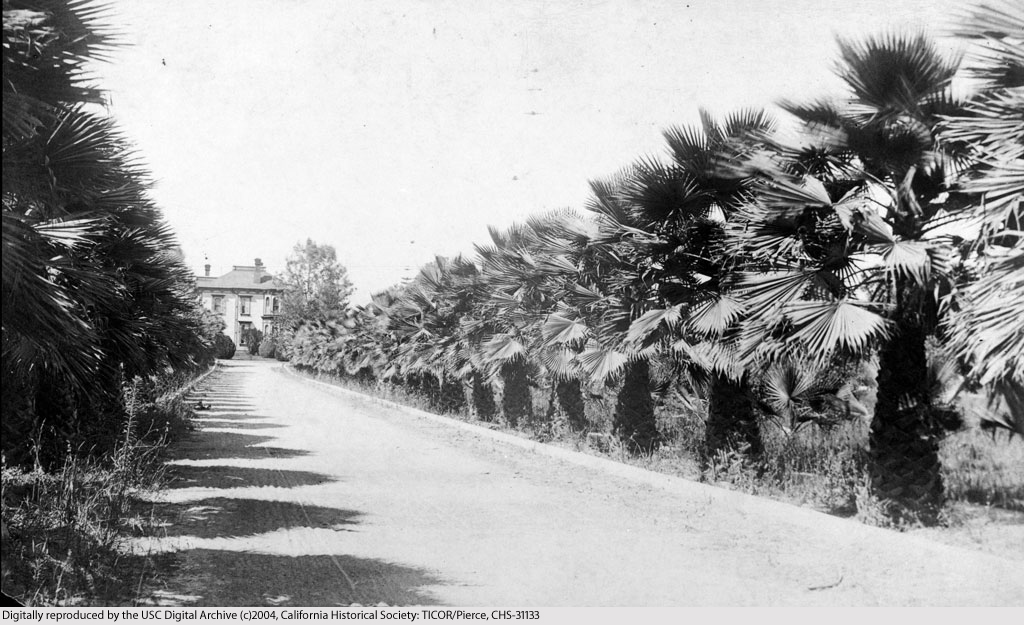

Courtesy U.S.C. Digital Library.


1886: More information about Longstreet and his estate: "From a letter to the Herald Express (1940 February 5): 'About 1875, Confederate General Longstreet acquired the 40 acres on the northeast corner of Figueroa and West Adams streets. He did what was possibly up to that time the most extensive grading job done in Los Angeles. He made a pleasing slope up to where the house was to be built, a slope such as we used to read about in southern love stories. He built a mansion of Southern grandeaur [sic] and elegance and made the entrance from West Adams, between the palms which he planted, a southern romance. He planted the whole place with orange trees and it became the showplace of Southern California...'."
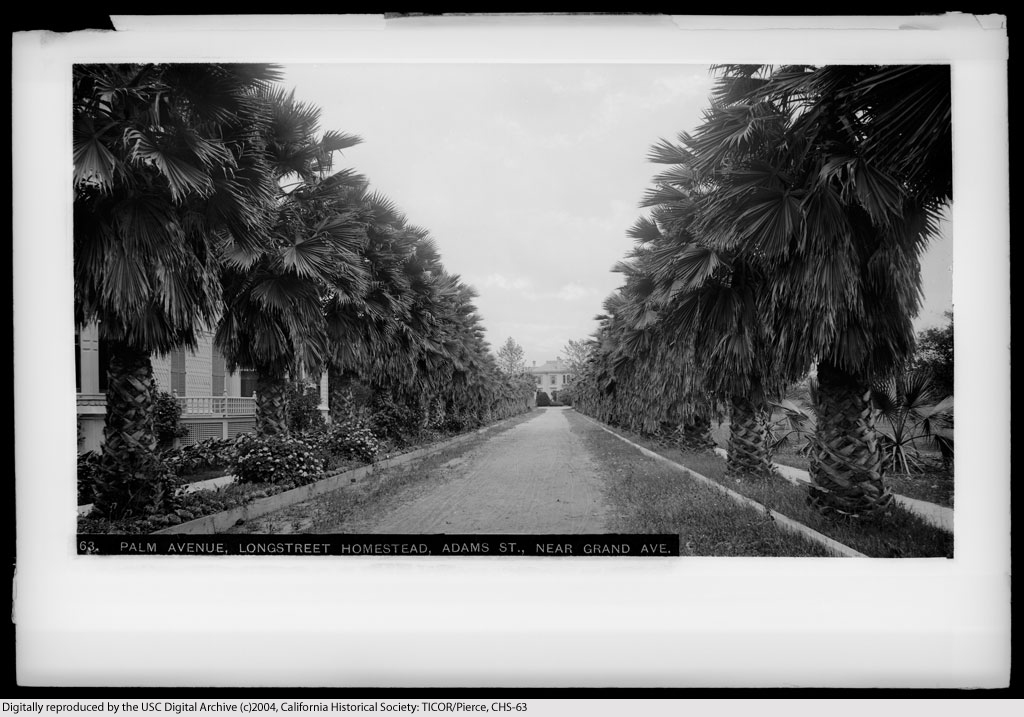

Courtesy U.S.C. Digital Library.


c.1900: This scene looks very similar to the photos of Palm Drive in the earliest 20th century postcards (e.g., as above), so even though this photo is undated, around 1900 seems about right. Here is a photo of General Longstreet's estate's grounds taken around 1890-1900. The caption mentions that the house at this time "was in use as an osteopathic hospital." The website for Orthopaedic Hospital says the clinic was founded in 1911, but evidently the property's history as a place for treating bone disorders extends back in time to the late 19th century when the property was still owned by Gen. Longstreet himself.
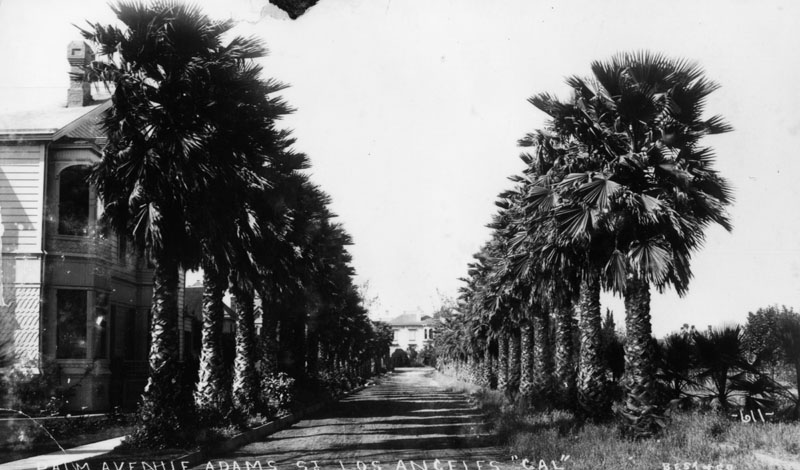

Courtesy Los Angeles Public Library.


c.1910: The referenced page says this photo was taken around 1920, but I guesstimate it was more likely taken closer to 1910.
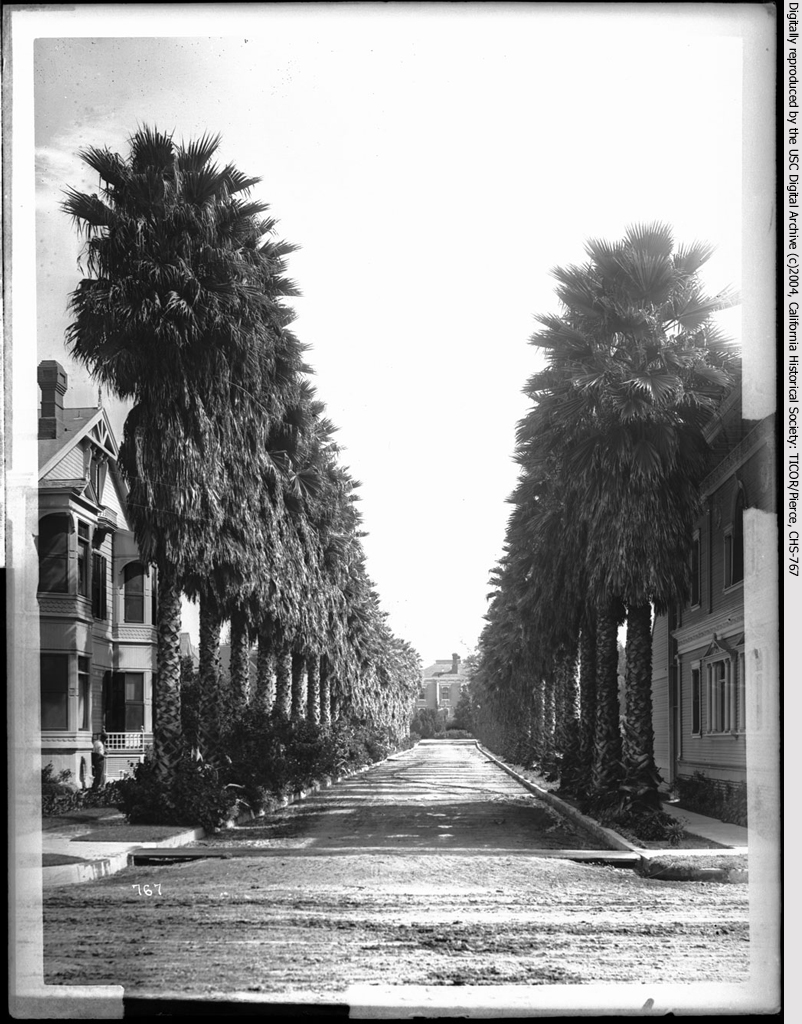

Courtesy U.S.C. Digital Library.


c.1920: The text accompanying this photo gives the account that, at the time, these were the "tallest palm[s] in the city." Aha! Logically, if these were the tallest, then they were also likely the oldest. The more famous palm-lined avenues of Beverly Hills were just being planted in the late 'teens/early '20s. The trees of Palm Drive were already about 60 years old by then.
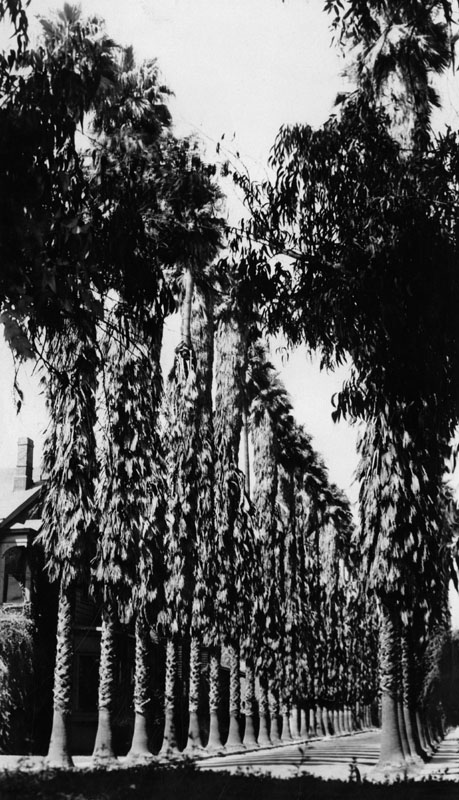

Courtesy Los Angeles Public Library.


c.1928: From the back cover of "La Reina - Los Angeles in Three Centuries," published by Security Trust & Savings Bank, 1929. The palms are truly in their prime! General Longstreet's house is gone now, and at right is the Holton Arms, an upscale West Adams "apartment hotel."
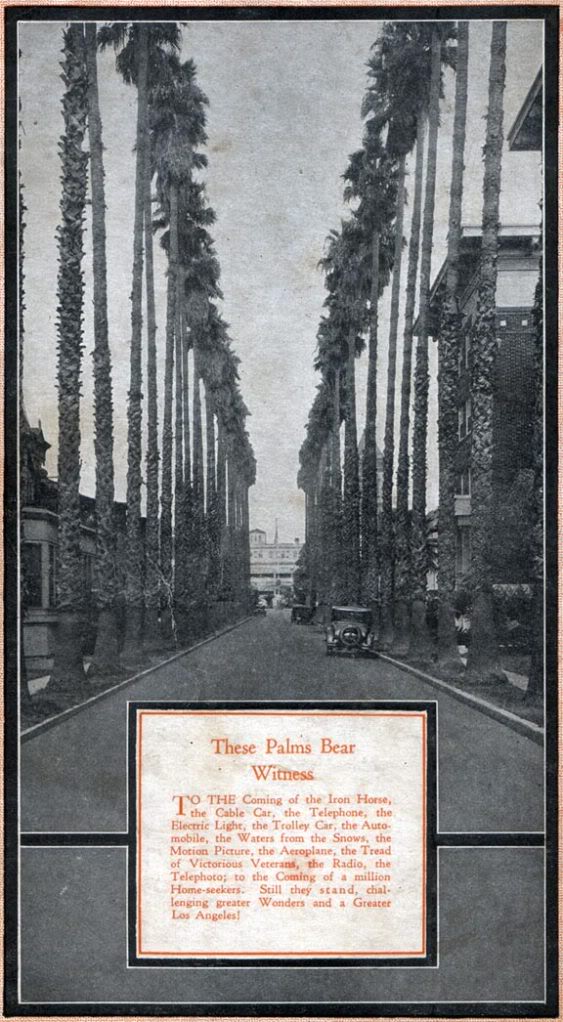


c.1940: This is the latest photo I was able find of the historical palms in the online archives. By this time, even before WWII, they had been here for 65 years, and were approximately 80 years old...
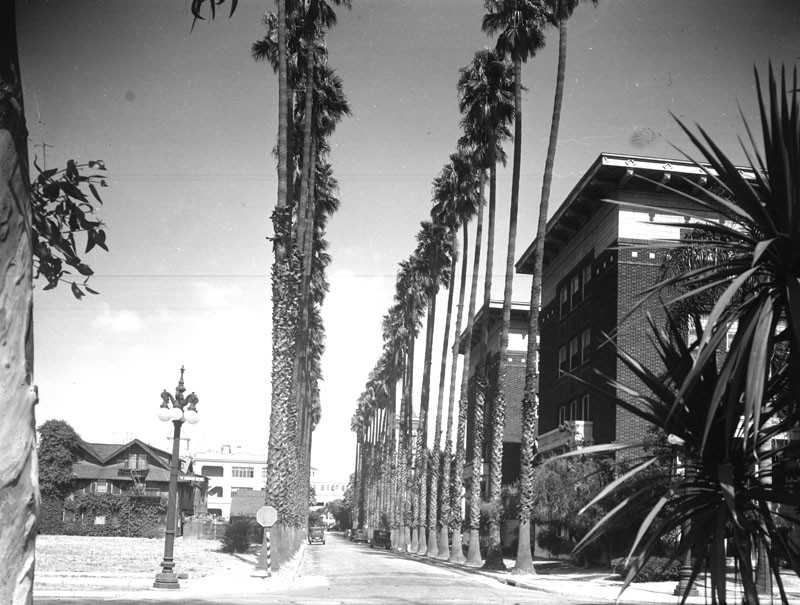

Courtesy Los Angeles Public Library.


And it just so happened that while I was beginning to put the finishing touches on my information search, one of my favorite L.A. blogs (Larry Harnisch's The Daily Mirror) reprinted a column about General Longstreet's palm trees that had appeared in the Los Angeles Times 70 years ago, on July 8, 1938:
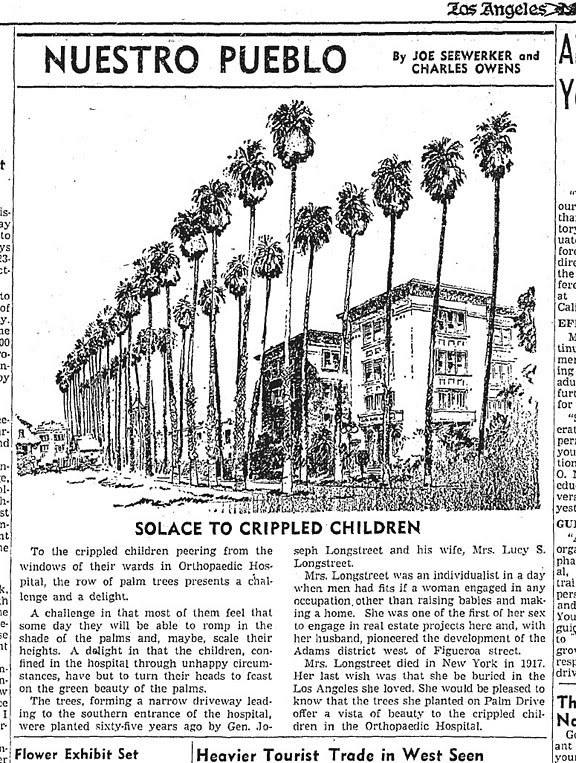


Click image for source.


Reading this old "Nuestro Pueblo" article was a big thrill, as it provided independent confirmation of many of the factoids I'd found in the USC and LAPL archives, with the happy inclusion of Mrs. Lucy Longstreet's role in the story.


On to the present day... via the web, I've learned that the site of Orthopaedic Hospital was sold in 2006, and that its redevelopment for luxury apartments commenced in 2007. According to this page, it appears at least some of the ancient palms have already been removed; perhaps all of them are gone now, I don't know. I don't live in the L.A. area, or I would definitely look into this myself.

It would truly be a shame to lose these venerable survivors. I wonder if anyone else but me has any idea just how old or significant these palms really are – that they were planted by a famous Confederate General and his wife, that they were once a celebrated showpiece of Los Angeles, and that today, they might just be the oldest living things in the entire city. Are Gen. Longstreet's palms really gone? I sincerely hope not...

Read the next installment in the saga of the Longstreet Palms: 'Whose palms are these, anyway?'
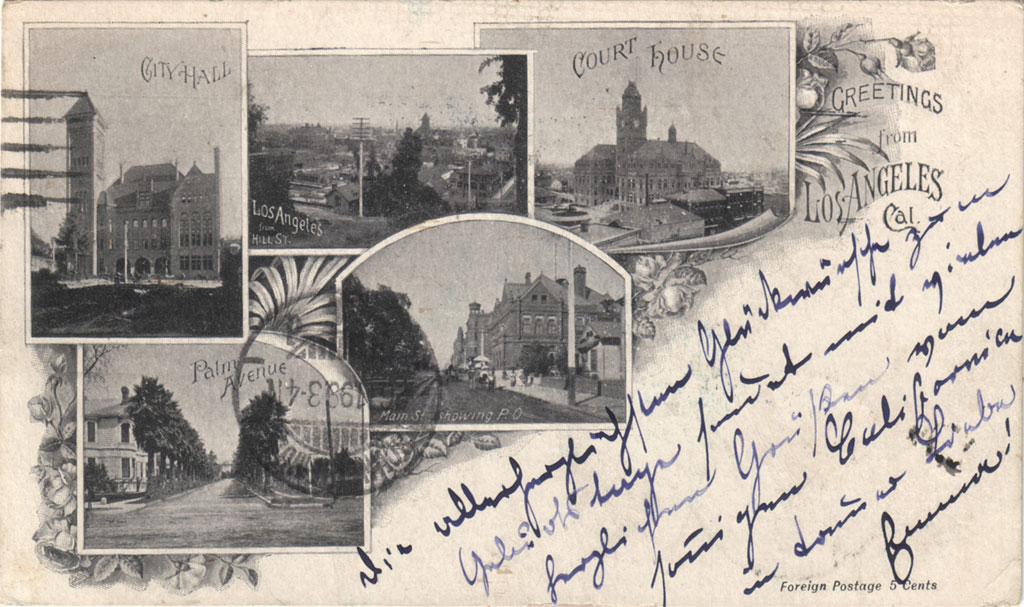


An 1899 postcard featuring "Palm Avenue."


Saturday, May 17, 2008

The other Wrigley Field

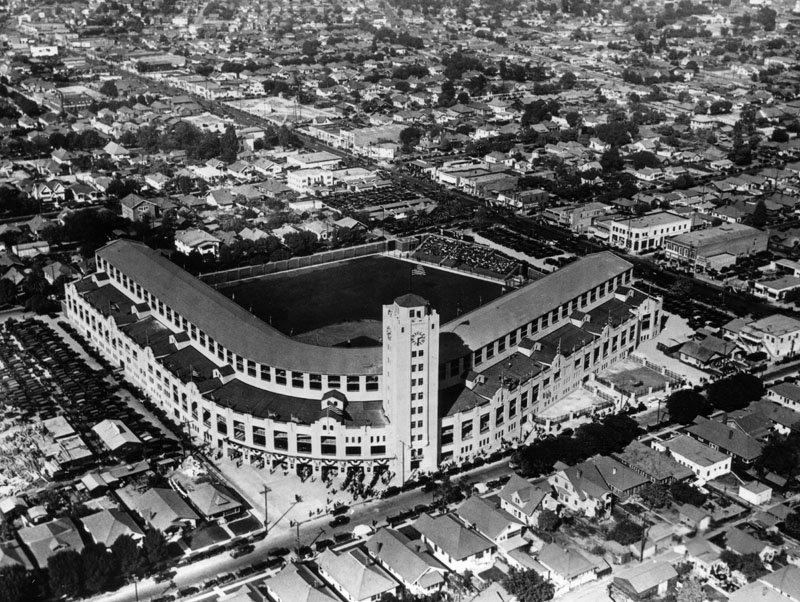
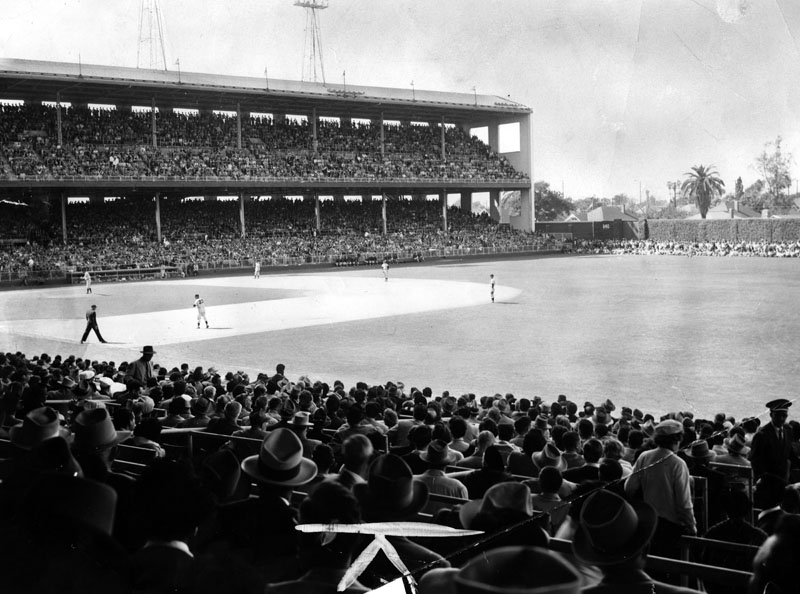
Several times, I remember Dad telling me about the other Wrigley Field, the one in Los Angeles: original home of the Los Angeles Angels (Pacific Coast League, 1925-1957; American League, 1961). I'd never seen pictures of it before now, though.


Courtesy Los Angeles Public Library.


Located at 42nd Place and San Pedro Street, California's Wrigley Field opened in 1925.


Courtesy U.S.C. Digital Library.


Courtesy Los Angeles Public Library.


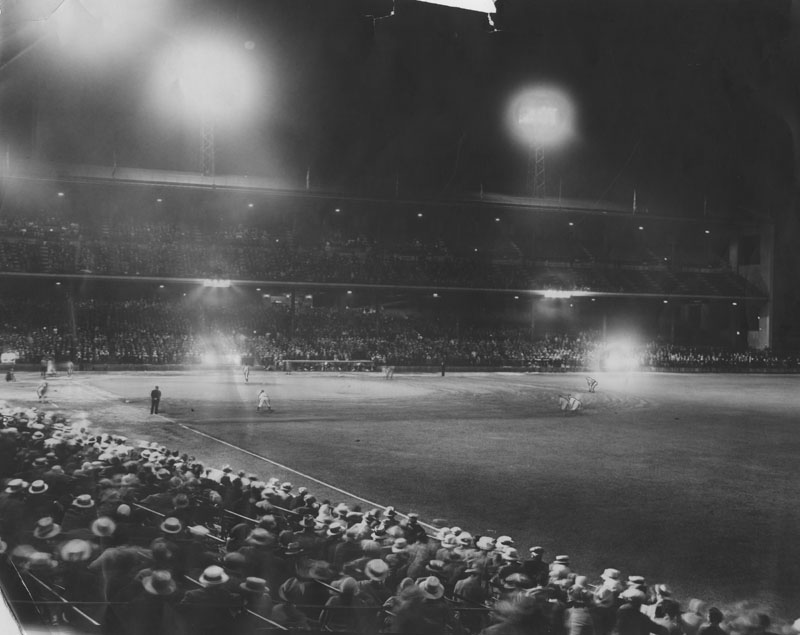
This Wrigley Field got its lights in 1930. Its namesake in Chicago would have to wait another 58 years for night baseball.


Courtesy Los Angeles Public Library.


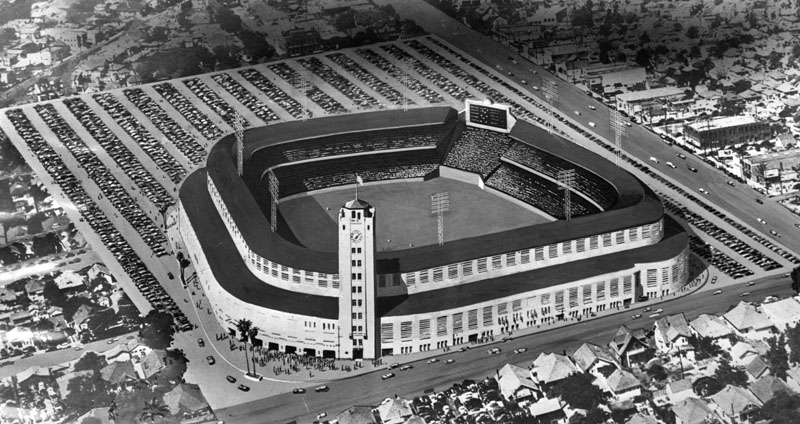
It was initially proposed that the Dodgers would play here after relocating from Brooklyn. This concept drawing from 1957 depicted proposed improvements to turn Wrigley Field into a major league park. Instead, it met the wrecking ball in 1966.


Courtesy Los Angeles Public Library.