A vanished city lives again...

Showing posts with label architecture. Show all posts

Monday, May 19, 2014

"French Flats"

Some years ago, while browsing digital archives online, I came across this photo of a dilapidated old Los Angeles apartment building. I found its quirkiness to be instantly endearing. It looked totally ramshackle, but at the same time, its architectural details suggested to me that it might have had a much more elegant past.
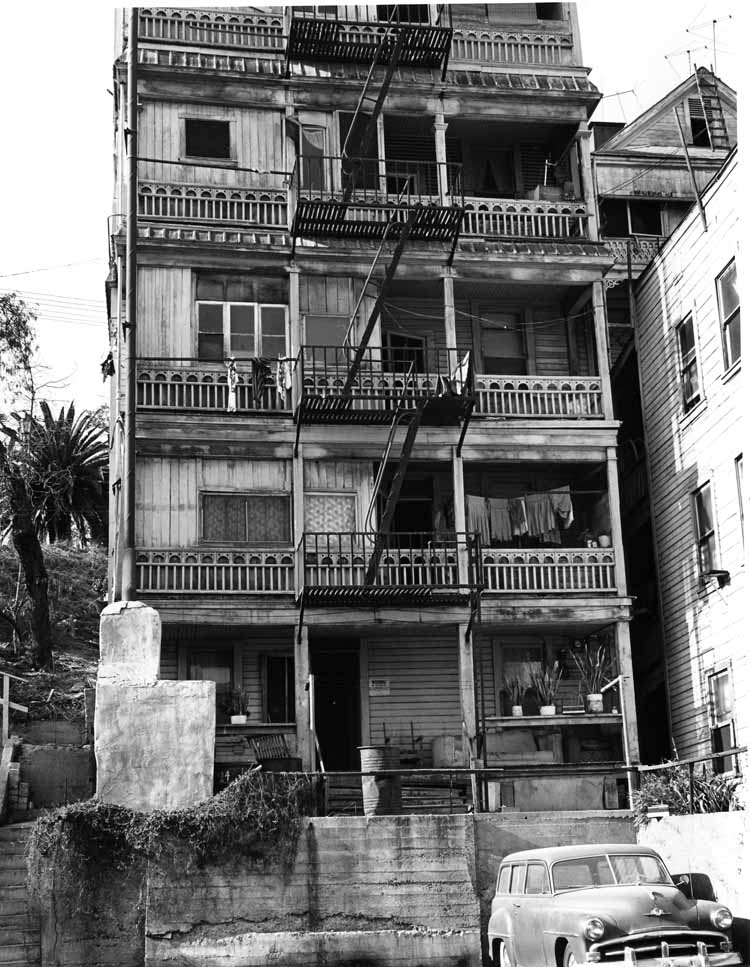

William Reagh, photographer. Courtesy California State Library.


So where exactly was this intriguing structure? No way to tell. The photograph's description contained no information more specific than it was taken on Bunker Hill in Los Angeles in 1963.

Not long ago, I found another photo of the building, but this time in color. Looking closely, I could tell it was taken around the same time as the black-and-white one (note the same three potted plants on the bottom floor porch). Moreover, this photo's online description did contain a specific address. It was 224 South Olive Street.
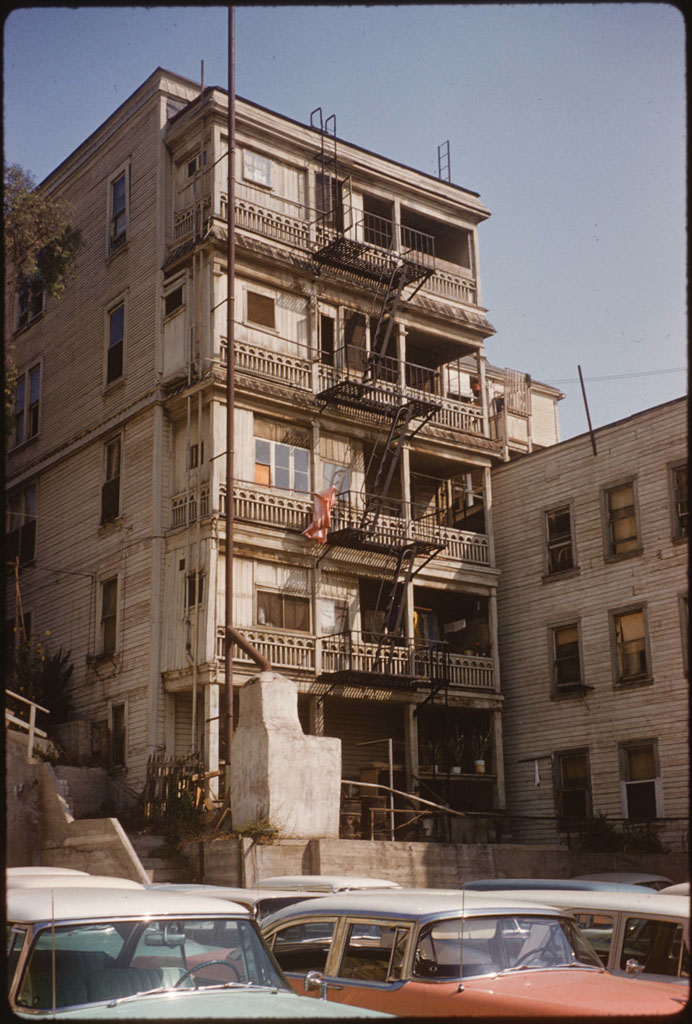

"Bunker Hill from Clay Street between 2nd and 3rd Streets, looking west," Palmer Connor, photographer. From the Palmer Connor Collection of Color Slides of Los Angeles. Courtesy of The Huntington Library, San Marino, CA. Link to full-res image.


Now I was anxious to find out what it looked like from the front. Thankfully, after a little more searching on the Huntington Library site, I found exactly what I was looking for. 224 is the building at right in the photo below.
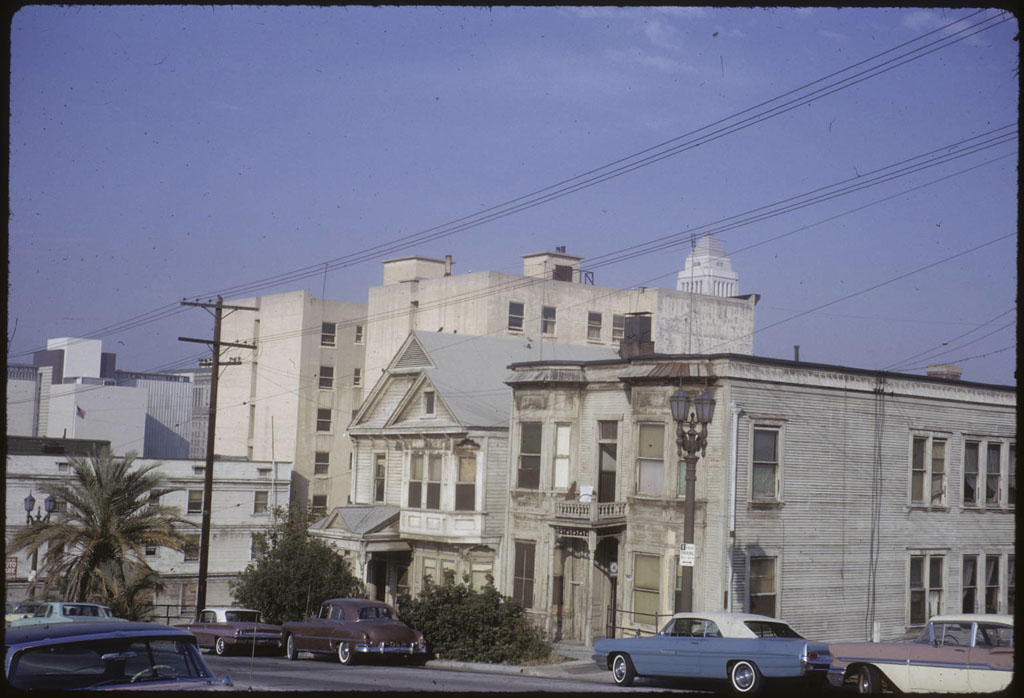

"Olive Street between 3rd and 2nd Streets," Palmer Connor, photographer. From the Palmer Connor Collection of Color Slides of Los Angeles. Courtesy of The Huntington Library, San Marino, CA. Link to full-res image.

More history sleuthing after the jump!
Saturday, November 24, 2012

1891 Landmarks

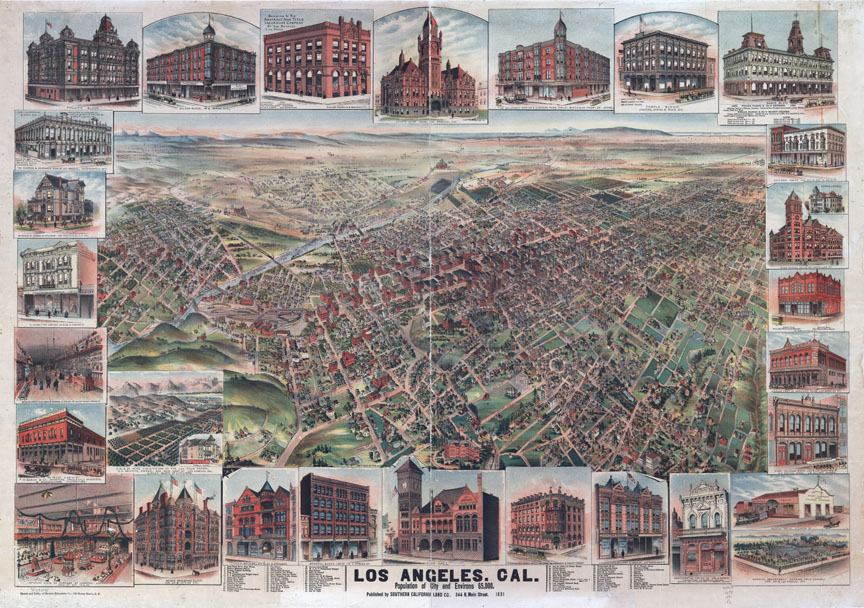
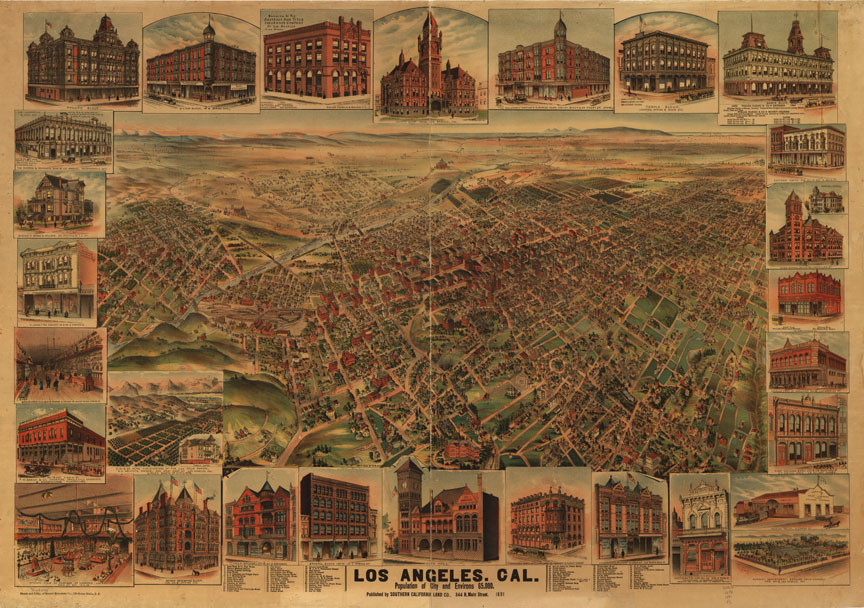
Apologies for the hiatus. Seemingly endless computer snafus and trainwrecks in my personal life have kept me from spending more time indulging in my favorite avocation. Anyway, recently, I used Photoshop to do a little color mod of this panoramic map of Los Angeles from 1891. The highly-foxed original image cleaned up rather well, I think!

Before:

Library of Congress.


After:

Library of Congress.


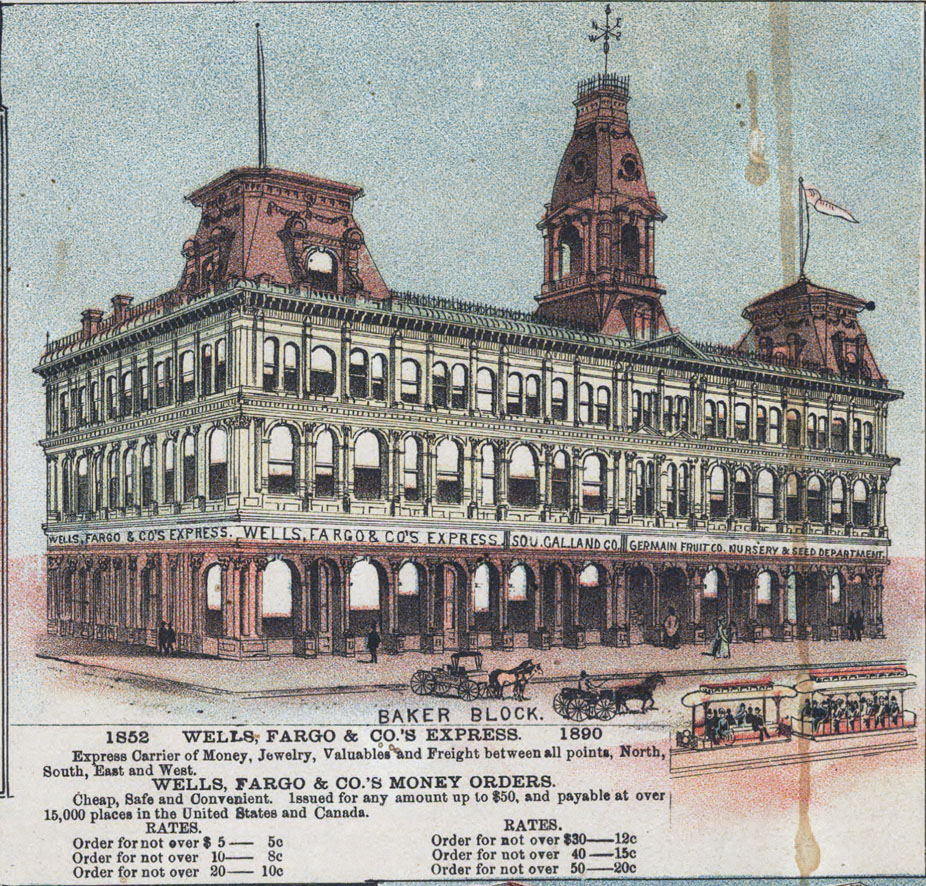
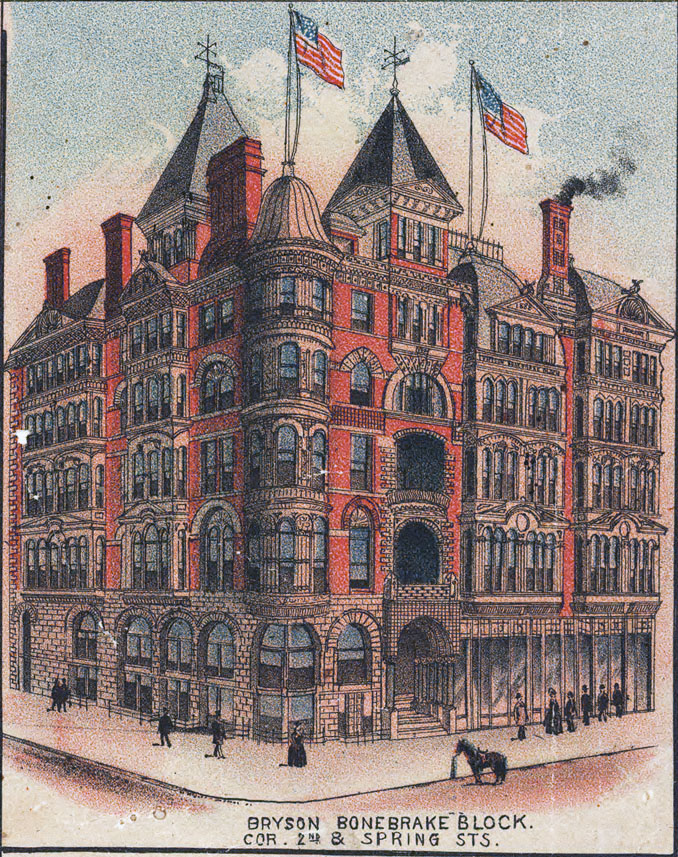
The buildings depicted in the margins are worth a much closer look.


Library of Congress.


Library of Congress.


8 more behind the jump!
Tuesday, October 2, 2012

The oldest building in Los Angeles?

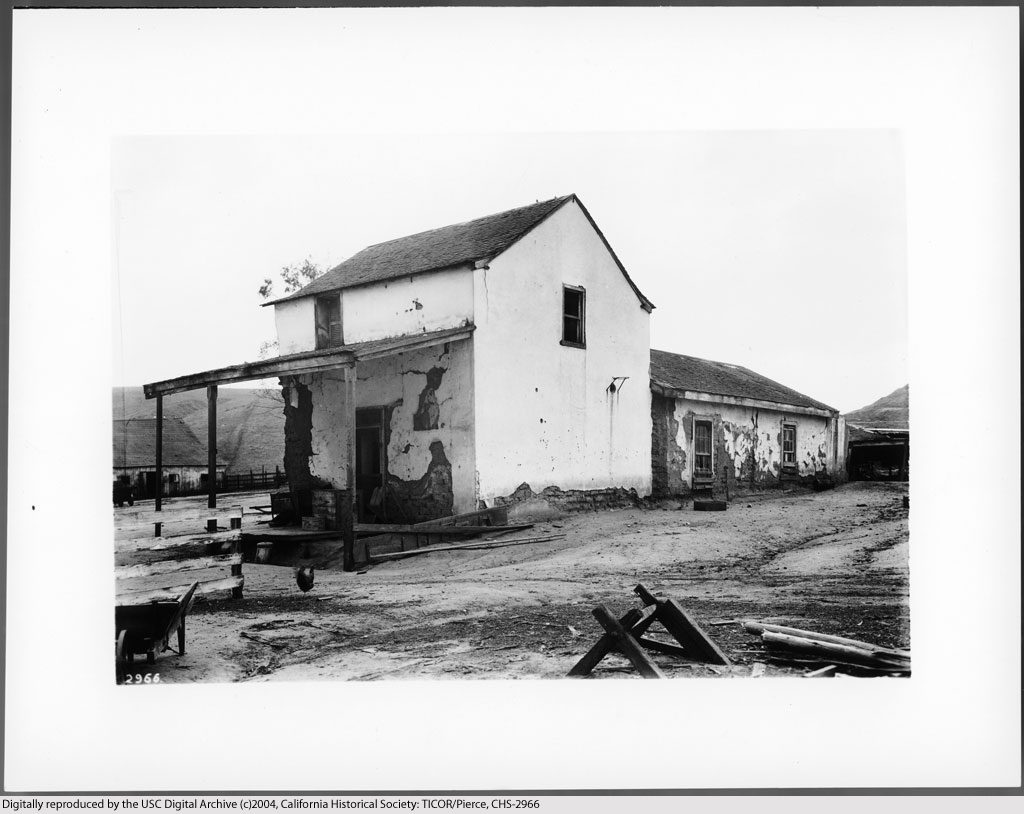
Many have already heard about the emerging realization that the Sanchez Adobe in the Baldwin Hills may be the oldest building in Los Angeles.

Although the structure bears the Sanchez name, it is believed to have actually been built by unknown rancheros fifty years before the land was first deeded to Don Vicente Sanchez in 1843.

This 1840s map depicting the boundaries of "Rancho del Paso de la Tijera" shows the little cottage whose existence has now spanned four centuries.


Hispanic-Heritage Links at the National Archives.


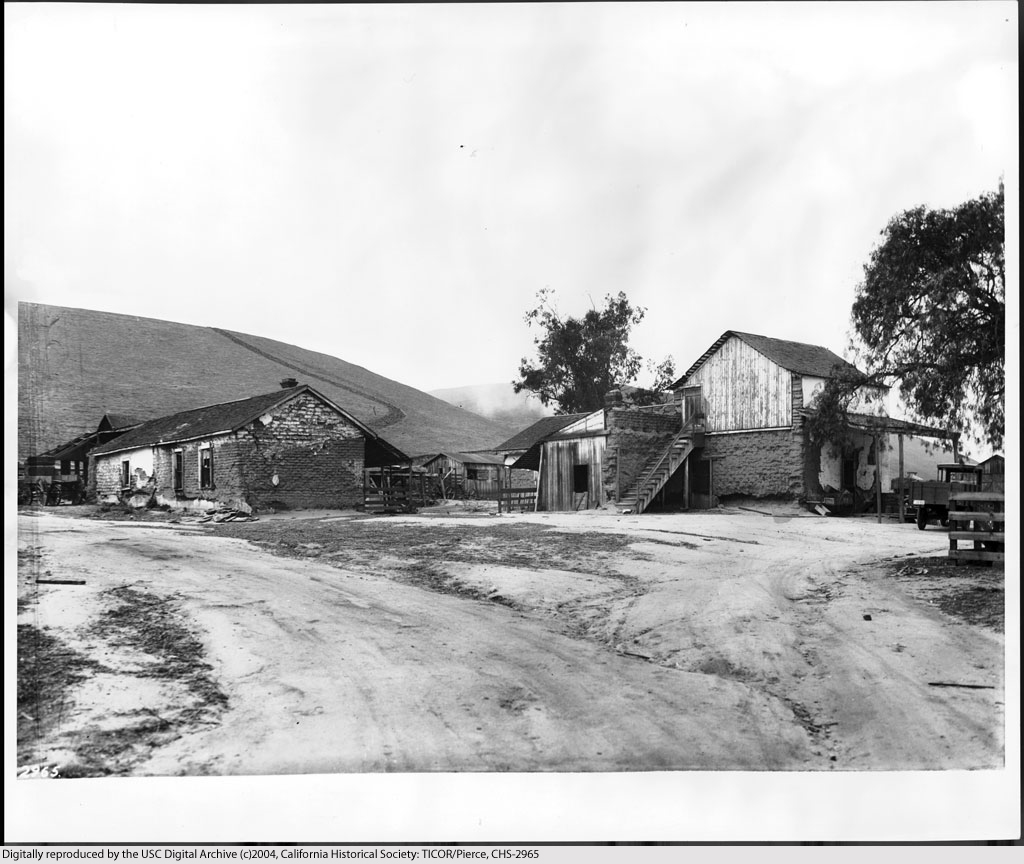
The former Baldwin Ranch, circa 1926. The Sanchez Adobe is the taller white building to the left of center.


Courtesy U.S.C. Digital Library.


Casa de Sanchez, ca. 1924. At this time, the house was already 130 years old.


Courtesy U.S.C. Digital Library.


Another view of the Sanchez house (right) in the 1920s. Does the adobe outbuilding at left still survive? A modern aerial view suggests a possibility that it may.


Courtesy U.S.C. Digital Library.


Only a few years later, the two-storey Sanchez house was incorporated into a much larger modern structure that still stands today at 3725 Don Felipe Drive.


Courtesy U.S.C. Digital Library.


Friday, June 15, 2012

Union Station, 1939

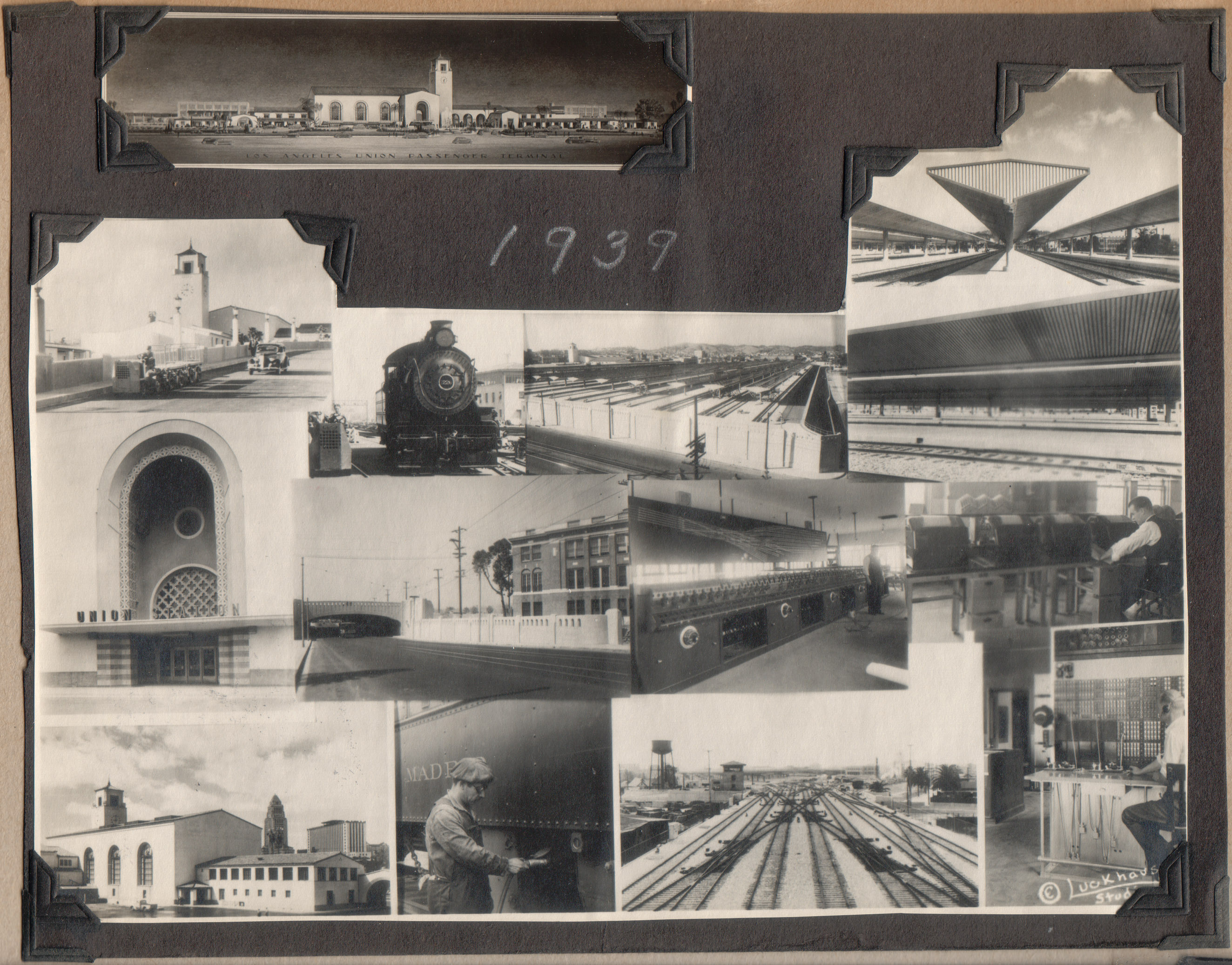
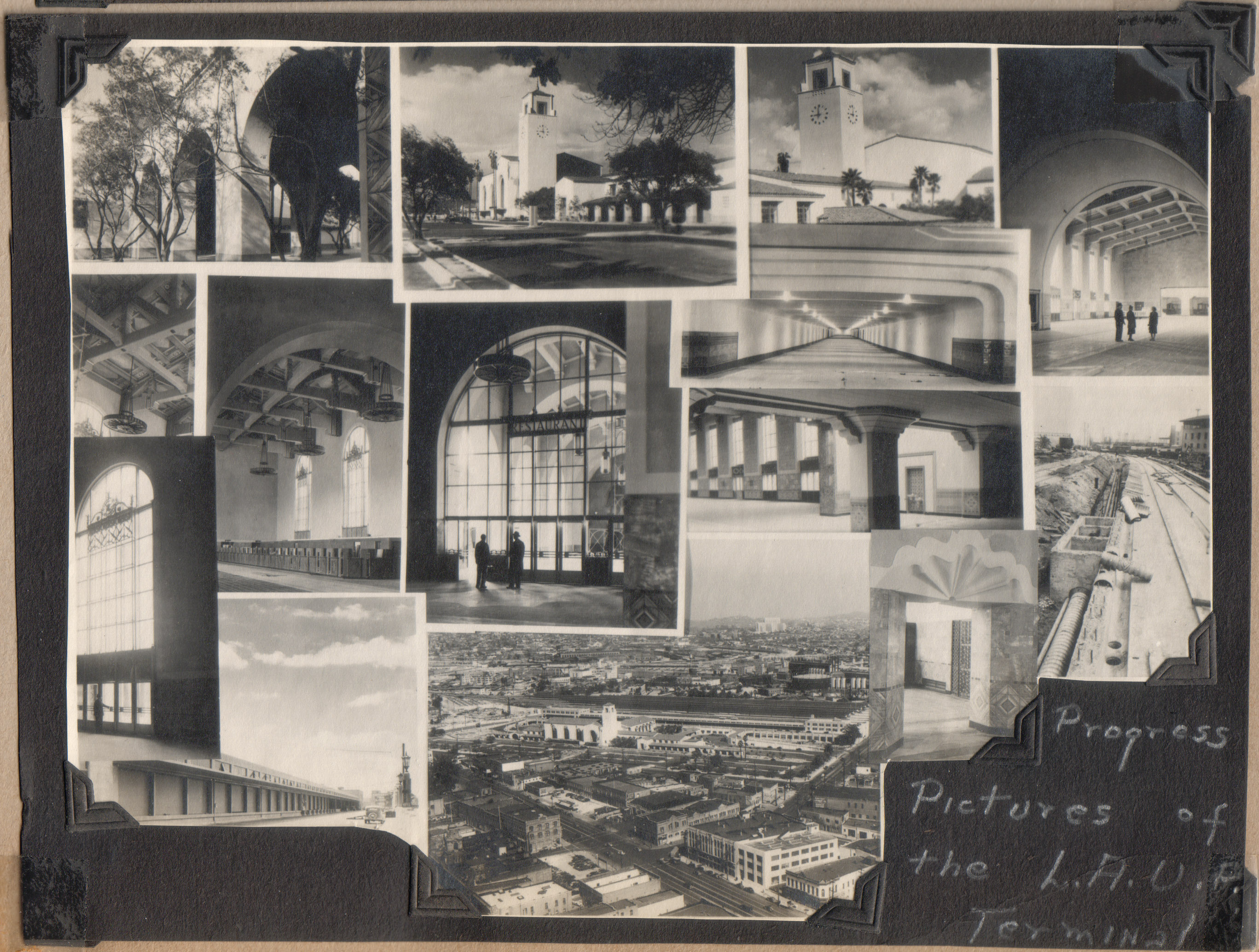
These two photo-montages are from our family album. They depict the Los Angeles Union Passenger Terminal in 1939, just prior to its official opening. I've never seen the likes of them in any online archive, so I'm guessing they may be rather rare images.


Click image for 300dpi enlargement. Link to Flickr page.


Click image for 300dpi enlargement. Link to Flickr page.


Sunday, August 28, 2011

The Baker Block


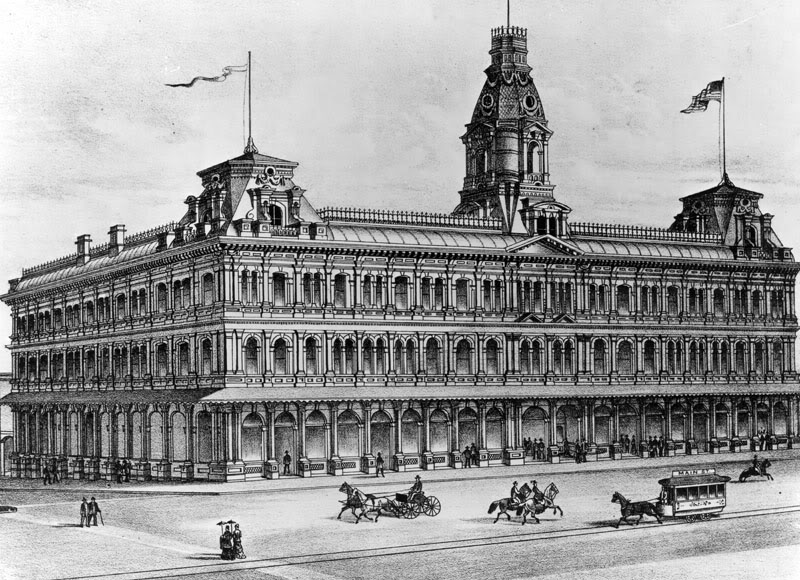
Los Angeles Public Library Photo Collection/Litho. C.L. Smith & Co., Oakland, CA.


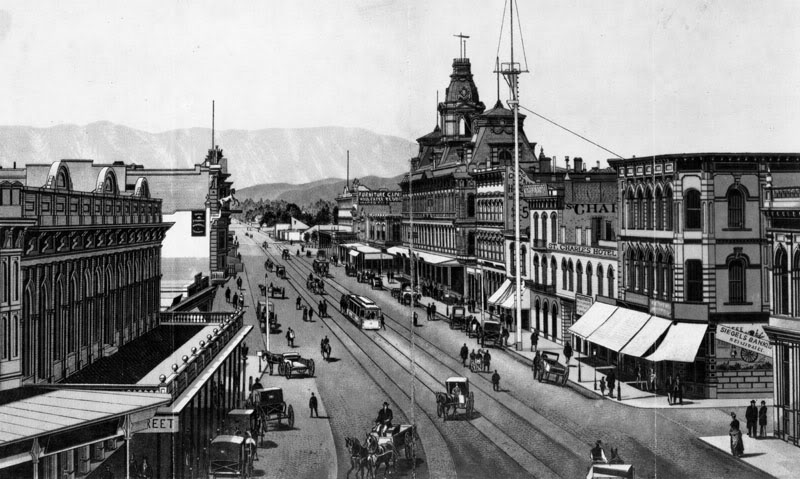
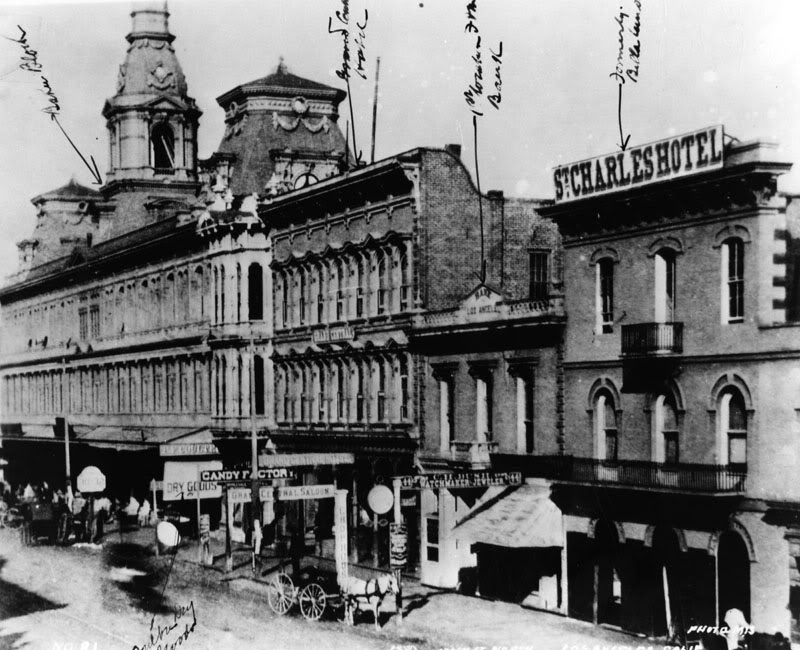
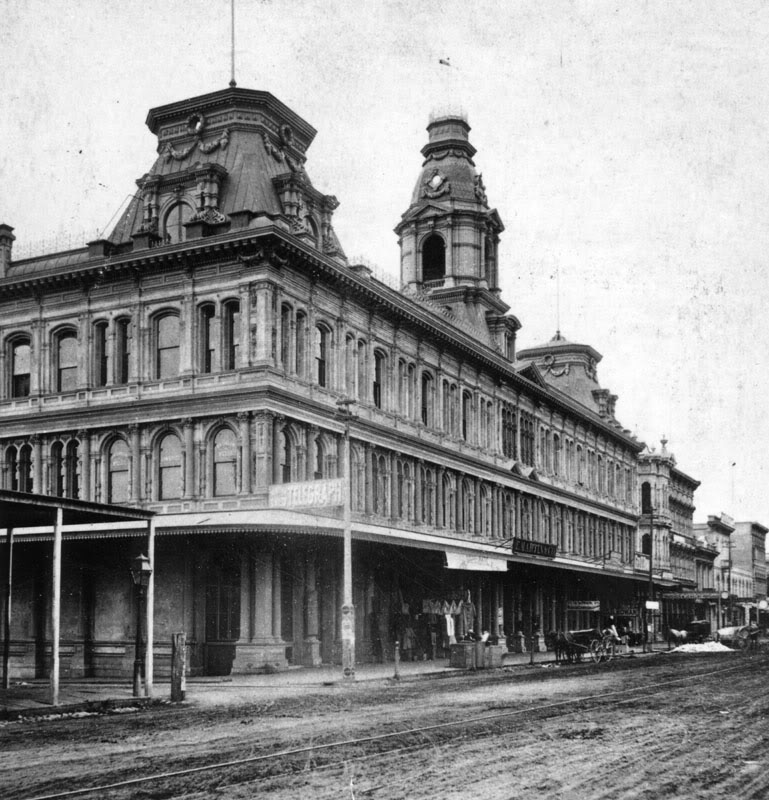
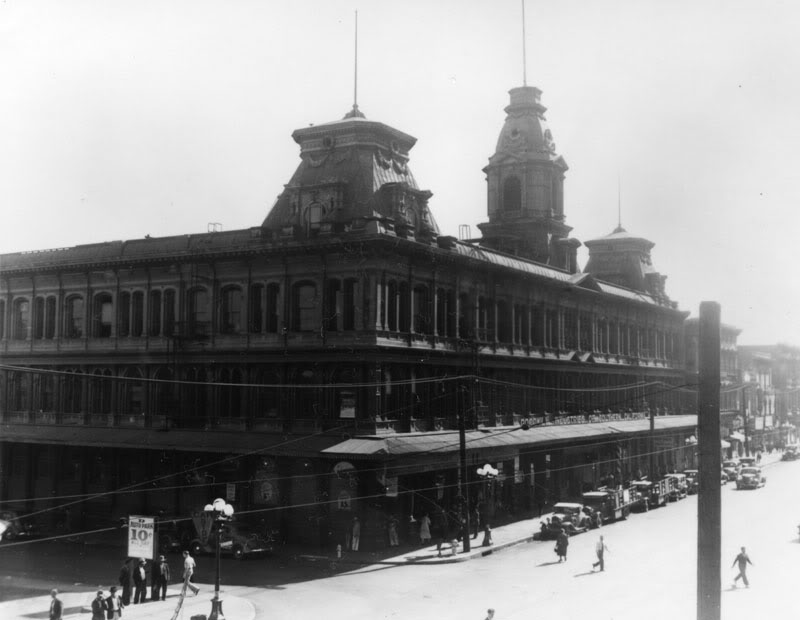
The Baker Block was the architectural showpiece of Los Angeles during the city's centennial decade. In a town still consisting mostly of simple frame houses and adobes, this palace of commerce must have been a truly wondrous apparition. Standing for 65 years – from c.1877-1942 – the Baker Block was located at the southeast corner of Main and Arcadia Sts., only a few hundred feet south of the original Pueblo de Los Angeles. An excellent summary of the history of the Baker Block can be found on Brian Hsu's Urban Diachrony weblog. Here are some pictures of this grand old edifice.

Main Street looking north from atop the Temple Block, c.1880; the Baker Block just right of center. (This vantage point is now occupied by City Hall.)


Los Angeles Public Library Photo Collection.


The uptown commercial heart of the old city, c.1880. The Baker Block at left, and the old Bella Union Hotel building at far right.


Los Angeles Public Library Photo Collection.


Southeast corner of Arcadia and Main Sts., 1880.


Los Angeles Public Library Photo Collection.


Fifty years later.


Los Angeles Public Library Photo Collection.


c.1920.


Los Angeles Public Library Photo Collection.


1938. There goes the neighborhood: the new Federal Building begins to rise across Main Street.


Los Angeles Public Library Photo Collection/Herman Schultheis, Photographer.


Not long for this world, c.1940.


Los Angeles Public Library Photo Collection.


Today, the 101 "Slot" runs right through the site where the Baker Block once stood...


Friday, September 24, 2010

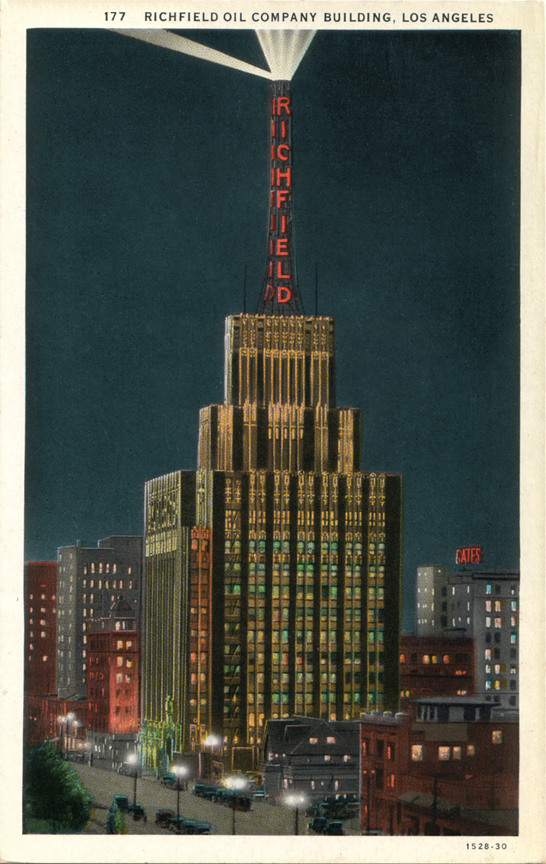
Richfield Kodachrome

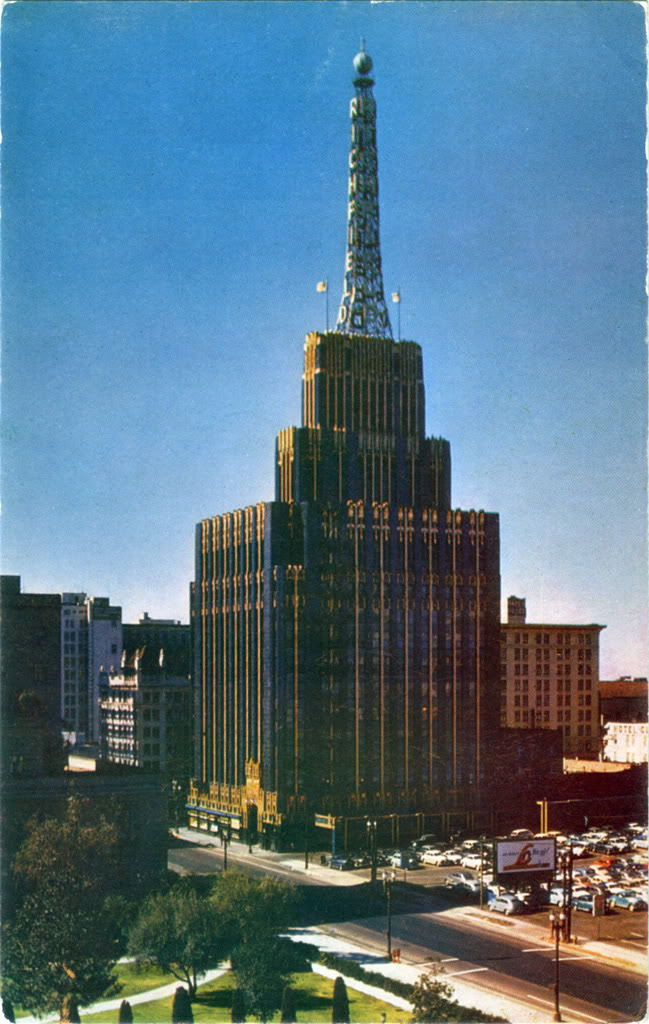
A mid-1950s Kodachrome postcard of the magnificent Richfield Building.


Can there be any doubt that this jewel was Los Angeles's single most grievous architectural loss of the 20th century?


Wednesday, November 4, 2009

The Bryson-Bonebrake Block

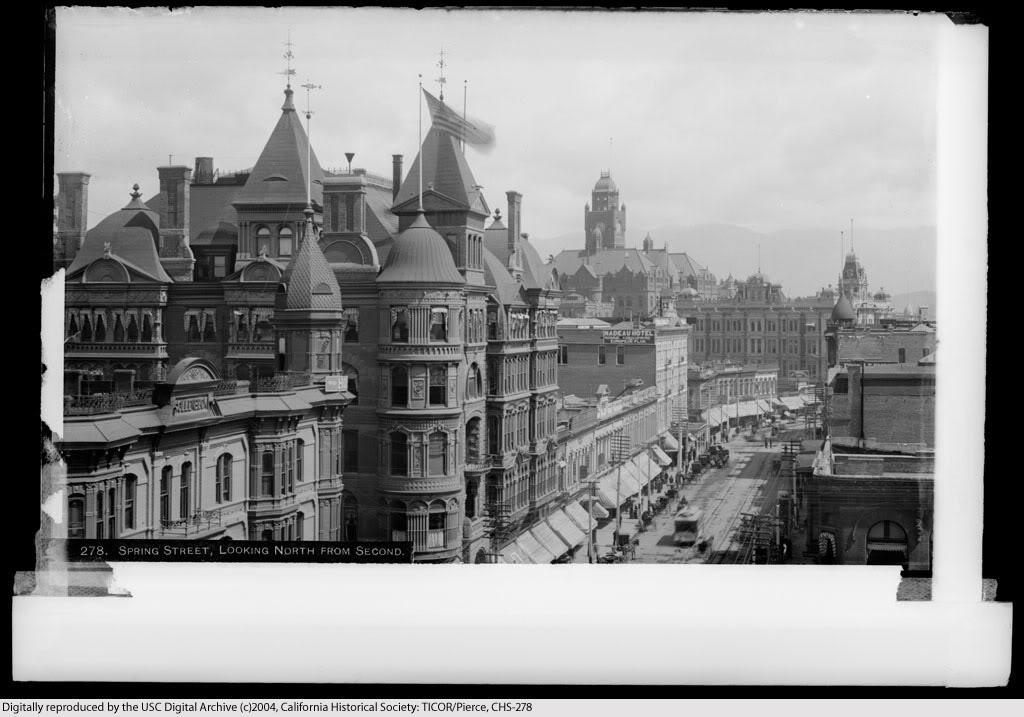
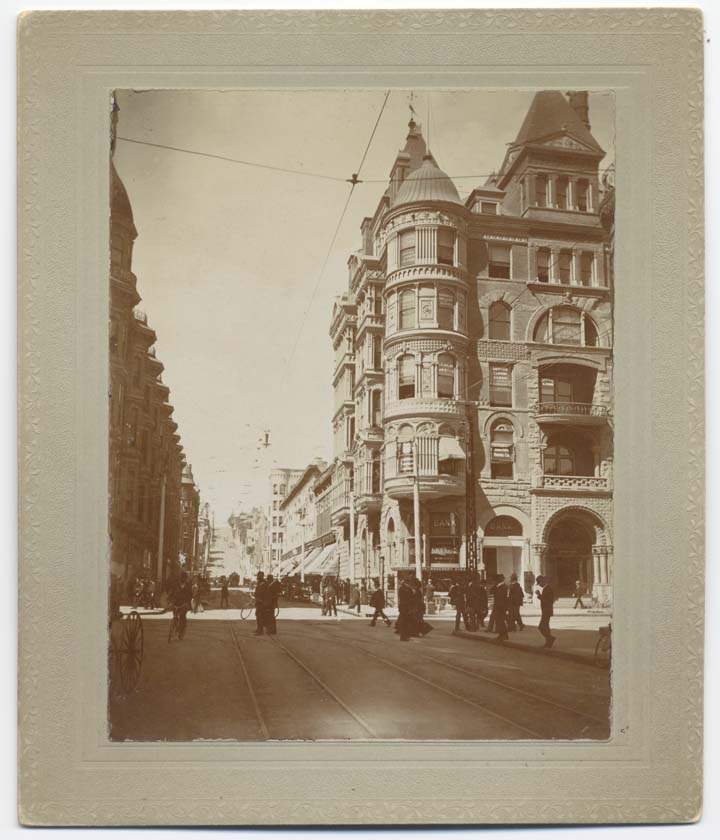
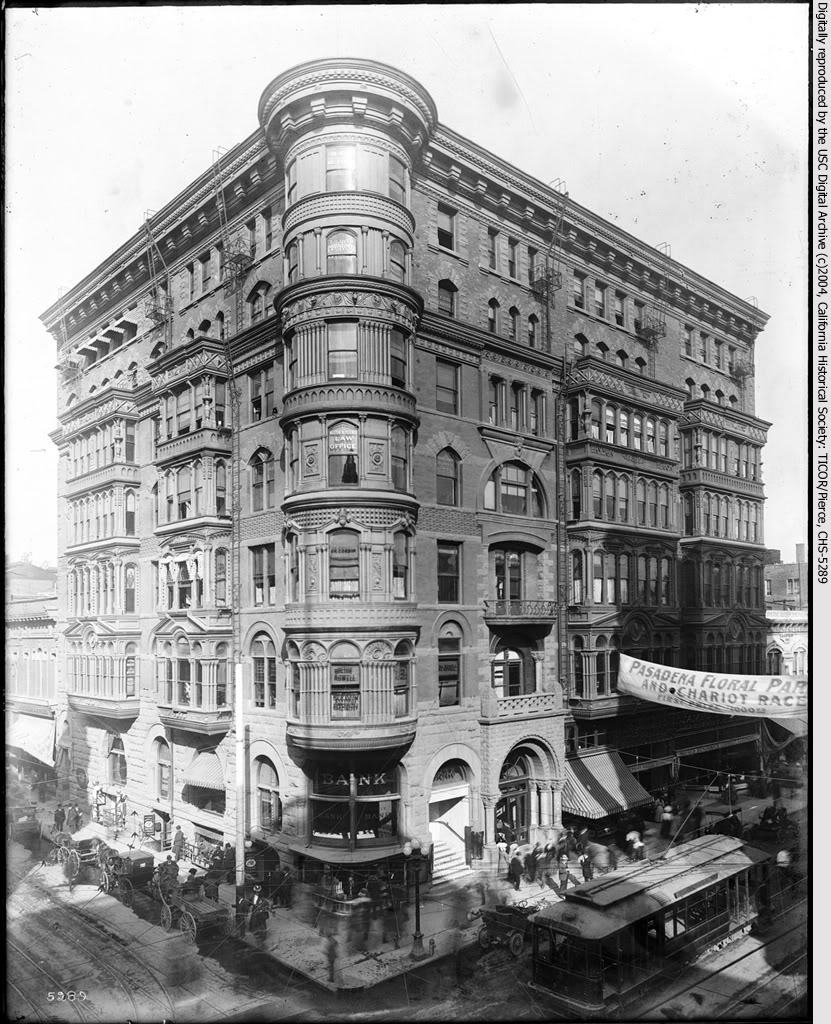
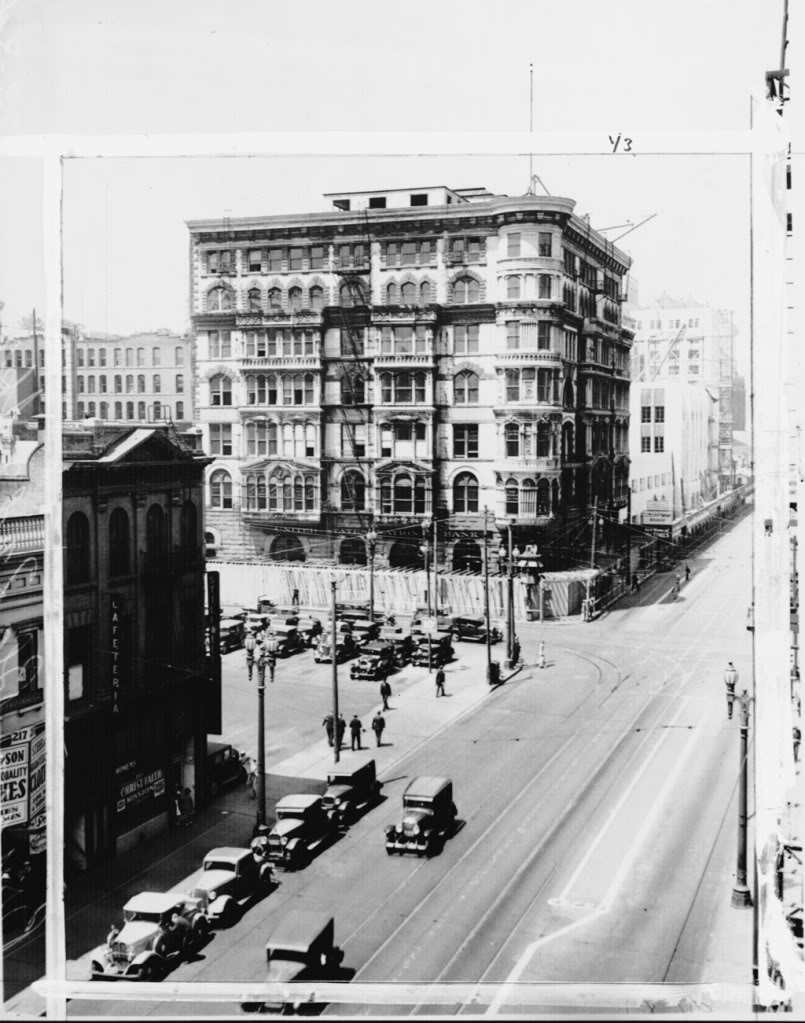
At the time of its construction in 1888, the Bryson-Bonebrake Block was without question the most attractive and architecturally-significant office building in Los Angeles.


Photo courtesy Floyd Bariscale on Flickr.


Floyd Bariscale quotes a contemporary source describing the new civic showpiece:

"Designed by Joseph Cather Newsom in 1888, located on the northwest corner on 2nd and Spring in Los Angles. From a 1981 reprint of J.C. Newsom's Artistic Buildings and Homes of Los Angeles:

'Bryson-Bonebrake Block, commissioned by John Bryson, Sr., Los Angeles Mayor, and Major George H. Bonebrake, banker, this huge office building was Newsom's most ambitious and commercial structure. The Los Angeles Times, September 17, 1888 reports: "At the corner of Second and Springs streets, is one of the largest and most substantial in Southern California, and is most ornamental in appearance. It is six stories and a basement in height, and will contain four stories, one bank, 126 rooms, and a lodgeroom on the sixth floor. It has 120 feet frontage on Spring street and 103 feet frontage on Second steet. The rooms are all large and well ventilated, and the halls are wide and lighted by light wells. The principal features of the building are the massive and elegantly carved stone entrance, with its beautifully grained Colton marble shafts, carved stone caps and base of Moorish design, and the court in the center of the building throwing light into the corridors and inner rooms. The steps of the entrance are of the best granite, and the entrance is tiled and has marble wainscoting. On one side is a large bulletin-board, and on the other a richly-carved staircase with marble steps... The interior of the building is finished in cedar, and the plumbing is of the best... All the offices are heated and lighted with gas, and there are electric bells from each room to the bulletin board on the first floor. The elevator runs from the basement to the sixth floor. There is a fine [sic] hose reel on each floor for use in case of fire. Its cost will be $224,000.'"


More 19th century views of the Bryson block...

Grand opening, 1888 - The Court House on Pound Cake Hill in the distance right of center was also constructed this same year. Also, note how Spring Street originally veered to the right after its intersection with First Street.


Courtesy U.S.C. Digital Library.


Looking west on Second Street from Spring.


Courtesy California State Library.


1905 - A nice close view showing the intricate exterior decorative elements of the Bryson block. Note that the entire original ornate top of the building has been removed and replaced by two additional storeys of offices.


Courtesy U.S.C. Digital Library.


1934 - Only 46 years after its construction, demolition of the Bryson block is underway. An annex building of the Los Angeles Times occupies the site today.


Courtesy U.S.C. Digital Library.


Thursday, July 30, 2009

Where Mother was: Then & Now

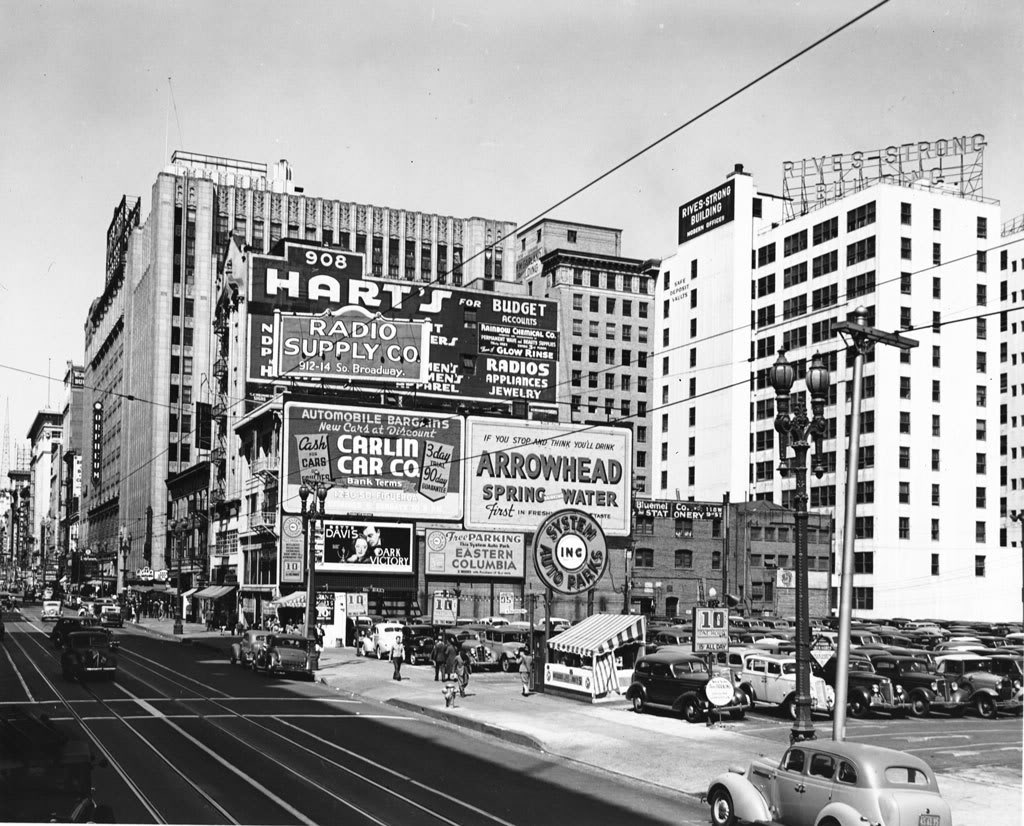
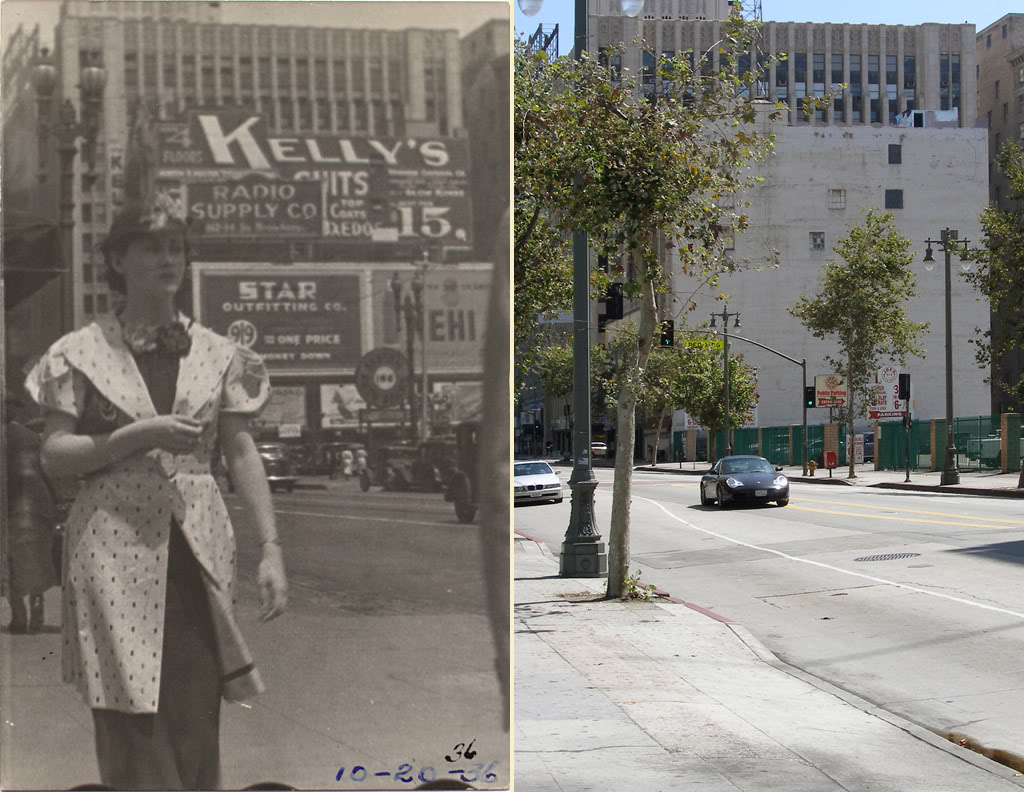
In this old post, I told the story of my mother having had her picture taken by a street photographer somewhere in downtown Los Angeles in 1936, when she was a 19-year-old secretary for the Huntington Land Company. Some time later, I finally identified the location of the picture as having been the 900 block of South Broadway. Here's a nice clear photo of the locale in 1939.


USC Digital Library-Dick Whittington Photography Collection.


Anyway, thereafter, I decided that if I ever went back to Los Angeles, I would like to visit the place where my mother was photographed, 73 years ago. And three Wednesdays ago, during my recent L.A. vacation, I did just that.

Here's the exact spot, then and now.


J Scott Shannon.


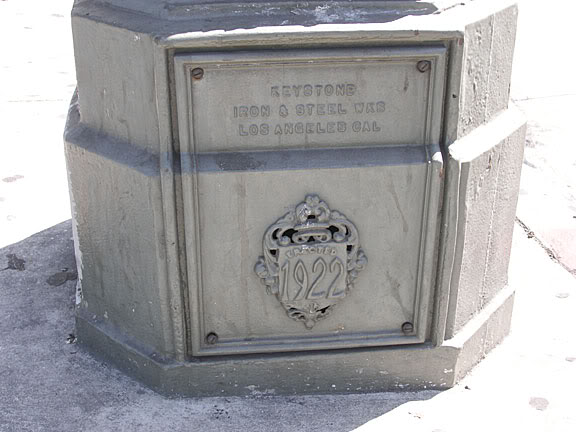
Remarkably, relatively little in the background has changed in the intervening seven decades. The two principal buildings visible in the old photograph are still there – the 9th and Broadway Building (1929), and the L.L. Burns Building (1914); the latter is the one with the "Kelly's" ad painted on its side. (No ads today – this section of Broadway is not in any way the commercial hotspot it used to be.) The lampposts are noticeably different in height and style, but the bases themselves are apparently the same ones as when Mother was there.


Photo by J Scott Shannon.


And where was Mom walking to that day in October, 1936? Probably to a trolley stop at the intersection of South Broadway and Olympic Blvd., which is only a few feet in back of where the 1936 photographer was standing.

Heh, it's funny, when I was there last week, I tried to show Mom's picture to several passers-by, but nobody could be bothered. Admittedly, if I were walking on South Broadway and some stranger asked if I'd like to see a picture of his mother, I'd probably avoid the guy, too. ;-)


Friday, July 10, 2009

City Hall rotunda

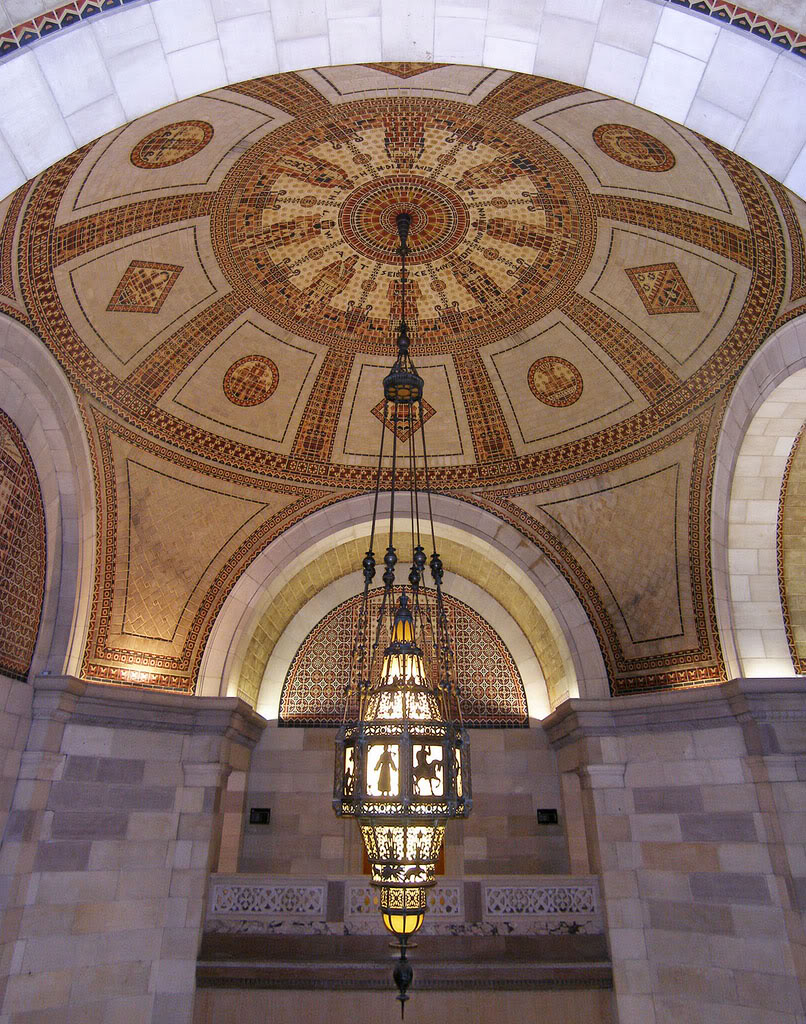
View of the central rotunda from the fourth floor inside Los Angeles City Hall, taken earlier today.


Photo by J Scott Shannon.


Monday, June 23, 2008

Rediscovering the "Willard" house

When I was a teenager, one of my favorite movies was the original Willard (1971), which was about a young man who befriended some rats that lived in and around his house. I liked the movie because I had so much in common with the protagonist, Willard Stiles. Willard was the son of a steel-industry man; so was I. Willard's mother was domineering and sickly, and demanded complete devotion. So did mine. Willard's working life was made a living hell by his duplicitous general manager and harassing co-workers. Mine, too. And, as I did, Willard turned to the companionship of animals as a psychic refuge from his tortured daily existence.

Fast forward ten years. I was working for my father's company at the time, and I had a business appointment in the Wilshire district across town. That office turned out to be in a grand old Victorian mansion, the likes of which were rarely seen anymore, especially right off Wilshire Boulevard, which was one of the most heavily developed (and re-developed) streets in West Los Angeles in the mid-20th century.

Anyway, I trotted up the front steps, opened up the huge carved wooden door, and stepped inside. Right away I saw it wasn't just one office, but many. I walked through the main hall seeing a large parlor then a large dining room to my left. To my right was a grand staircase. Then, as I spotted the office I was looking for at the end of the entry hall, it struck me.

I've been here before.

But no, no way. I'd never been in this house, obviously. But that front room, the room next to it, that staircase. Wow! This is the Willard house! Talk about a chill running up my spine! I was completely dumbstruck. I walked through a doorway on the far side of the main room, and there, again, to my right was another staircase – Willard's mother's staircase, the one in the movie that had the invalid's escalator chair on it. And the office my appointment was in was in the former kitchen, where Willard prepared the poison for Ben and the rest of the rats!
This was almost too much.

As soon as I introduced myself to my business associate, I asked, "Is this the house where they filmed Willard? "Yes! How did you know that?" "I just walked in and I recognized it from the movie." Then I looked out the back windows, and there was the overgrown garden and the cement pond, again, just like it was in the film.

(As an aside, there was another memorable thing about that office. It was the first time I ever saw a computer used in a work environment – and it was an Apple II, of course. ^^)

Anyway, in July, 2009, I got to see the old mansion again, though only from the outside. Oh well, I'm quite content with my memories as they are. Nothing could re-create the surprise of that initial visit!


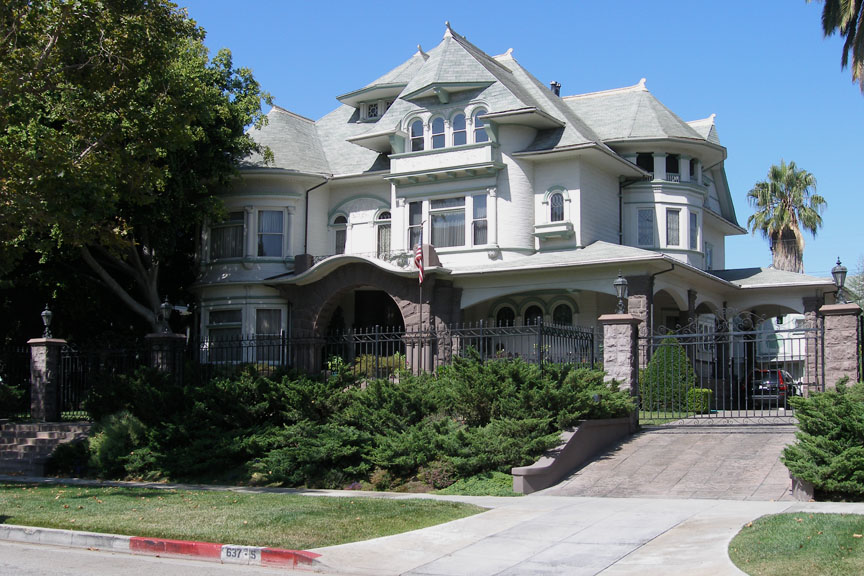
The Higgins-Verbeck-Hirsch mansion, 637 S. Lucerne Blvd., Los Angeles. Photo by J Scott Shannon.


Monday, May 12, 2008

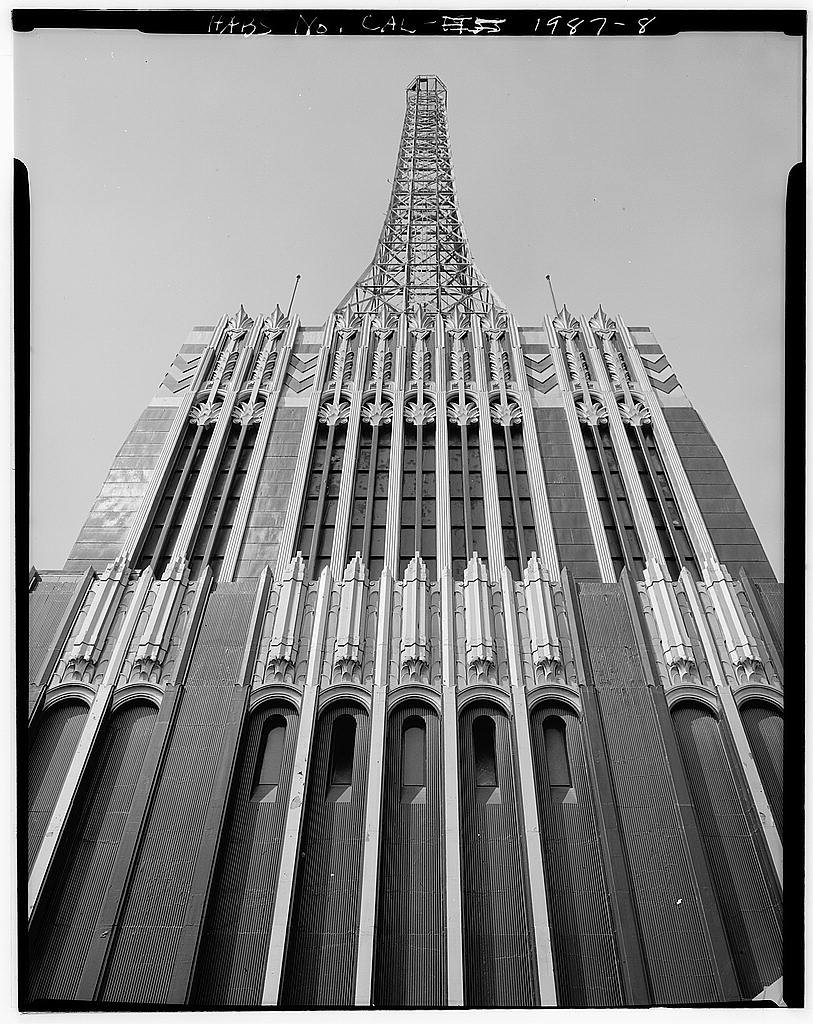
The Richfield Building

I'm in love again! ;-) This time with the Richfield Building (1928-1968), formerly located at 6th and Flower, Los Angeles. Unquestionably, the most elegant Art Deco skyscraper ever built west of the Mississippi. Its intricate, sculpted exterior was adorned with terra cotta tiles of black, burnished gold and turquoise. It rose 500 feet from street level to the top of its stainless steel neon tower.


I was alive and living in L.A. County during the last fourteen years of the building's existence, but unfortunately, I have no memory of it whatsoever. Not too surprising, considering its location, because Mother hated the adjacent Harbor Freeway and avoided it whenever possible. So near and yet so far...


Library of Congress-Historic American Buildings Survey.


Library of Congress-Historic American Buildings Survey.


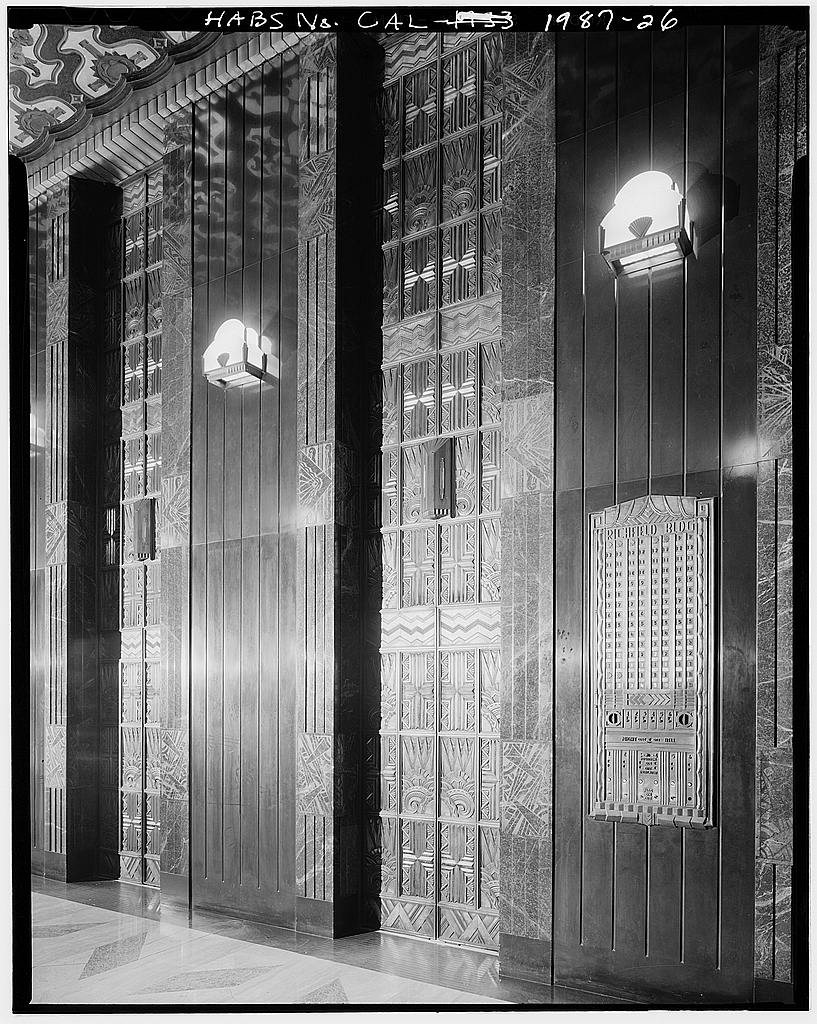
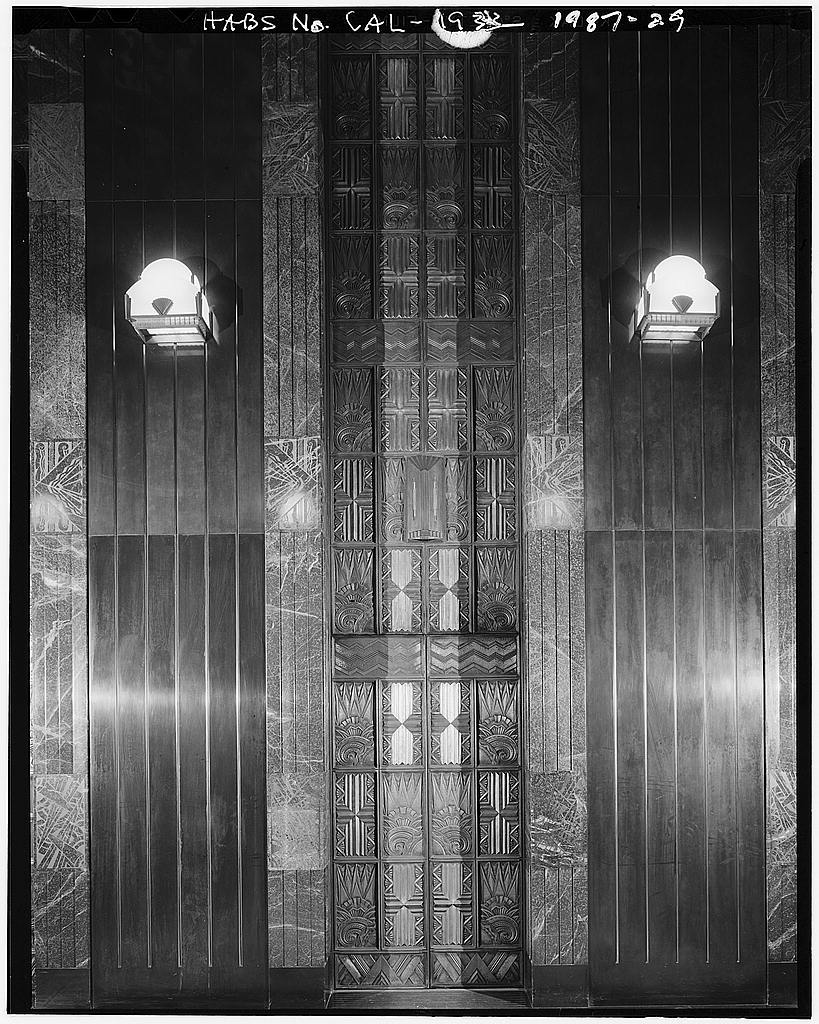
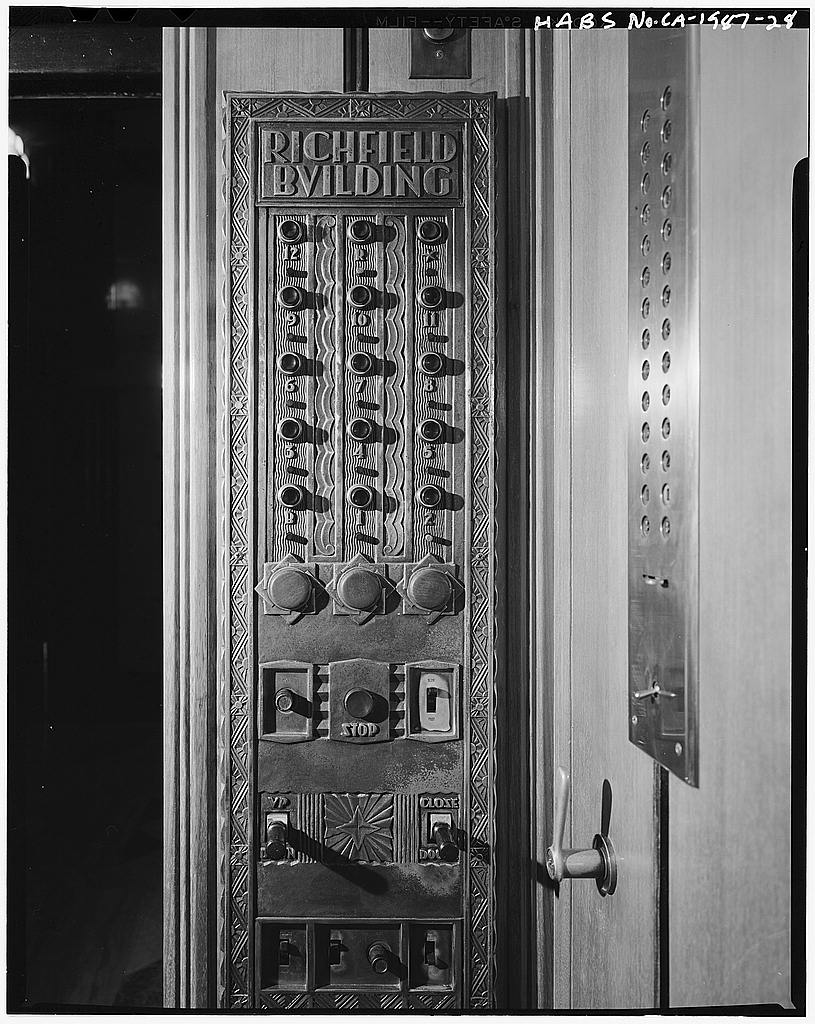
Even its elevators were Deco design jewels:


Library of Congress-Historic American Buildings Survey.


Library of Congress-Historic American Buildings Survey.


Library of Congress-Historic American Buildings Survey.


Sadly for architecture buffs like me, after Richfield Oil merged with Atlantic Petroleum to form ARCO in 1966, the Richfield headquarters in Los Angeles was deemed redundant. It was torn down in 1968-1969, and replaced by the impossibly drab twin ARCO Towers in 1970.


Los Angeles Public Library.


Bleah. :-p

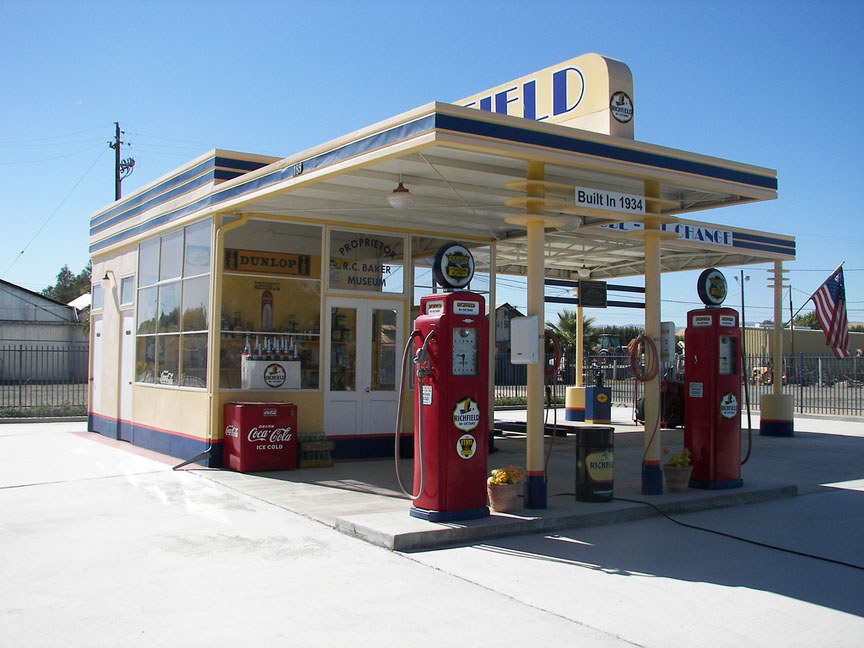
Aside: here is a restored Richfield service station (1934). Richfield's service stations of the time were also tastefully designed... simple but stylish.


Courtesy C. V. Dusty on Flickr.


Sunday, February 17, 2008

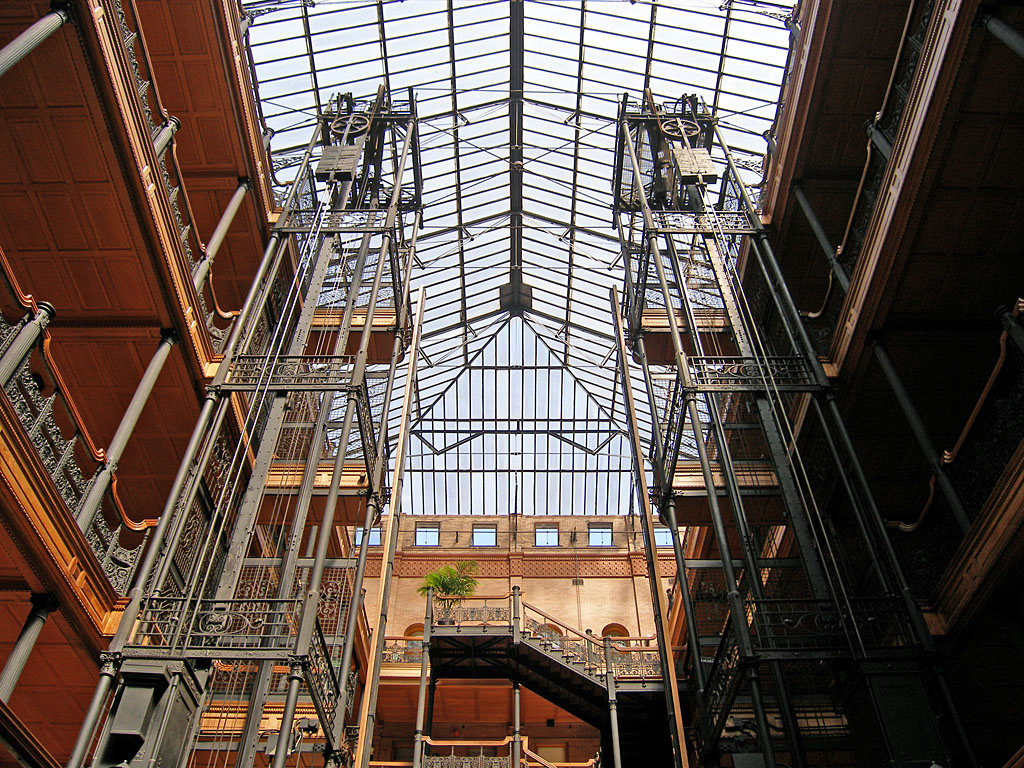
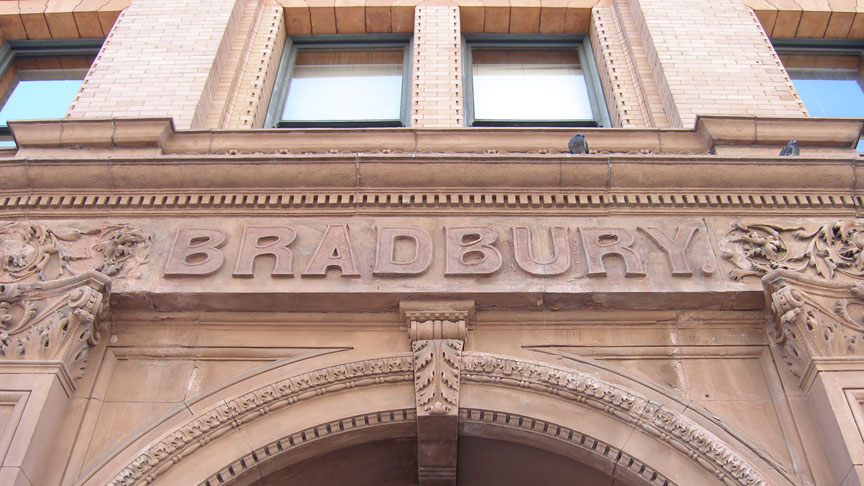
The Bradbury Building


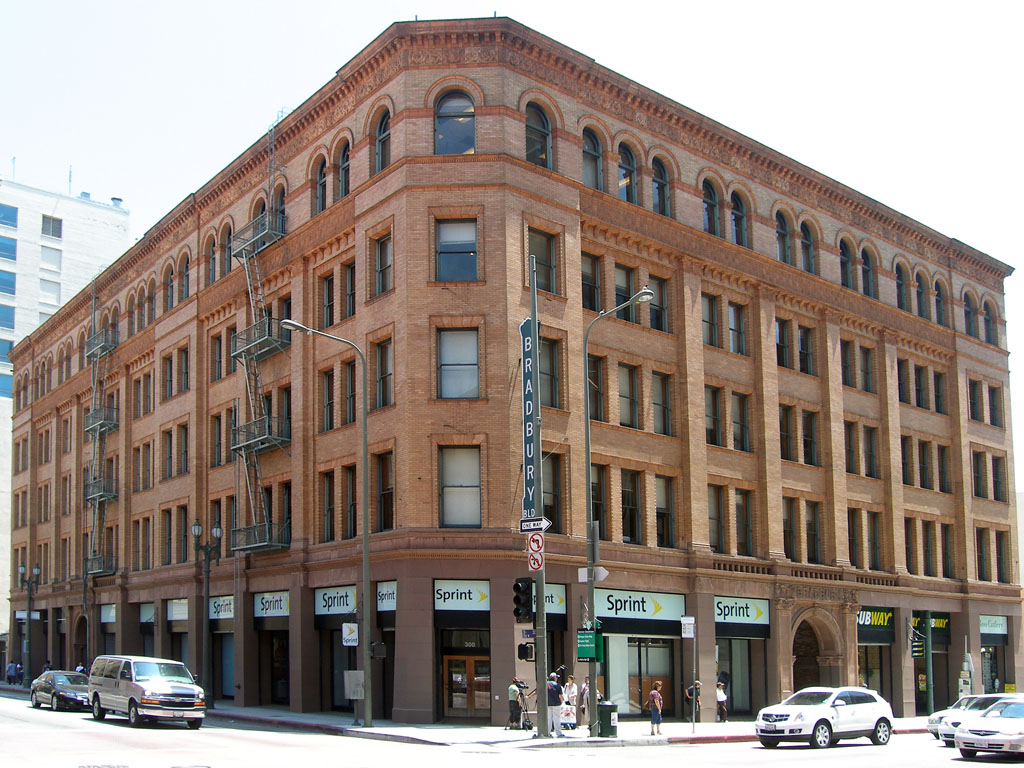
Photo by J Scott Shannon.


Right after you got your driver's license, where was the very first place you drove to on your own? Do you remember? I sure do! As soon as I could talk my dad into loaning me his car for a day, of all places, I went here – to the Bradbury Building, at 304 S. Broadway in Los Angeles. I couldn't wait to see this place with my own eyes. I was 16 years old then, and the Bradbury Building was, at least in an architectural sense, my first love...


Photo by J Scott Shannon.

I'd learned about the Bradbury Building via a favorite TV show called "Ralph Story's Los Angeles," and what I saw really struck a chord in me. For starters, I could hardly believe such an old building still existed in Los Angeles (it was built in 1889-1893). I'd grown up in the L.A. area and I never heard of the place before, and neither had my parents, both of whom had lived most of their lives in the southland.

Just to look at it, though, you can understand why the Bradbury Building didn't attract a lot of attention. It doesn't appear to be anything special at all from the outside. It's the interior design of the place that sets it apart from all others of its time, and still makes it a standout to this day...

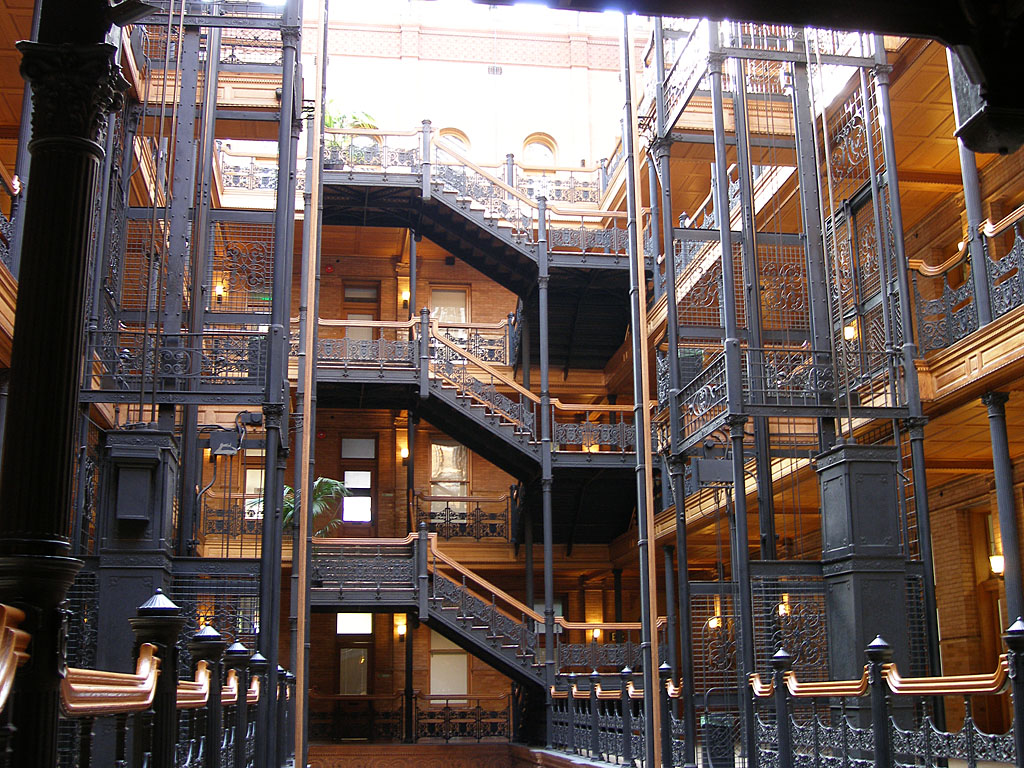
Introducing the world's first modern open atrium office building.


Photo by J Scott Shannon.


Photo by J Scott Shannon.


Heh. Are you thinking maybe you've seen this interior space before? Well, you probably have! (It was J.F. Sebastian's apartment building in Blade Runner.) :-)

I remember the day so well – I'd dragged my friend Gary along for the ride, and it being a Saturday, we had the whole building essentially to ourselves. It was great! We went up and down one of the ancient elevators at least twice. (It was surprisingly quiet, as I recall.)

*sighs* I always wanted to be an architect when I was growing up, but my teachers and counselors finally convinced me that I didn't have the math or art skills to be good at it. (Thanks a bunch, folks.) I should have just gone ahead and done it anyway. I know now I could have been great. I've always had an eye for beauty in buildings. By and large, I'm very disappointed with the quality of the architecture my generation has produced. I know I'd've done a lot better if I'd had the chance...


Thursday, February 9, 2006

Mystery postcard

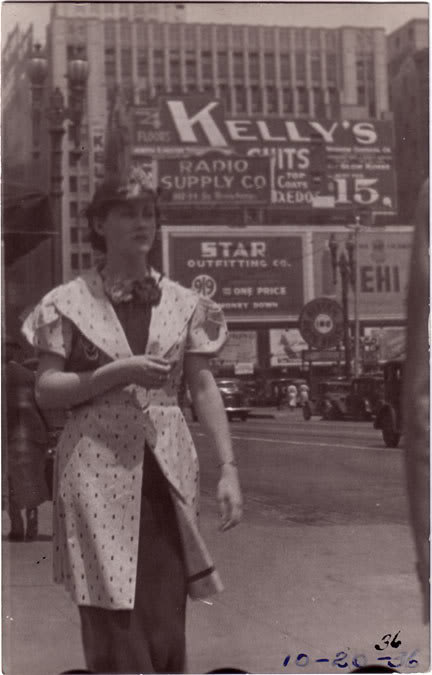
This is a "Real Photo" postcard of my mother snapped by a street photographer somewhere in downtown Los Angeles in October, 1936. Mom would have been 19 years old then; a secretary at the Huntington Land Company.


I've wondered about this picture for years. Where exactly was it taken, and what's that almost Stalin-esque building in the background? Adding to the mystery is: I remember this place. My mom used to take me on shopping trips there when I was around 5 years old, which means this place-in-time still existed at least until the late-'50s. Can anybody tell me where in town this is/was, and perhaps help me to finally put this ghost memory to rest?

I'm always struck by Mother's appearance here. She's so young, so self-assured, and so fashionable. Even at that young age, the personal poise she was known for all her life was already in full flower.

And I wouldn't be born for another 18 years...


EDIT, May 17, 2008: Mystery solved! I actually figured out the location a while back, but now I can show you proof positive, thanks to this recent postcard acquisition...

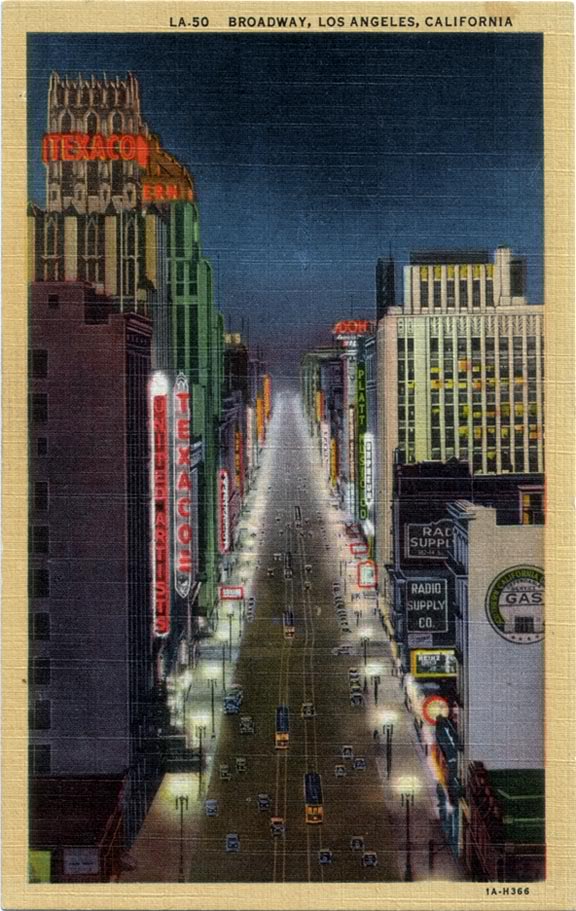
Mother was walking south on the west sidewalk of the 900 block of South Broadway in Los Angeles. Here's a contemporaneous postcard view of this stretch of Broadway at night:


On the right, there's the Radio Supply Co. with the "Stalin-esque" building behind it. That edifice turns out to be the actually rather beautiful Ninth and Broadway Building, built in 1929.

So, hurrah! I've also now even been able to pinpoint within about 50 feet exactly where Mom was on the sidewalk when the picture was taken. I'll leave that for a later post, though. :)