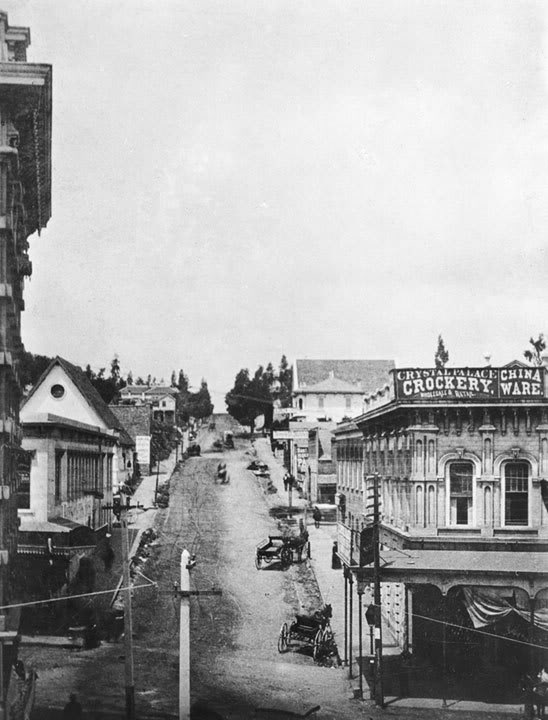
A vanished city lives again...

Monday, June 23, 2008

Rediscovering the "Willard" house

When I was a teenager, one of my favorite movies was the original Willard (1971), which was about a young man who befriended some rats that lived in and around his house. I liked the movie because I had so much in common with the protagonist, Willard Stiles. Willard was the son of a steel-industry man; so was I. Willard's mother was domineering and sickly, and demanded complete devotion. So did mine. Willard's working life was made a living hell by his duplicitous general manager and harassing co-workers. Mine, too. And, as I did, Willard turned to the companionship of animals as a psychic refuge from his tortured daily existence.

Fast forward ten years. I was working for my father's company at the time, and I had a business appointment in the Wilshire district across town. That office turned out to be in a grand old Victorian mansion, the likes of which were rarely seen anymore, especially right off Wilshire Boulevard, which was one of the most heavily developed (and re-developed) streets in West Los Angeles in the mid-20th century.

Anyway, I trotted up the front steps, opened up the huge carved wooden door, and stepped inside. Right away I saw it wasn't just one office, but many. I walked through the main hall seeing a large parlor then a large dining room to my left. To my right was a grand staircase. Then, as I spotted the office I was looking for at the end of the entry hall, it struck me.

I've been here before.

But no, no way. I'd never been in this house, obviously. But that front room, the room next to it, that staircase. Wow! This is the Willard house! Talk about a chill running up my spine! I was completely dumbstruck. I walked through a doorway on the far side of the main room, and there, again, to my right was another staircase – Willard's mother's staircase, the one in the movie that had the invalid's escalator chair on it. And the office my appointment was in was in the former kitchen, where Willard prepared the poison for Ben and the rest of the rats!

This was almost too much.

As soon as I introduced myself to my business associate, I asked, "Is this the house where they filmed Willard? "Yes! How did you know that?" "I just walked in and I recognized it from the movie." Then I looked out the back windows, and there was the overgrown garden and the cement pond, again, just like it was in the film.

(As an aside, there was another memorable thing about that office. It was the first time I ever saw a computer used in a work environment – and it was an Apple II, of course. ^^)

Anyway, in July, 2009, I got to see the old mansion again, though only from the outside. Oh well, I'm quite content with my memories as they are. Nothing could re-create the surprise of that initial visit!
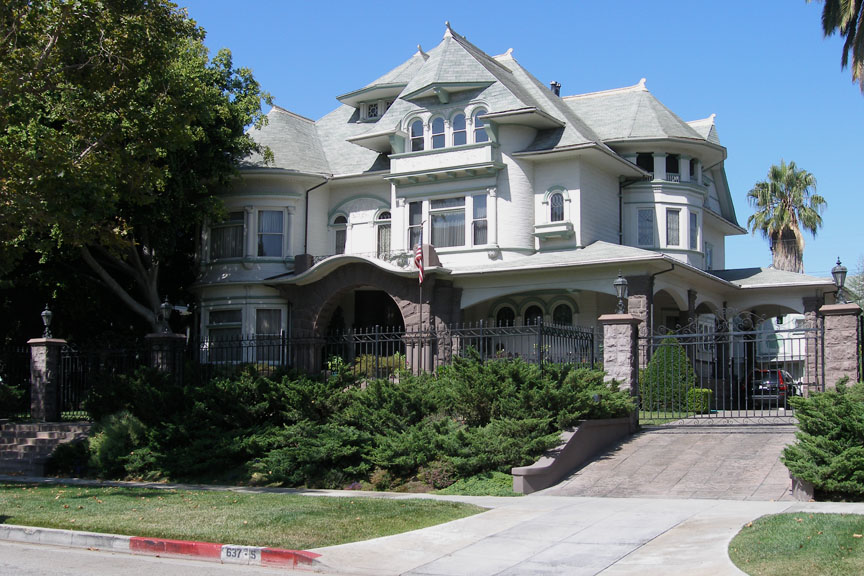

The Higgins-Verbeck-Hirsch mansion, 637 S. Lucerne Blvd., Los Angeles. Photo by J Scott Shannon.

 

Friday, June 13, 2008

Origin of an obsession


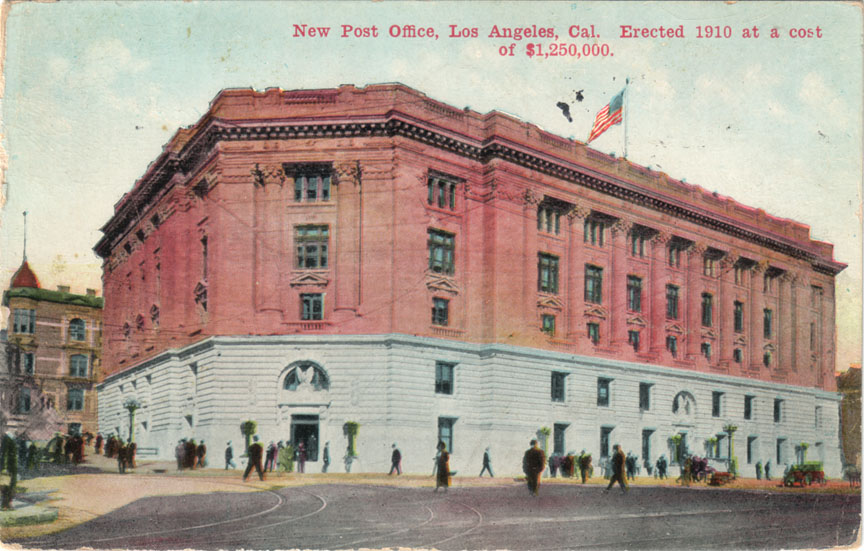
It was this building and this shabby old postcard of it that planted the seeds of my present obsession with pre-WWII Los Angeles.

It's kind of a long story, but I'll try to make short work of it. Back in late 2007, while browsing the Panoramic Maps collection on the Library of Congress website, I found a number of "bird's eye" views of old L.A. I'll never forget my reaction upon seeing them for the first time.

"I don't recognize anything here."

The two maps which most caught my eye were both dated 1909. They were the most detailed, by far. After searching them for a while, I finally found something familiar: the Bradbury Building at Broadway and Third. OK, now that I had my bearings, I kept scanning the maps and found what looked like a civic center: a Hall of Records and a Court House. And, nearby, a large Post Office. Strange thing, though. The two maps had two completely different drawings of that building. Which was the correct one?

A cursory web search proved fruitless, so, just on a whim, I searched eBay for 'los angeles post office', and up came this single postcard. The image was striking and completely unfamiliar. Surely if this building were still standing when I was growing up in the L.A. area, I would have remembered it.

But if such an expensive and ornate edifice – which was clearly meant to endure as a civic monument into the ages – was gone by the time I was born, what happened to it? Well, after studying the more-accurate 1909 map a bit more, I saw why. The old post office was located very close to where the 101 freeway "slot" would be constructed in the 1940s. No wonder everything in that vicinity was gone now...

At that point, I really wanted to find out what that part of town looked like back in the day. Googling again, I queried about the post office's location – Temple and Main Streets – and voilĂ , I found a Blogger entry by a "lastraphanger" entitled "Temple and Main Streets: What Used to be Here." Wow! With both text and photos, this guy answered every question I had about the locale and much much more. I was utterly fascinated by his descriptions of this vanished part of old Los Angeles, and upon searching his blog further, I was delighted to find an absolute wealth of new information there.

So I became an ardent reader of this anonymous person's weblog. Practically every day, I learned more and more about this L.A. I never knew. Unfortunately, less than two months after I found lastraphanger's blog, he moved on in life and deleted it. To this day, I lament the loss of that important historical document...

However, that loss ultimately proved beneficial, because since I no longer had someone else to rely upon to tell me about the history of old L.A., I had to dig up the knowledge I sought by myself. Back when I was a college student, I loved literature searches, and thanks to the various online archives and the wealth of information they contain, I quickly became adept at finding my own answers to practically every aspect of old L.A. that I was curious about. The result is what you see here in my blog today!


*smiles* I still remain rather fixated on that old post office, though. As with everything else about the vanished city, the more I find out about it, the more fascinated I become. Anyway, I will definitely have a lot more to say about this building when its centennial arrives in 2010. Trust me, it will be a tale well worth the telling!


Thursday, May 29, 2008

Third Street at Hill: Then, Then, Then and Now

Within a span of only two lifetimes, one street intersection in Los Angeles undergoes an almost unimaginable series of transformations...

c.1890:


Courtesy U.S.C. Digital Library.

c.1935:


Courtesy Los Angeles Public Library.

1978:


Photo by William Reagh, Courtesy California State Library.

Today:


Photo by J Scott Shannon.
 

Saturday, May 17, 2008

The other Wrigley Field

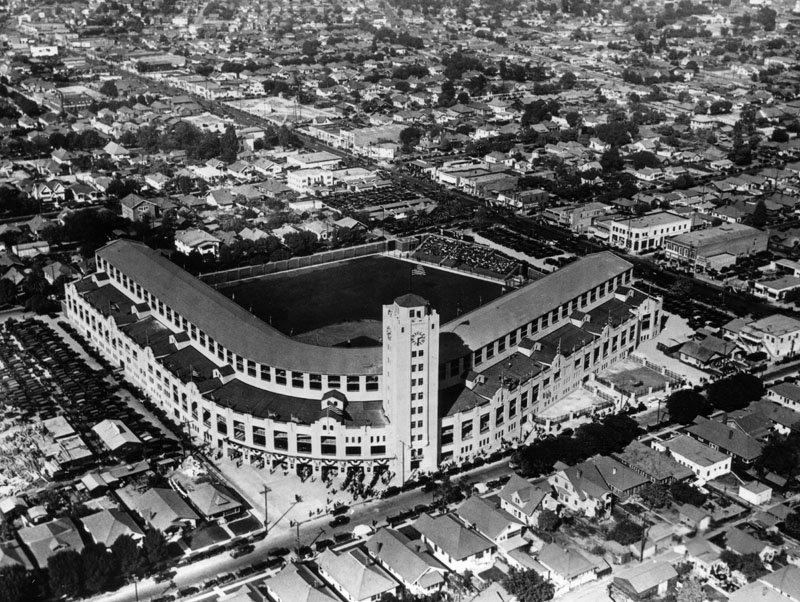
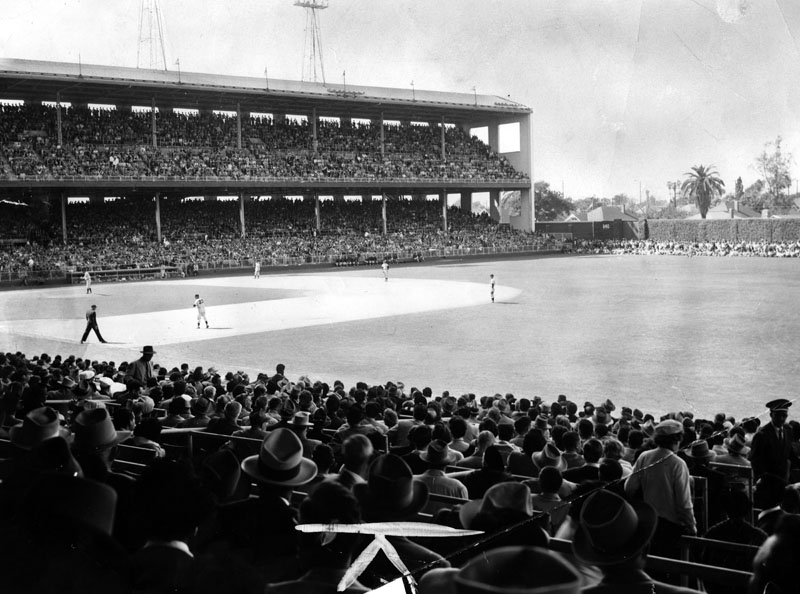
Several times, I remember Dad telling me about the other Wrigley Field, the one in Los Angeles: original home of the Los Angeles Angels (Pacific Coast League, 1925-1957; American League, 1961). I'd never seen pictures of it before now, though.


Courtesy Los Angeles Public Library.


Located at 42nd Place and San Pedro Street, California's Wrigley Field opened in 1925.


Courtesy U.S.C. Digital Library.


Courtesy Los Angeles Public Library.


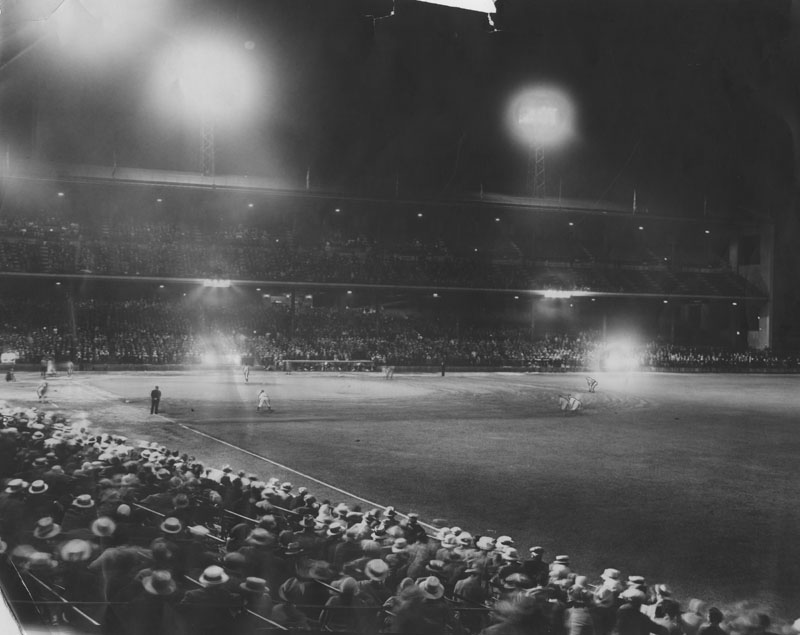
This Wrigley Field got its lights in 1930. Its namesake in Chicago would have to wait another 58 years for night baseball.


Courtesy Los Angeles Public Library.


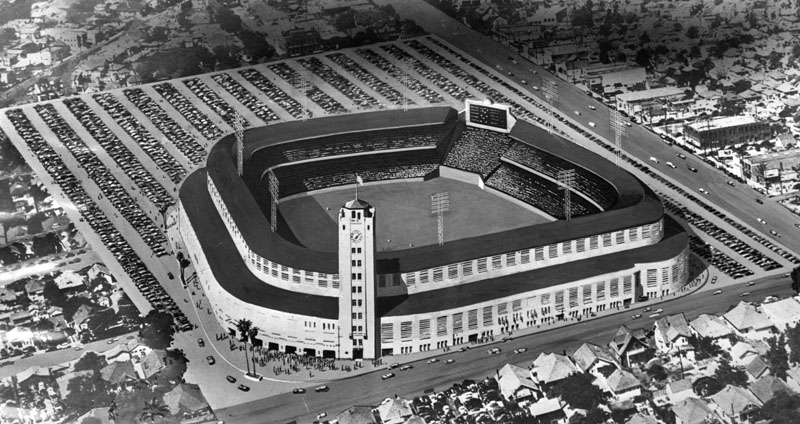
It was initially proposed that the Dodgers would play here after relocating from Brooklyn. This concept drawing from 1957 depicted proposed improvements to turn Wrigley Field into a major league park. Instead, it met the wrecking ball in 1966.


Courtesy Los Angeles Public Library.


Thursday, May 15, 2008

Temple and Main Streets, Los Angeles: Then and Now

The civic center of Los Angeles in three centuries...

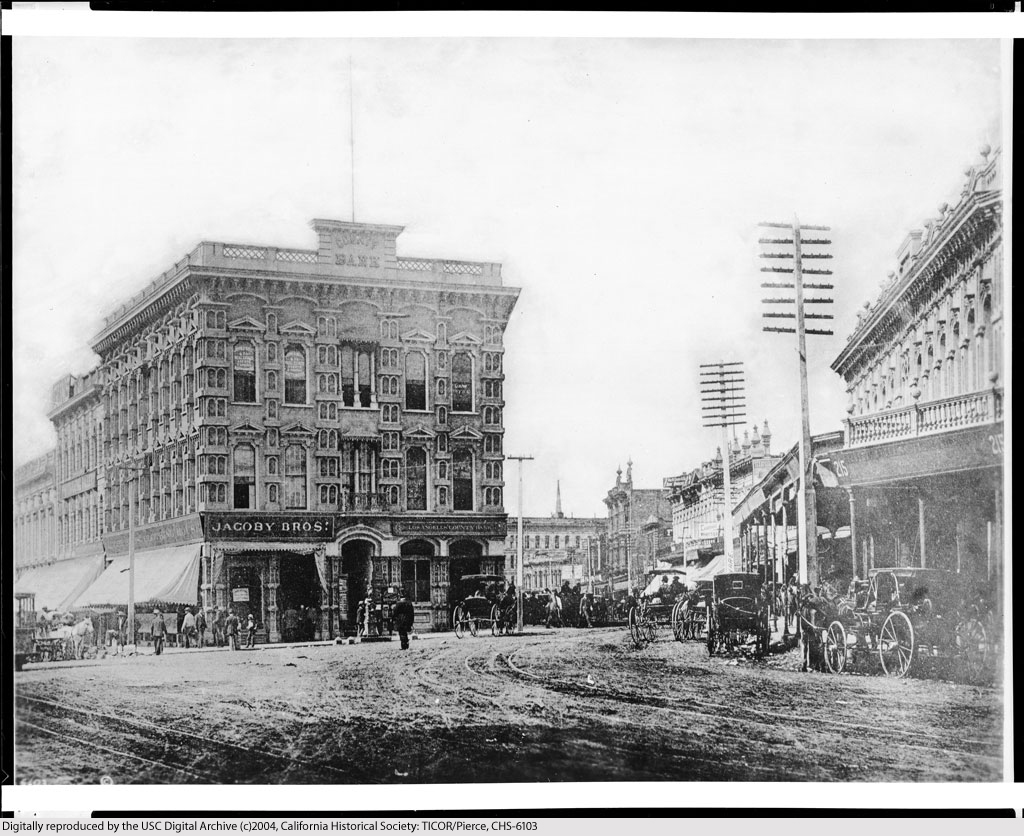
Temple Square – the heart of the city, 1885 – at the intersection of Temple, Main and Spring Streets:


USC Digital Archive.


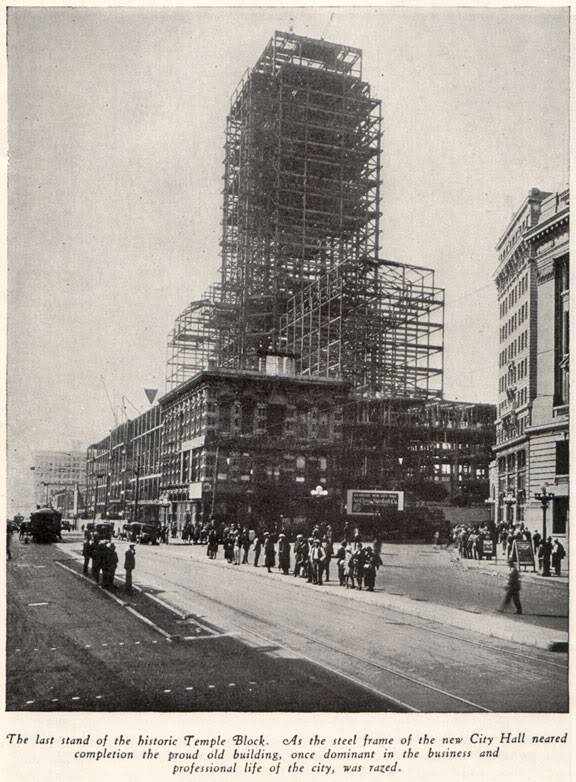
Temple Square, 1927. The new City Hall looms over the doomed Temple Block:


Photo from La Reina - Los Angeles in Three Centuries, Published by Security Trust & Savings Bank, Los Angeles, 1929.


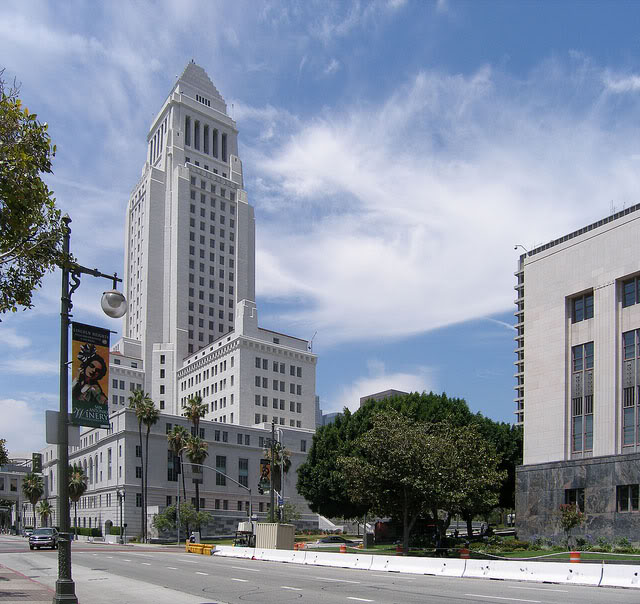
Temple and Main Streets, today:


Photo by J Scott Shannon.

The Temple Block was the ornate 3-storey brick structure in the older photos. It was the hub of civil life in Los Angeles during the 1870s-1880s. As we face the Temple Block, Main Street runs to the left, and Spring Street emerges at a diagonal angle to the right. Temple Street runs from left to right in the upper photo, but it can't be seen because it's obscured by the Downey Block at far right. (Here is Temple Street heading west from Temple Square.)

Spring Street was realigned when construction of the new City Hall began in early 1927. Spring now runs parallel to Main, and intersects with Temple where the large skyscraper at right is now located.

What strikes me the most when I compare these images is how the city center of old Los Angeles was a vibrant place, alive with people and commerce, while today's sterile Civic Center is almost exclusively a home for government, and where the populace is only a transitory visitor.

It's difficult to imagine this extensive a change taking place within a period of only two normal human lifespans, isn't it? Were a citizen of 19th century Los Angeles to suddenly find themself transported to today's Temple and Main, the place would no doubt be completely alien to them. Like another world entirely...


Monday, May 12, 2008

The Richfield Building

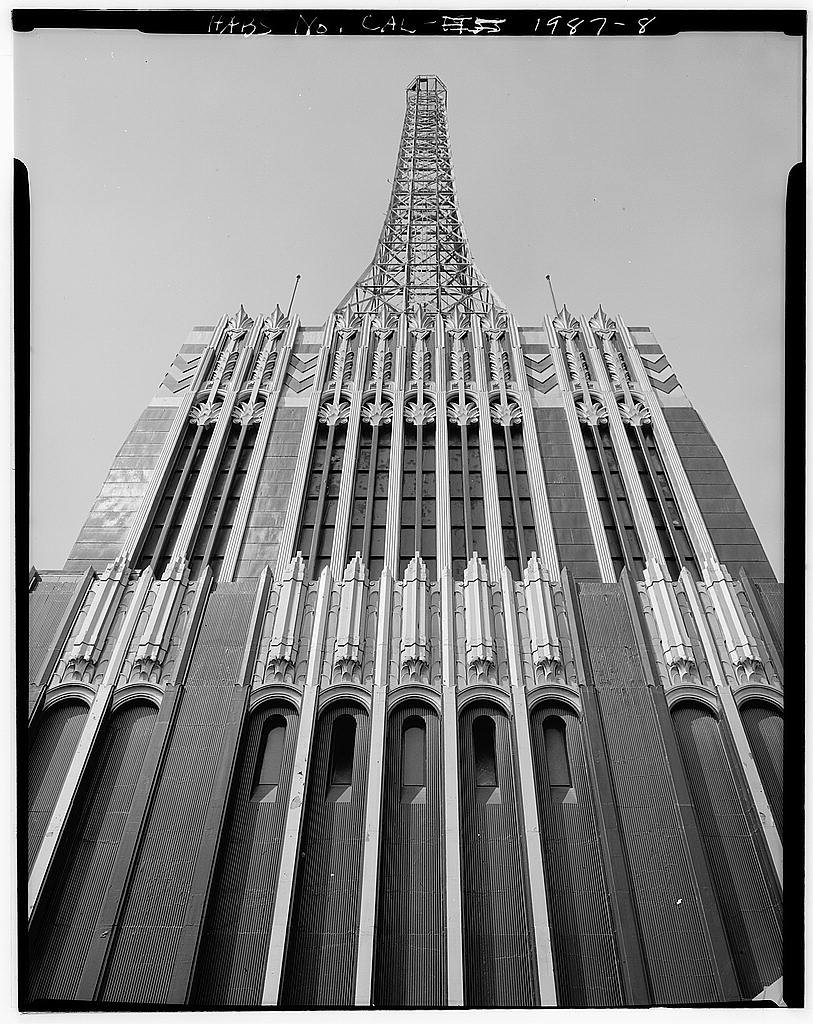
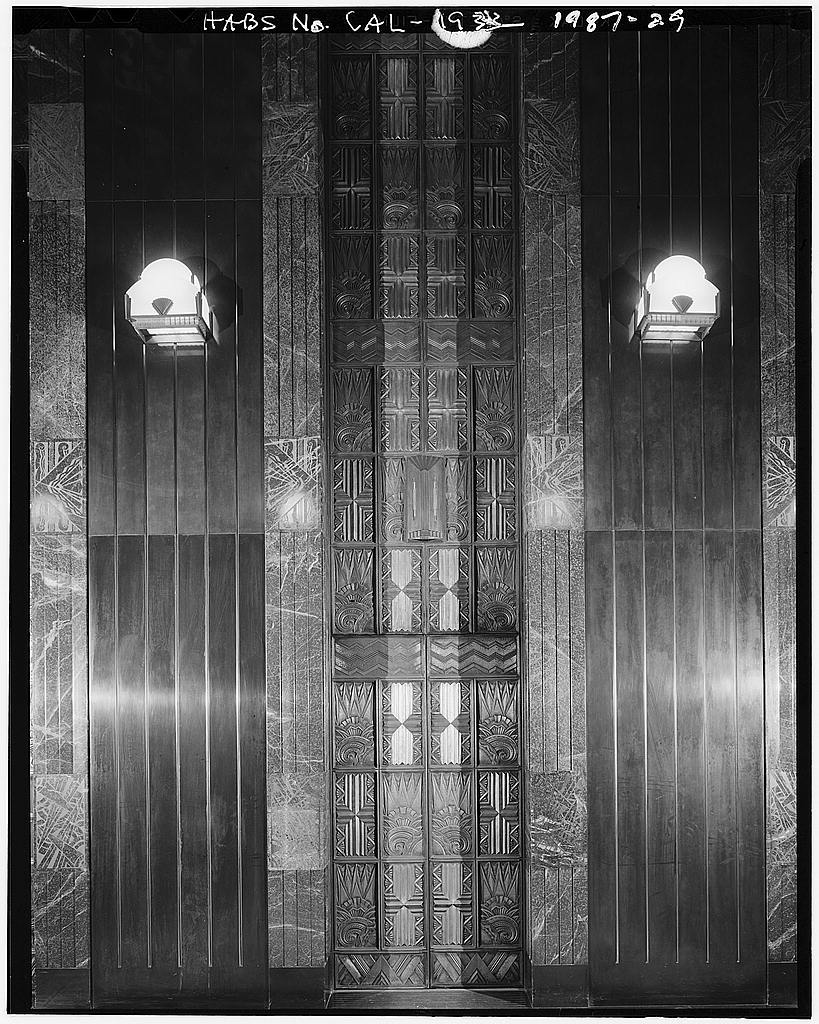
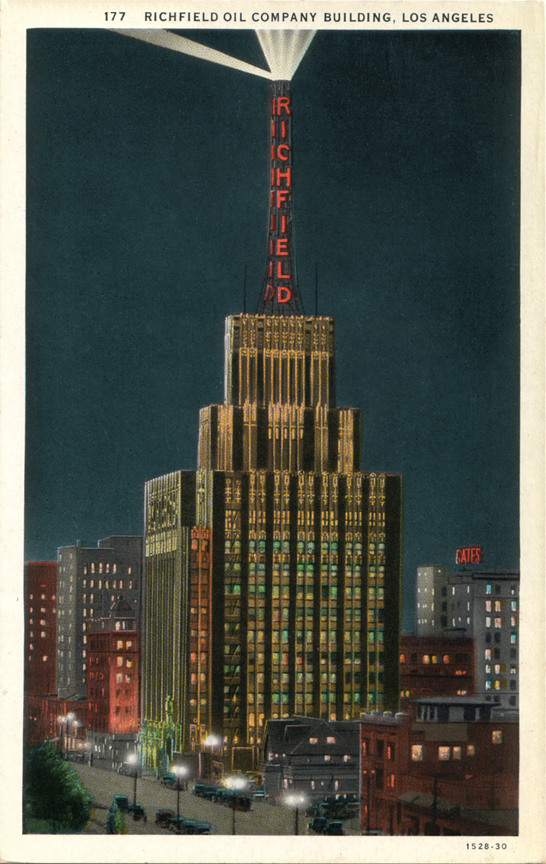
I'm in love again! ;-) This time with the Richfield Building (1928-1968), formerly located at 6th and Flower, Los Angeles. Unquestionably, the most elegant Art Deco skyscraper ever built west of the Mississippi. Its intricate, sculpted exterior was adorned with terra cotta tiles of black, burnished gold and turquoise. It rose 500 feet from street level to the top of its stainless steel neon tower.


I was alive and living in L.A. County during the last fourteen years of the building's existence, but unfortunately, I have no memory of it whatsoever. Not too surprising, considering its location, because Mother hated the adjacent Harbor Freeway and avoided it whenever possible. So near and yet so far...


Library of Congress-Historic American Buildings Survey.


Library of Congress-Historic American Buildings Survey.


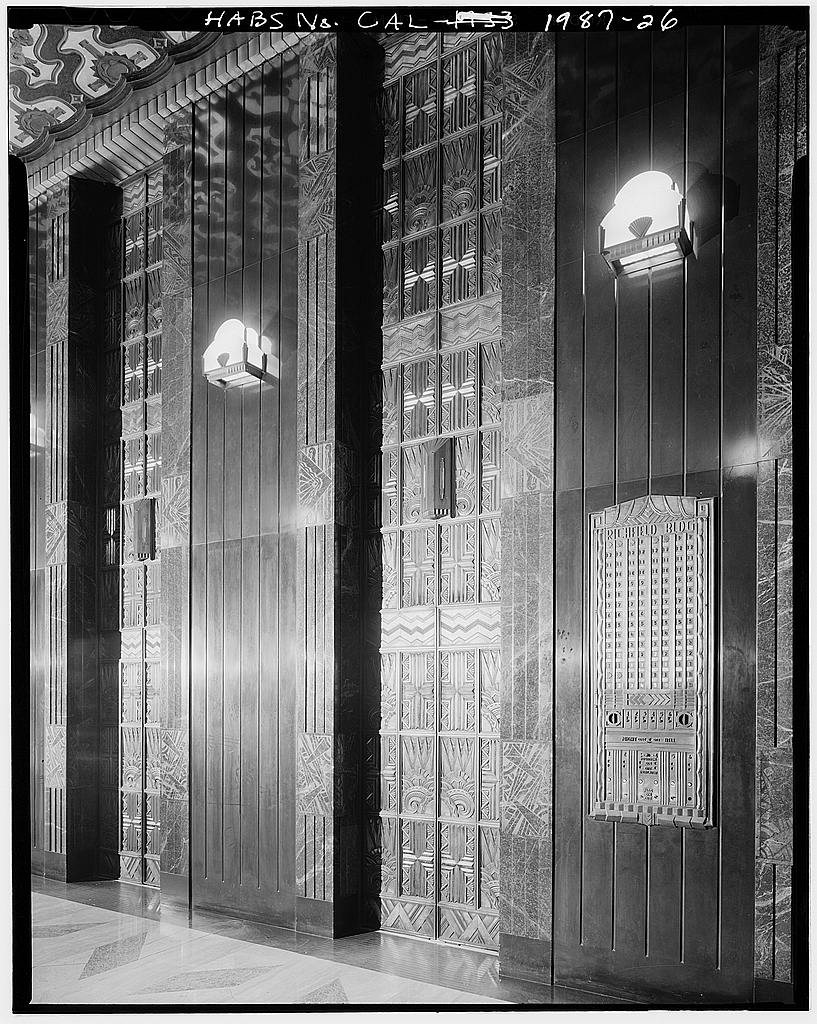
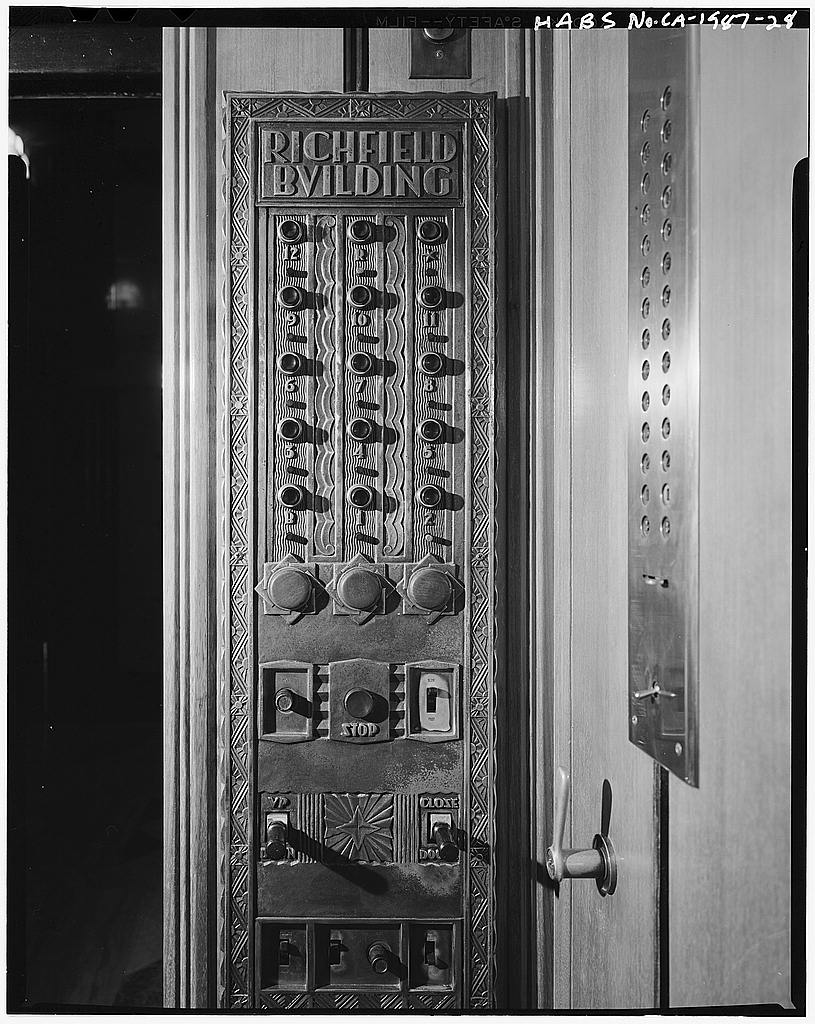
Even its elevators were Deco design jewels:


Library of Congress-Historic American Buildings Survey.


Library of Congress-Historic American Buildings Survey.


Library of Congress-Historic American Buildings Survey.


Sadly for architecture buffs like me, after Richfield Oil merged with Atlantic Petroleum to form ARCO in 1966, the Richfield headquarters in Los Angeles was deemed redundant. It was torn down in 1968-1969, and replaced by the impossibly drab twin ARCO Towers in 1970.


Los Angeles Public Library.


Bleah. :-p

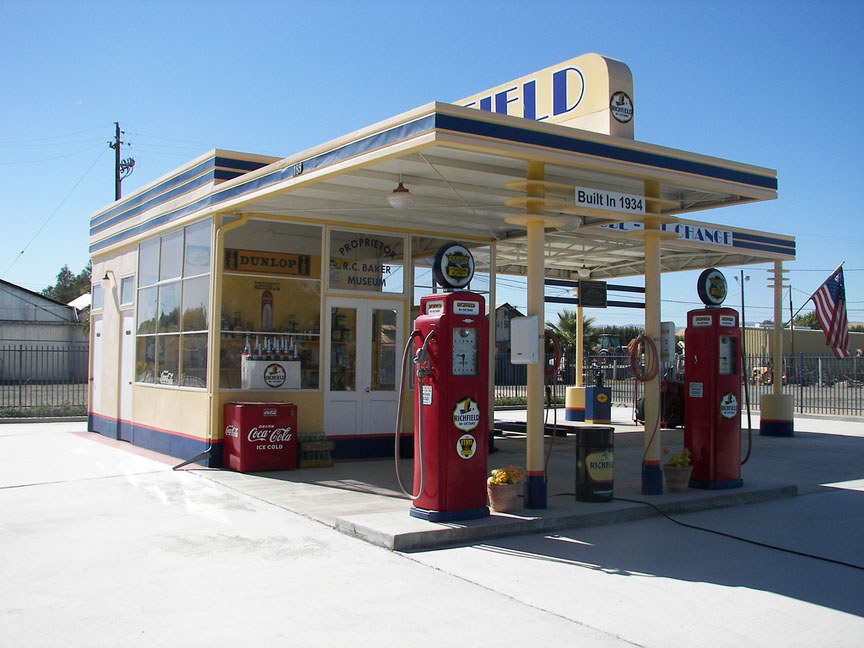
Aside: here is a restored Richfield service station (1934). Richfield's service stations of the time were also tastefully designed... simple but stylish.


Courtesy C. V. Dusty on Flickr.