A vanished city lives again...

Saturday, November 7, 2009

In only 30 years...

Cahuenga Pass, 1911:


Courtesy U.S.C. Digital Library.


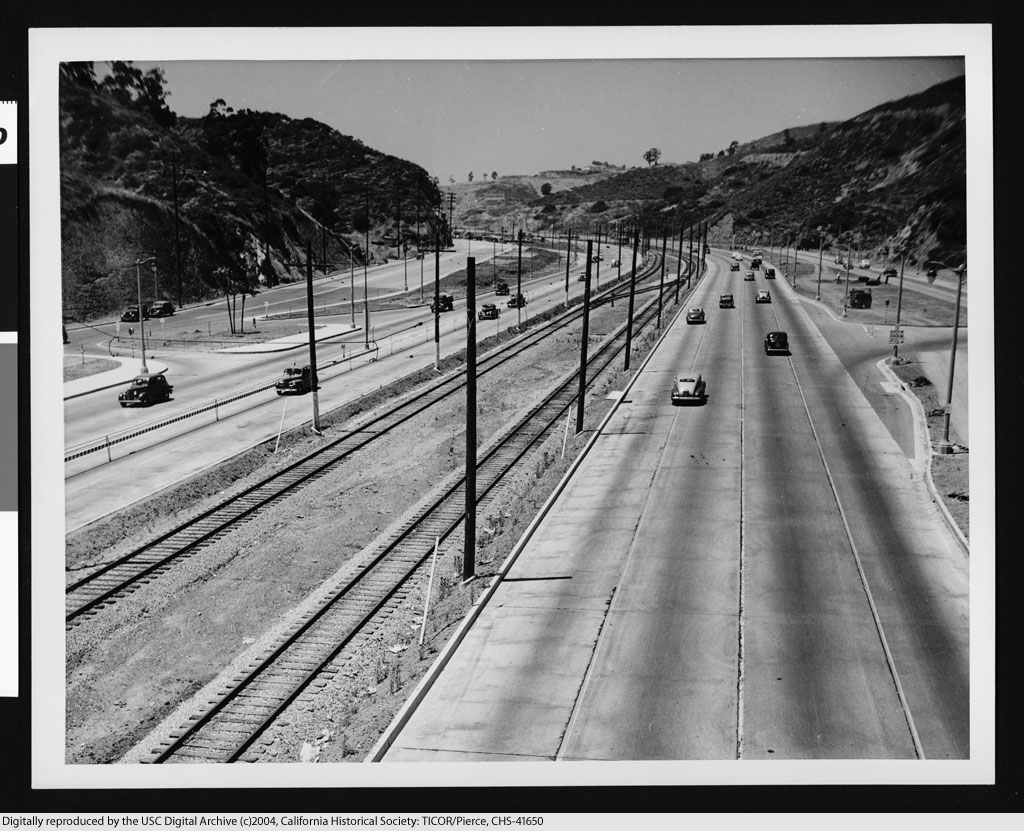
Cahuenga Boulevard, 1941:


Courtesy U.S.C. Digital Library.


All this change in only 30 years! Not as much change since then, though; the Hollywood Freeway today still follows basically the same path as this old road. It's really something to see Cahuenga Pass when it was only a dirt road traversed by horse teams, though. It's amazing to think that was less than 100 years ago. Only 1-1/2 normal human lifetimes, and Cahuenga Pass is almost unrecognizable from what it originally was...


Wednesday, November 4, 2009

The Bryson-Bonebrake Block

At the time of its construction in 1888, the Bryson-Bonebrake Block was without question the most attractive and architecturally-significant office building in Los Angeles.
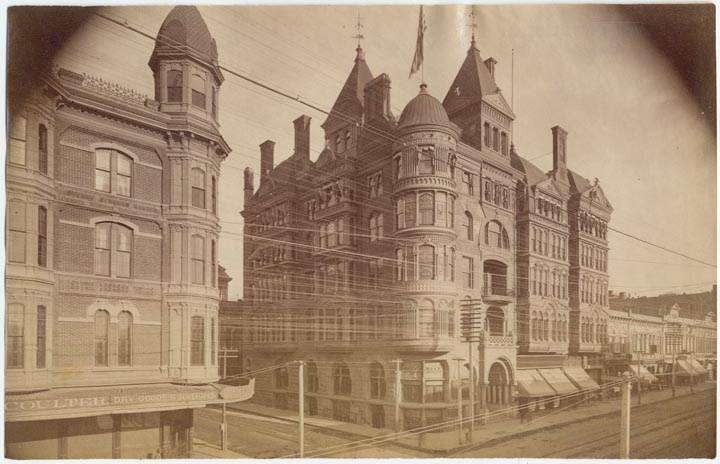

Photo courtesy Floyd Bariscale on Flickr.


Floyd Bariscale quotes a contemporary source describing the new civic showpiece:

"Designed by Joseph Cather Newsom in 1888, located on the northwest corner on 2nd and Spring in Los Angles. From a 1981 reprint of J.C. Newsom's Artistic Buildings and Homes of Los Angeles:

'Bryson-Bonebrake Block, commissioned by John Bryson, Sr., Los Angeles Mayor, and Major George H. Bonebrake, banker, this huge office building was Newsom's most ambitious and commercial structure. The Los Angeles Times, September 17, 1888 reports: "At the corner of Second and Springs streets, is one of the largest and most substantial in Southern California, and is most ornamental in appearance. It is six stories and a basement in height, and will contain four stories, one bank, 126 rooms, and a lodgeroom on the sixth floor. It has 120 feet frontage on Spring street and 103 feet frontage on Second steet. The rooms are all large and well ventilated, and the halls are wide and lighted by light wells. The principal features of the building are the massive and elegantly carved stone entrance, with its beautifully grained Colton marble shafts, carved stone caps and base of Moorish design, and the court in the center of the building throwing light into the corridors and inner rooms. The steps of the entrance are of the best granite, and the entrance is tiled and has marble wainscoting. On one side is a large bulletin-board, and on the other a richly-carved staircase with marble steps... The interior of the building is finished in cedar, and the plumbing is of the best... All the offices are heated and lighted with gas, and there are electric bells from each room to the bulletin board on the first floor. The elevator runs from the basement to the sixth floor. There is a fine [sic] hose reel on each floor for use in case of fire. Its cost will be $224,000.'"


More 19th century views of the Bryson block...

Grand opening, 1888 - The Court House on Pound Cake Hill in the distance right of center was also constructed this same year. Also, note how Spring Street originally veered to the right after its intersection with First Street.
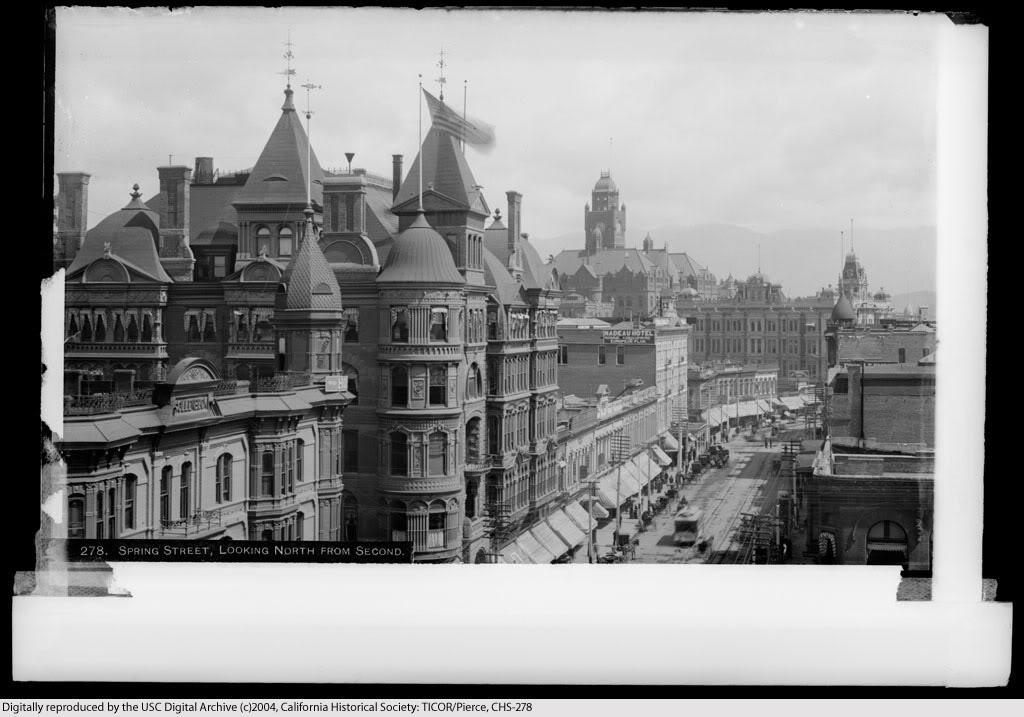

Courtesy U.S.C. Digital Library.


Looking west on Second Street from Spring.
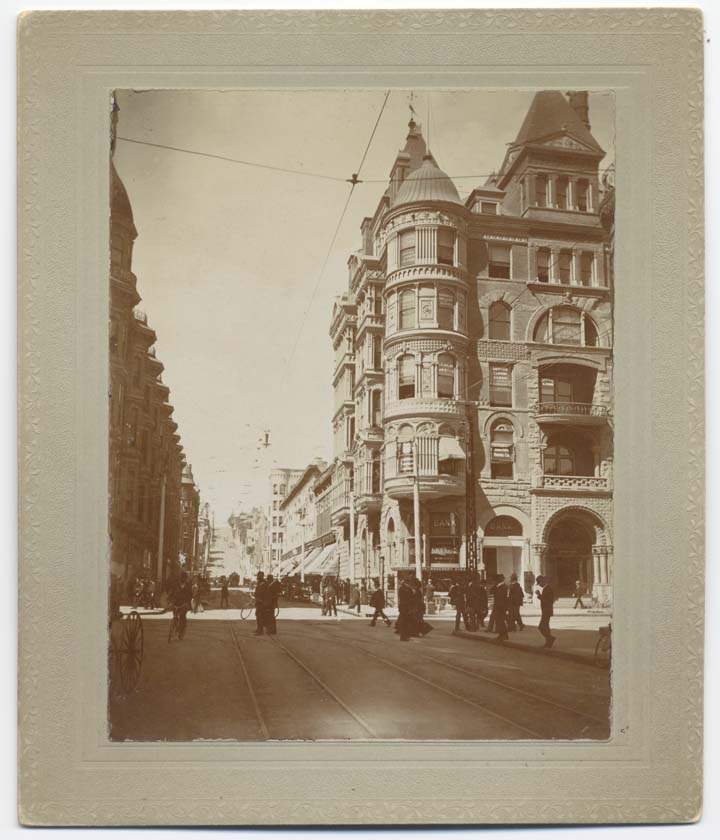

Courtesy California State Library.


1905 - A nice close view showing the intricate exterior decorative elements of the Bryson block. Note that the entire original ornate top of the building has been removed and replaced by two additional storeys of offices.
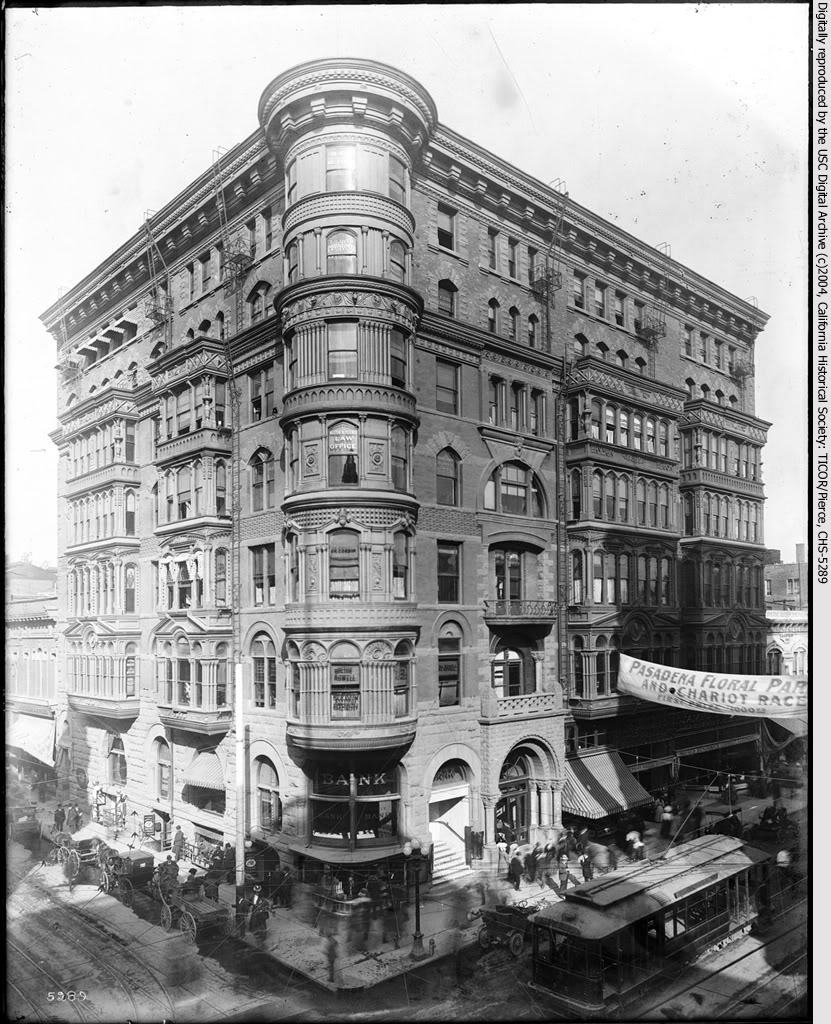

Courtesy U.S.C. Digital Library.


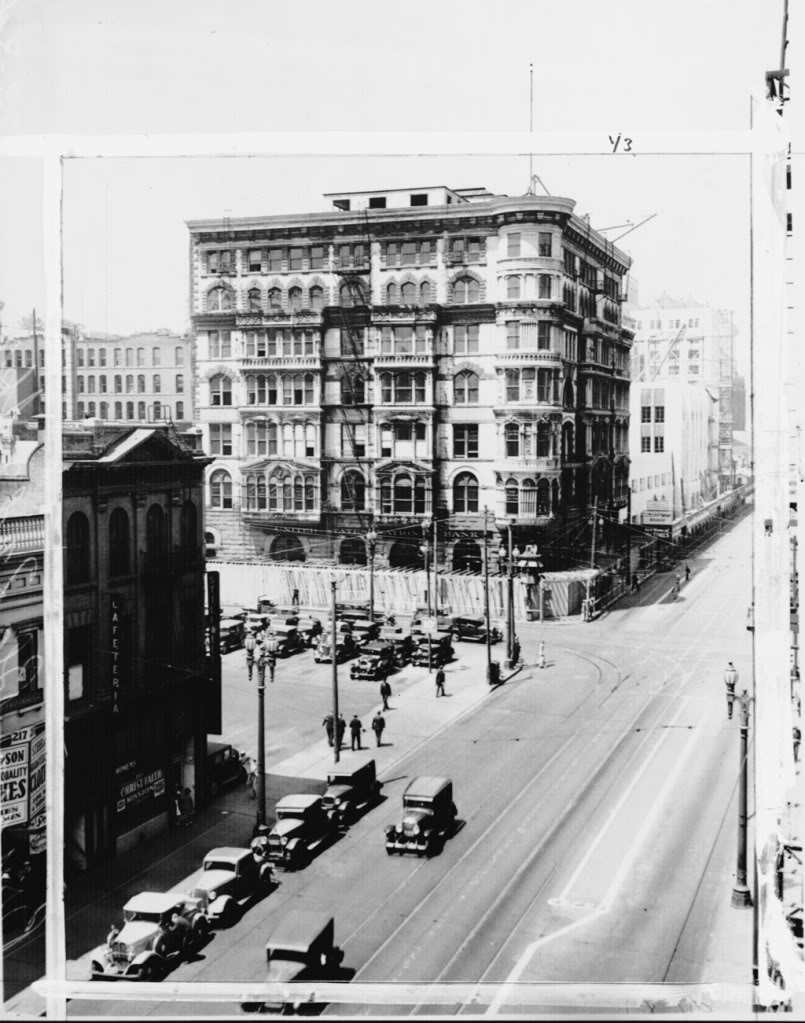
1934 - Only 46 years after its construction, demolition of the Bryson block is underway. An annex building of the Los Angeles Times occupies the site today.

Courtesy U.S.C. Digital Library.


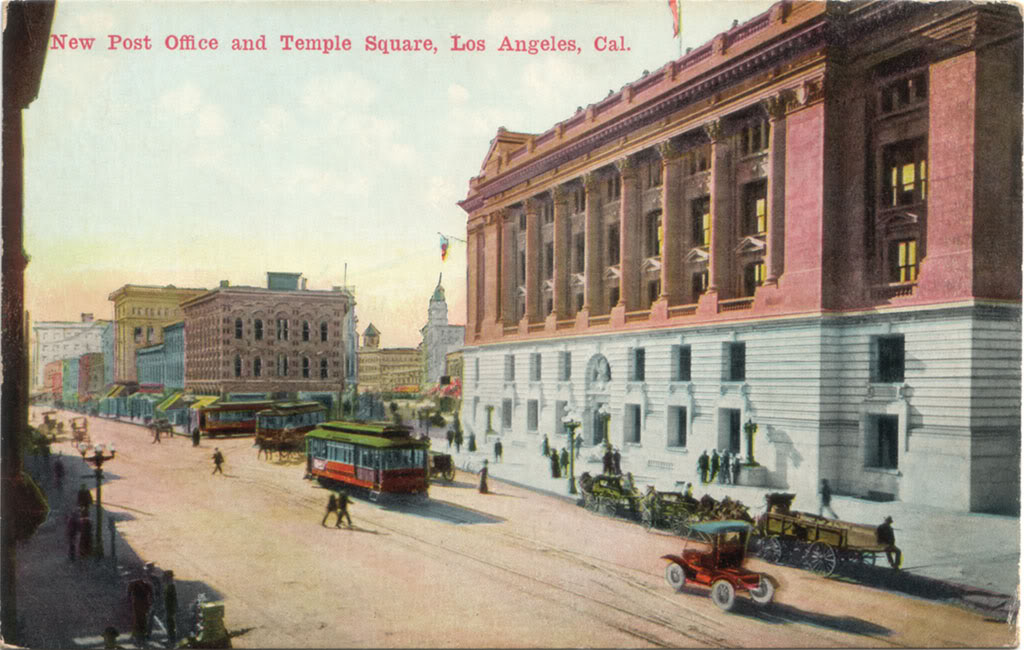
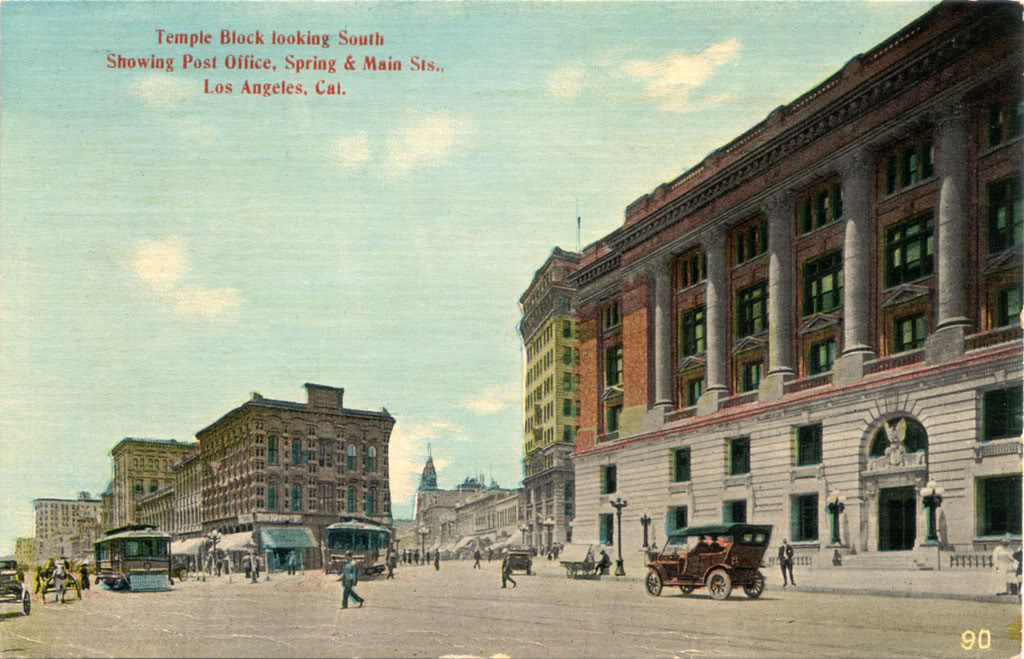
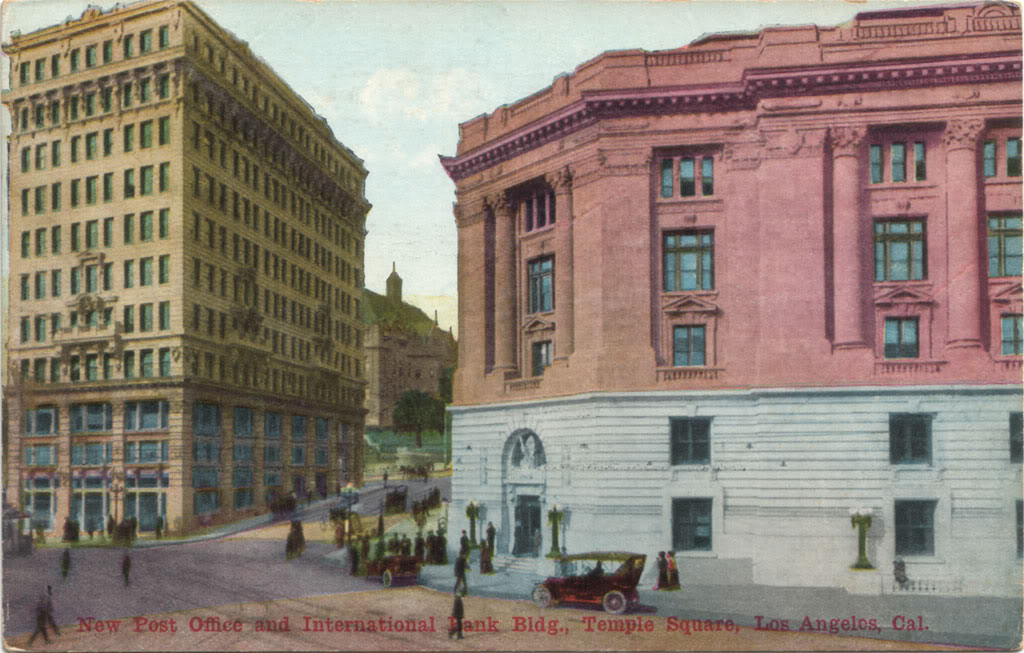
Temple Square

From the 1860s to the 1930s, Temple Square was the original "civic center" of Los Angeles. Formed by the junction of Main, Temple and Spring Streets, it was the nexus of everyday life in the old city. Here are some postcard views of Temple Square from the first and second decades of the 20th century...


Today, no one looking at the intersection of Main and Temple could guess that a grand open public space once existed there. Temple Square has vanished without a trace from the face of the earth...


Thursday, October 29, 2009

Southwest from City Hall: Then & Now

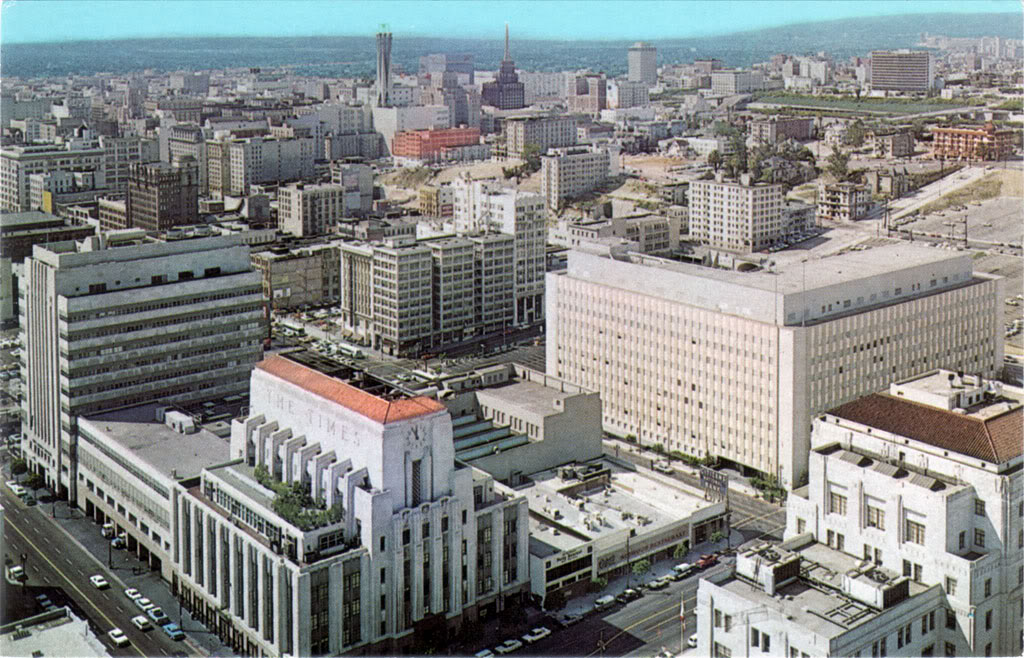
I'm not quite done with the special project I've been working on of late, but I just got this old postcard and I can't wait to do a quick "Then & Now" with it.

As usual, I can't be absolutely certain about the date of this photo, but I'm thinking it's probably around 1962. The buildings around Angels Flight have been razed by this time, but The Dome is still alive and well at the corner of Second and Grand (upper right), so I think this is a good ballpark guess.


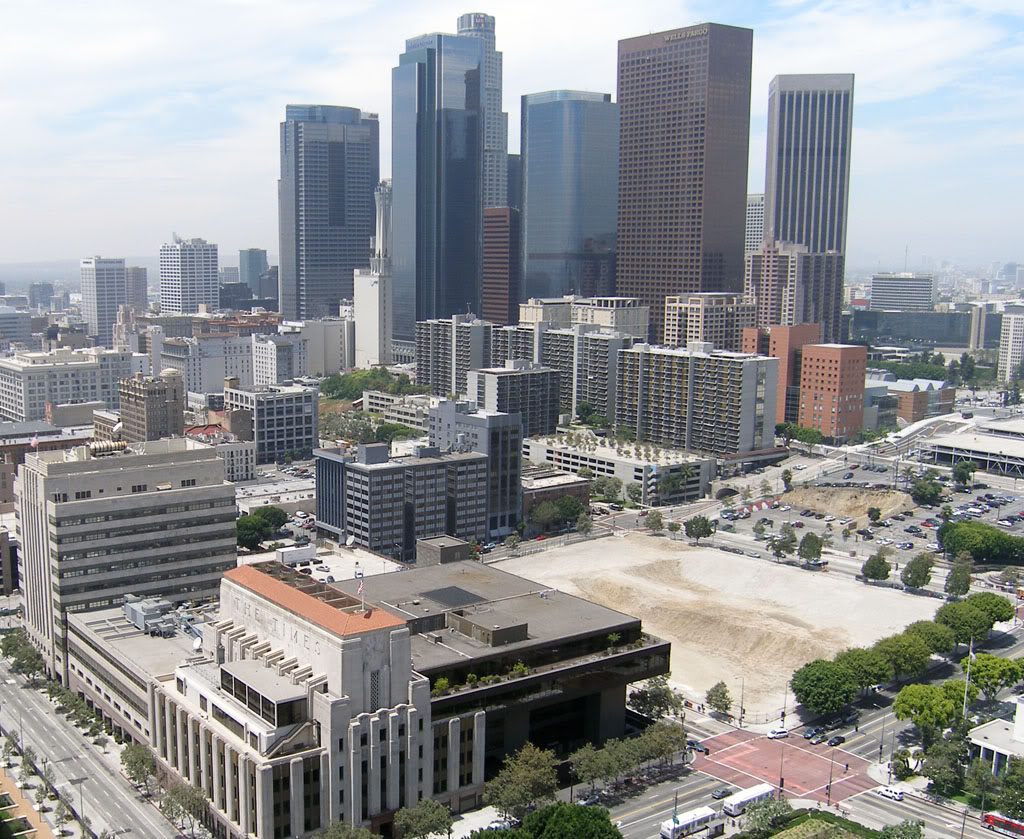
Taken by me from the observation deck of City Hall during my visit on July 10, 2009. I have to say – when I first saw that block-square open pit at First and Broadway, I had mixed feelings about it, but now that I see the building that was there before (The California State Office Building?), I have to say the current open space is a significant improvement.


Photo by J Scott Shannon.


It's interesting to me to think that the old photo is from a time that is actually within my living memory. This Then & Now comparison illustrates pretty much exactly the extent to which downtown Los Angeles has changed in the short space of my own lifetime...


Thursday, October 22, 2009

Hiatus

My apologies for the lack of updates recently. Due to Real Life circumstances, I've been forced to take a bit of a hiatus from writing about my favorite avocation here. When I come back, though, I'll have something really special to share – something quite different than what I usually post, and more personal, too. Anyway, rest assured, Los Angeles Past will be back again in a week or two. Stay tuned!


Sunday, October 4, 2009

Palm Drive: Then & Now

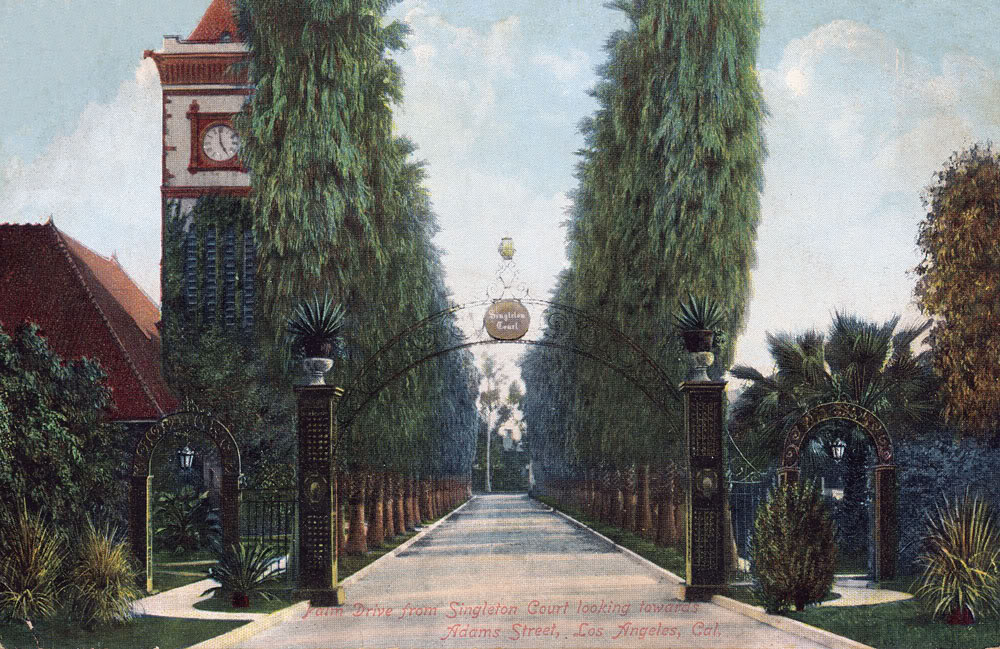
Nathan Marsak recently sent me this lush postcard image of the palm drive of Singleton Court in West Adams, circa 1915. These are the Longstreet palms which I've written about previously. Planted circa 1875, the 23 Longstreet palms that remain today are quite possibly the oldest living things in Los Angeles. These trees have a continuous documented photographic history which alone affirmatively attests to their great age.

Palm Drive, Singleton Court, West Adams, c.1915:


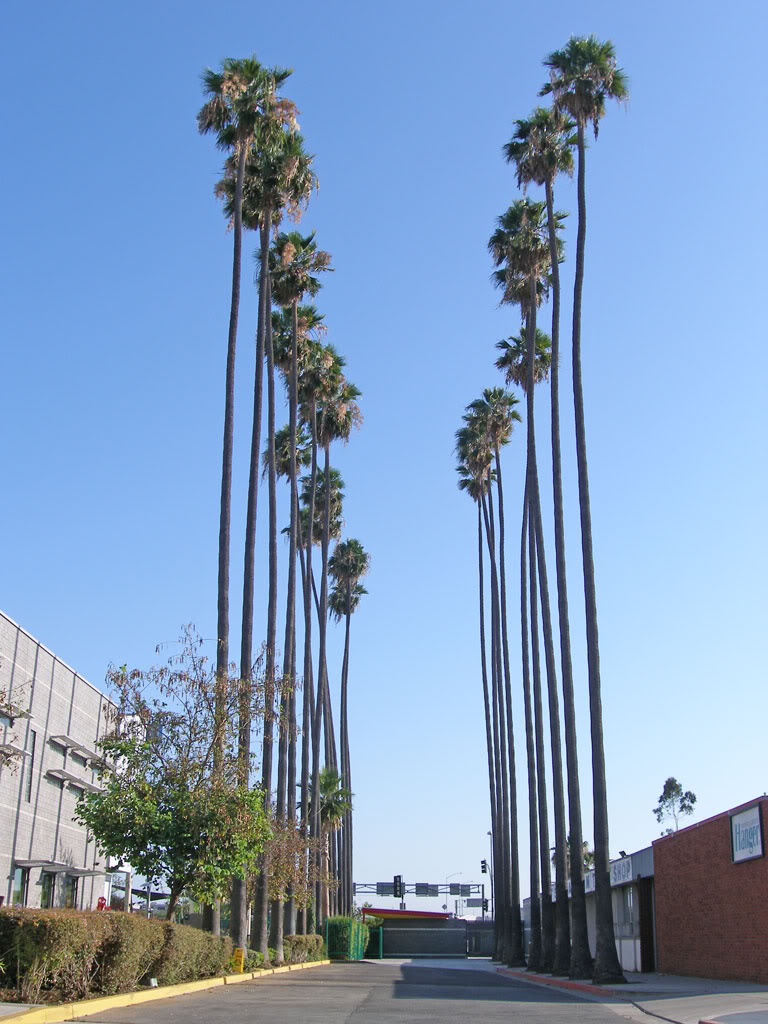
The same view of Palm Drive, 2009:


Photo by J Scott Shannon.


These palms actually began life during the Civil War, almost a century and a half ago. Only five buildings still standing in all of Los Angeles are older (dead link) than these palm trees. They may look just like any others, but the Longstreet palms are really quite special, indeed...